
To properly clean and condition cowboy boots, you must follow a sequential process. First, use a soft brush to remove all loose dirt and debris. Next, apply a dedicated leather cleaner with a cloth, allow the boots to dry completely, and then finish by working a high-quality leather conditioner into the material to restore moisture and flexibility.
The core principle of boot care is not just cleaning but preservation. The goal is to remove harmful abrasives and then systematically reintroduce essential oils into the leather, preventing it from drying out, cracking, and deteriorating over time.
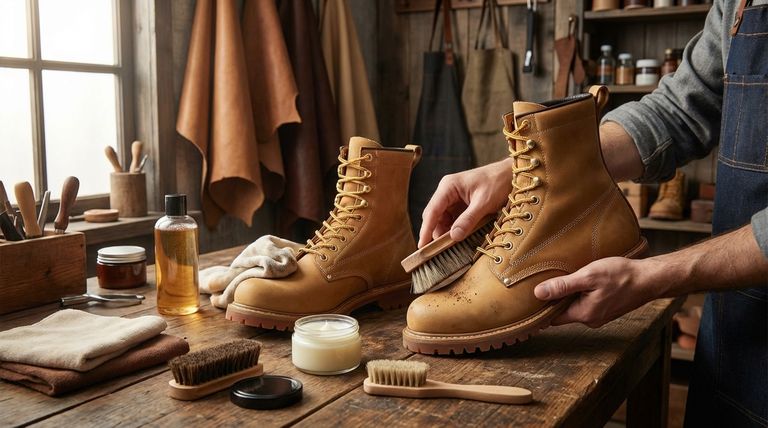
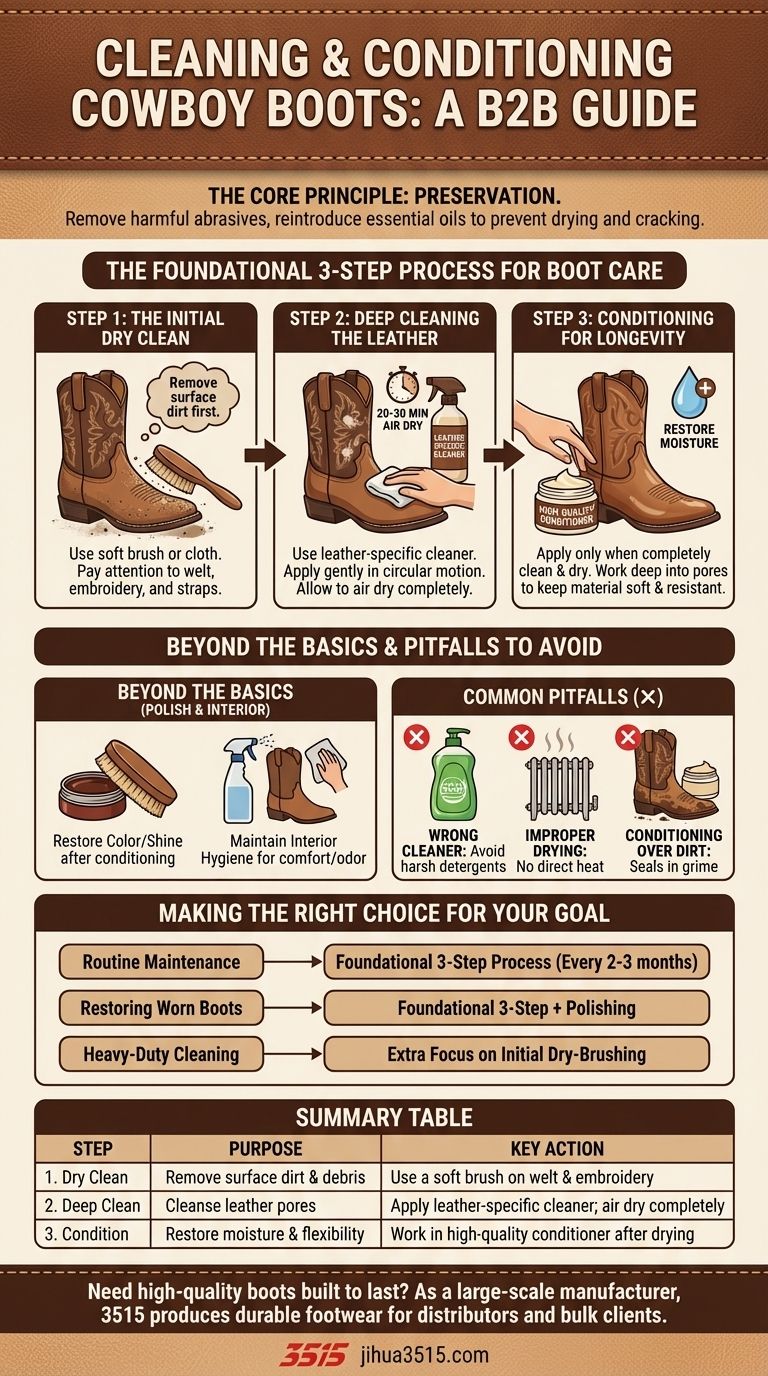
The Foundational 3-Step Process for Boot Care
Proper boot care can be broken down into three distinct phases: preparation, deep cleaning, and conditioning. Following this order ensures that you are not sealing in dirt and that the conditioner can effectively penetrate the leather.
Step 1: The Initial Dry Clean
Before introducing any moisture, you must remove all surface-level dirt. This prevents you from grinding abrasive particles into the leather during the cleaning phase.
Use a soft-bristled brush or a clean, dry cloth for this step. Pay close attention to the welt (where the boot upper meets the sole), embroidery, and around the pull straps, as these areas commonly trap debris.
Step 2: Deep Cleaning the Leather
With the surface dirt gone, you can now address grime that has settled into the leather's pores.
It is critical to use a cleaner specifically formulated for leather. Common household soaps can be too harsh, stripping the leather of its essential natural oils and leading to premature drying.
Apply the cleaner with a soft cloth in a gentle, circular motion. Once finished, allow the boots to air dry completely, which typically takes 20-30 minutes.
Step 3: Conditioning for Longevity
Conditioning is arguably the most important step for extending the life of your boots. Think of it as a moisturizer that replenishes the oils lost during wear and cleaning.
Apply a high-quality leather conditioner only after the boots are completely clean and dry. This allows the product to penetrate deep into the leather's pores.
Work the conditioner into the leather with a clean cloth or your fingers, ensuring even coverage. This keeps the material soft, supple, and resistant to cracking.
Beyond the Basics: Polishing and Interior Care
For boots that need more than just a basic clean, you can add steps to restore their finish and address interior hygiene.
Restoring Color and Shine with Polish
If your boots have scuffs or scratches, polishing can help restore their appearance. This should only be done after conditioning.
Apply a shoe polish that matches the color of your leather. Use light layers, buffing with a soft brush or cloth between each application until you achieve the desired level of shine.
Maintaining the Boot's Interior
The inside of the boot is often neglected but is crucial for comfort and odor prevention.
For general cleaning, wipe the interior with a cloth slightly dampened with soapy water. To combat odors, you can lightly spray the inside with a 50/50 solution of white vinegar and water and let it air dry.
Common Pitfalls to Avoid
Mistakes in the cleaning process can cause more harm than good. Understanding these common errors is key to proper maintenance.
Using the Wrong Cleaner
Never use harsh detergents, dish soap, or all-purpose cleaners on leather boots. These products are designed to strip away grease and oils, which will dehydrate and damage the leather.
Improper Drying Techniques
Never place your boots near a direct heat source like a radiator, vent, or in direct sunlight to speed up drying. Intense heat can cause the leather to shrink, become brittle, and crack irreparably. Always let them air dry at room temperature.
Conditioning Over Dirt
Applying conditioner to dirty boots is a critical mistake. You will simply seal the dirt and grime into the leather, preventing the conditioner from being absorbed and potentially damaging the material over the long term.
Making the Right Choice for Your Goal
Your approach can be tailored depending on the condition of your boots and your objective.
- If your primary focus is routine maintenance: Stick to the foundational 3-step process of brushing, cleaning, and conditioning every 2-3 months, depending on wear.
- If your primary focus is restoring a worn, scuffed pair: Add the polishing step after conditioning to cover blemishes and bring back a factory-like finish.
- If your primary focus is heavy-duty cleaning after significant exposure to mud or dirt: Pay extra attention to the initial dry-brushing step, ensuring all caked-on debris is removed before you begin wet cleaning.
Consistent care is the key to ensuring your cowboy boots last for years to come.
Summary Table:
| Step | Purpose | Key Action |
|---|---|---|
| 1. Dry Clean | Remove surface dirt & debris | Use a soft brush on welt, embroidery, and straps |
| 2. Deep Clean | Cleanse leather pores | Apply leather-specific cleaner; air dry completely |
| 3. Condition | Restore moisture & flexibility | Work in high-quality conditioner after drying |
Need high-quality boots built to last? As a large-scale manufacturer, 3515 produces a comprehensive range of durable footwear for distributors, brand owners, and bulk clients. Our production capabilities ensure your boots are crafted from premium materials, designed for easy maintenance and long-term wear. Contact us today to discuss your footwear needs and benefit from our expert manufacturing solutions.
Visual Guide
Related Products
- Wholesale High-Traction Camo Boots - Custom Manufacturer for Brands
- High-Traction Suede Tactical Boots Wholesale & Custom Manufacturing
- Wholesale Lightweight Tactical Boots Custom Manufacturer for Desert & Combat Use
- Durable Leather Tactical Boots Wholesale & Custom Manufacturing for Brands
- Wholesale Durable Mid-Cut Tactical Boots for Custom & Private Label Brands
People Also Ask
- What are the key features of the new line of camo boots? Built for Extreme Cold & Rugged Terrain
- Are camo boots necessary for hunting success? Prioritize Performance Over Pattern
- How does the Rank Score Test identify the primary causes of premature failure in tactical and work boots? Key Insights
- What is the technical logic behind using closed-eye testing for tactical boots? Unlocking Peak Footwear Stability
- What shoes to wear for a security job? Durable, Protective Footwear for Long Shifts

















