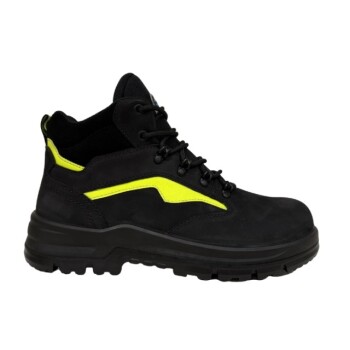
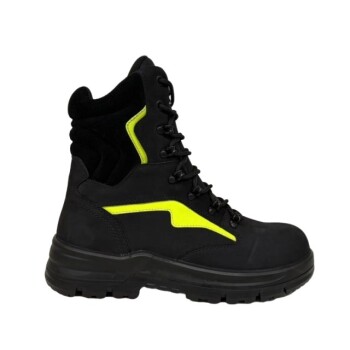
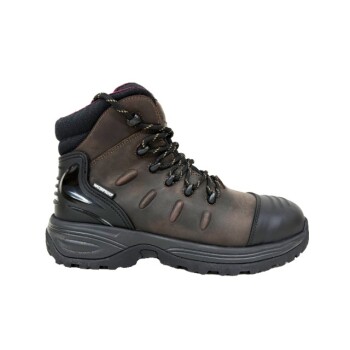
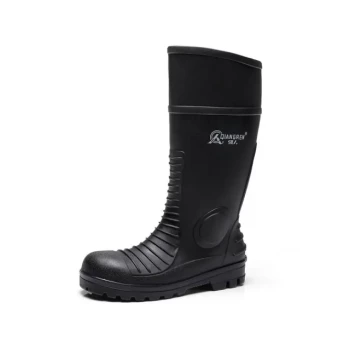
In Australia, the definitive safety standard for work boots is AS 2210.3:2019. This is the mandatory benchmark that all personal protective footwear must meet to be considered compliant for Australian worksites. This standard ensures the boots have undergone rigorous, independent testing to protect you from common workplace hazards.
The critical takeaway is that compliance with AS 2210.3:2019 is non-negotiable. While many boots meet international standards, only this specific Australian certification guarantees the footwear meets the legal and safety requirements for your job here.
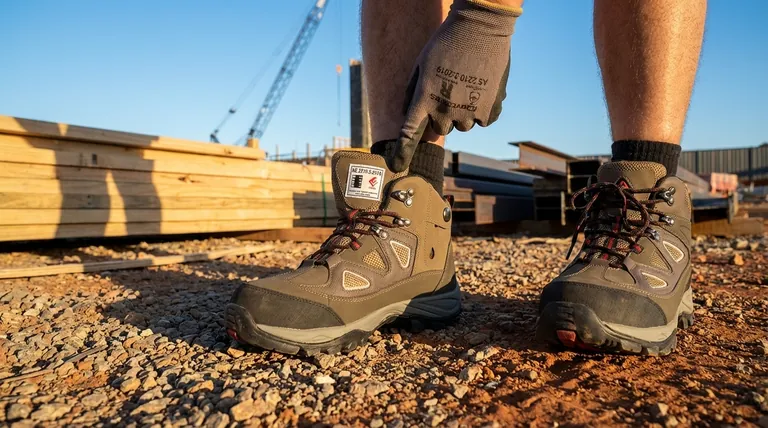
What "AS 2210.3:2019" Actually Guarantees
Meeting the standard is more than just a label on the tongue of a boot; it's a certification of performance. It signifies that the footwear has been tested against a range of specific workplace risks.
The Foundation of Protection
The standard establishes a baseline for safety. This includes essential features like impact and compression resistance in the toe cap, ensuring your feet are protected from falling objects and crushing forces.
A Mark of Rigorous Testing
To earn this certification, boots undergo a series of demanding physical tests. This process verifies the quality of materials, the durability of the construction, and the boot's ability to perform under stress.
How to Verify Compliance
Verifying a boot's compliance is straightforward. The certification number AS 2210.3:2019 should be clearly and permanently marked on the inside of the boot's tongue or lining. If you cannot find this mark, the boot is not certified for Australian worksites.
Beyond the Standard: Matching the Boot to the Job
While the AS 2210.3:2019 standard is the mandatory starting point, it's not the end of the story. Different jobsites present unique hazards, requiring specific types of protection that go beyond the basic certification.
Not All Certified Boots Are Equal
The standard covers various classifications of safety features. A boot designed for an electrician has different properties than one for a carpenter, even though both are certified.
Identifying Your Site-Specific Risks
Consider your daily tasks. Do you work around sharp objects like nails? You need a boot with a penetration-resistant midsole. Do you work near live electrical currents? You require a boot with an Electrical Hazard (EH) rating.
The Role of Reputable Brands
Established and reputable work boot brands are reliable for a reason. They ensure their products consistently meet the required standards and are clear about the specific protections each model offers, helping you make an informed choice.
Understanding the Trade-offs and Pitfalls
Choosing the right footwear involves navigating a few common points of confusion. Being aware of these can prevent a costly or dangerous mistake.
The Danger of International Standards
A boot certified to an American (ASTM), European (EN), or other international standard is not a substitute for Australian compliance. While these standards are robust, they are not interchangeable. Australian worksites specifically require AS 2210.3:2019 certification.
Cost vs. Safety
Certified, high-quality work boots are an investment. Resisting the temptation to buy cheaper, non-compliant footwear is critical for your personal safety and is often a mandatory requirement for gaining access to a worksite.
Compliance is Not a Suggestion
For most professional trades and industrial sites, wearing compliant footwear is a non-negotiable condition of employment and a key part of workplace health and safety (WHS) regulations. Failure to do so can result in being removed from a site.
Making the Right Choice for Your Worksite
Your choice should always begin with the standard and then narrow down based on your specific job hazards.
- If your primary focus is construction or heavy industry: You must have boots with protective toe caps and should strongly consider additional features like penetration-resistant midsoles, all under the AS 2210.3:2019 certification.
- If your primary focus is electrical work: Look for AS 2210.3:2019 certified boots that are also specifically marked with an Electrical Hazard (EH) rating.
- If your primary focus is on wet or slippery environments: Find a certified boot that highlights its high slip-resistance rating in its product description.
Always start by verifying the AS 2210.3:2019 standard to ensure your boots provide the fundamental protection you need to work safely in Australia.
Summary Table:
| Key Aspect | Details |
|---|---|
| Mandatory Standard | AS 2210.3:2019 |
| Key Protection | Impact/compression-resistant toe cap |
| Verification | Look for the standard marked on the boot's tongue |
| Additional Hazards | Penetration resistance, Electrical Hazard (EH) rating |
| International Standards | Not a substitute for AS 2210.3:2019 |
Need compliant work boots for your team?
As a large-scale manufacturer, 3515 produces a comprehensive range of AS 2210.3:2019 certified footwear for distributors, brand owners, and bulk clients. Our production capabilities encompass all types of safety boots and shoes, ensuring your workforce meets Australian safety regulations.
Contact us today to discuss your specific requirements and benefit from our expertise in compliant safety footwear.
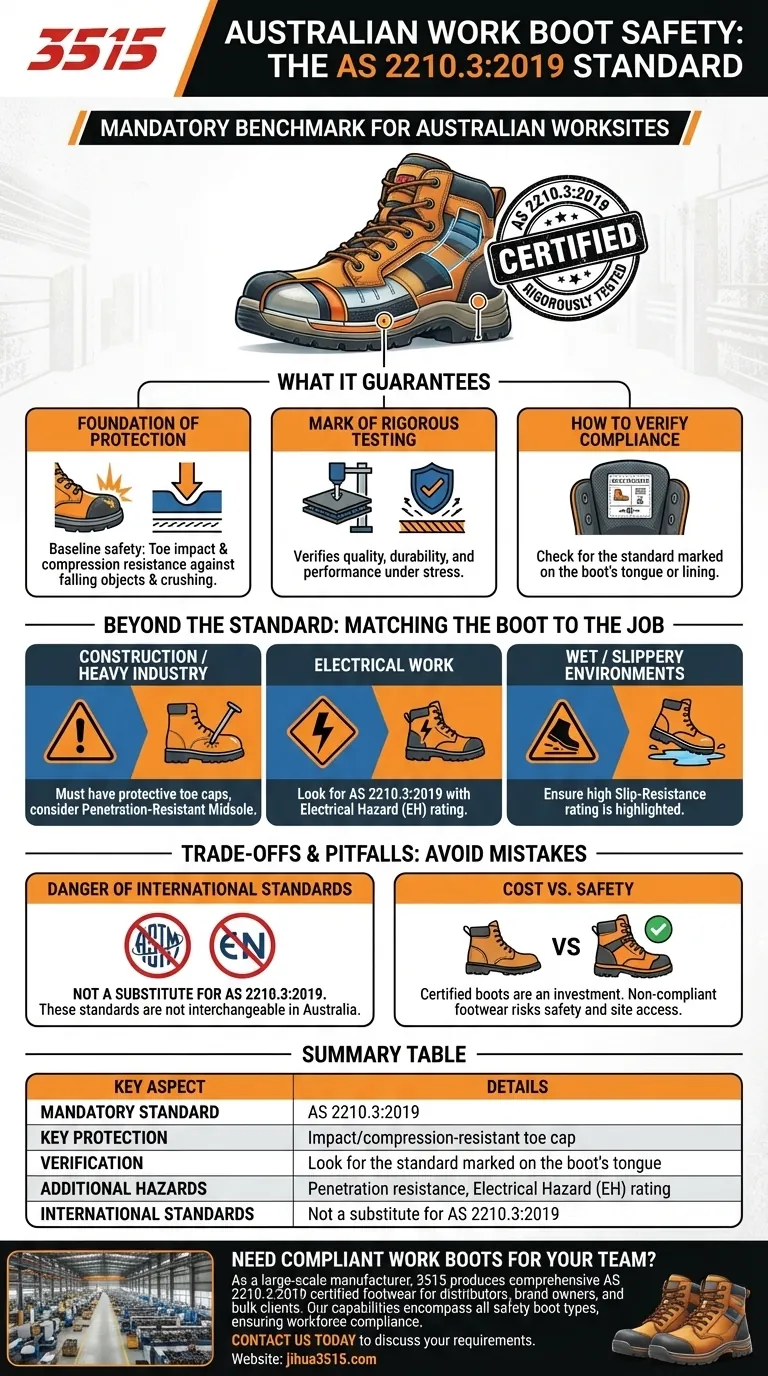
Visual Guide
Related Products
- Customizable Anti-Smash Safety Boots for Wholesale & Private Label Manufacturing
- Wholesale Durable Safety Boots Manufacturer Customizable Steel Toe Work Boots
- Wholesale Customizable Safety Boots Durable & Protective Footwear Manufacturing
- Wholesale Durable 6-Inch Work Boots | Custom & Private Label Manufacturer
- Durable Leather Safety Boots for Wholesale & Custom OEM Manufacturing
People Also Ask
- What are the requirements of BS EN345 safety regulations for security guard safety boots? | EN ISO 20345 Guide
- What are the key performance benchmarks set by the EN ISO 20345 standard for safety boots? A Guide to Selecting the Right Protection
- What additional protections are defined by the EN ISO 20345 norm? Match Footwear to Specific Hazards
- How is compliance with the EN ISO 20345 standard certified? The Path to Independent Verification
- Why are industrial safety boots with steel toes necessary for machine operators? Essential Foot Protection for Safety