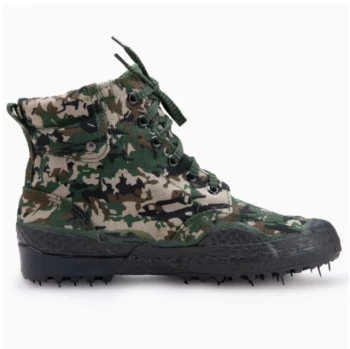
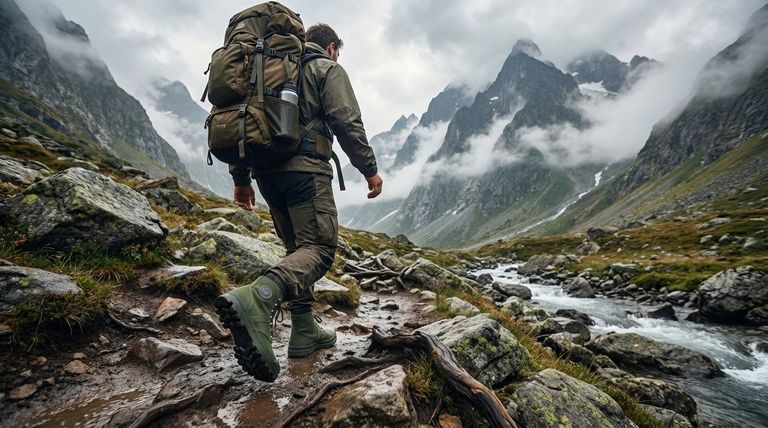
Choosing the right footwear is a foundational decision in hiking. Hiking boots become the superior choice over lightweight footwear under specific, demanding conditions. They are most suitable for navigating rugged, technical terrain, carrying heavy packs, or venturing into wet, snowy, or cold environments where robust support, durability, and protection are critical for safety and comfort.
The choice between hiking boots and lightweight footwear isn't about which is "better," but which is the appropriate tool for the job. Your decision should be a calculated assessment of terrain, load, and environmental conditions against your personal need for support and protection.
The Core Functions of a Hiking Boot
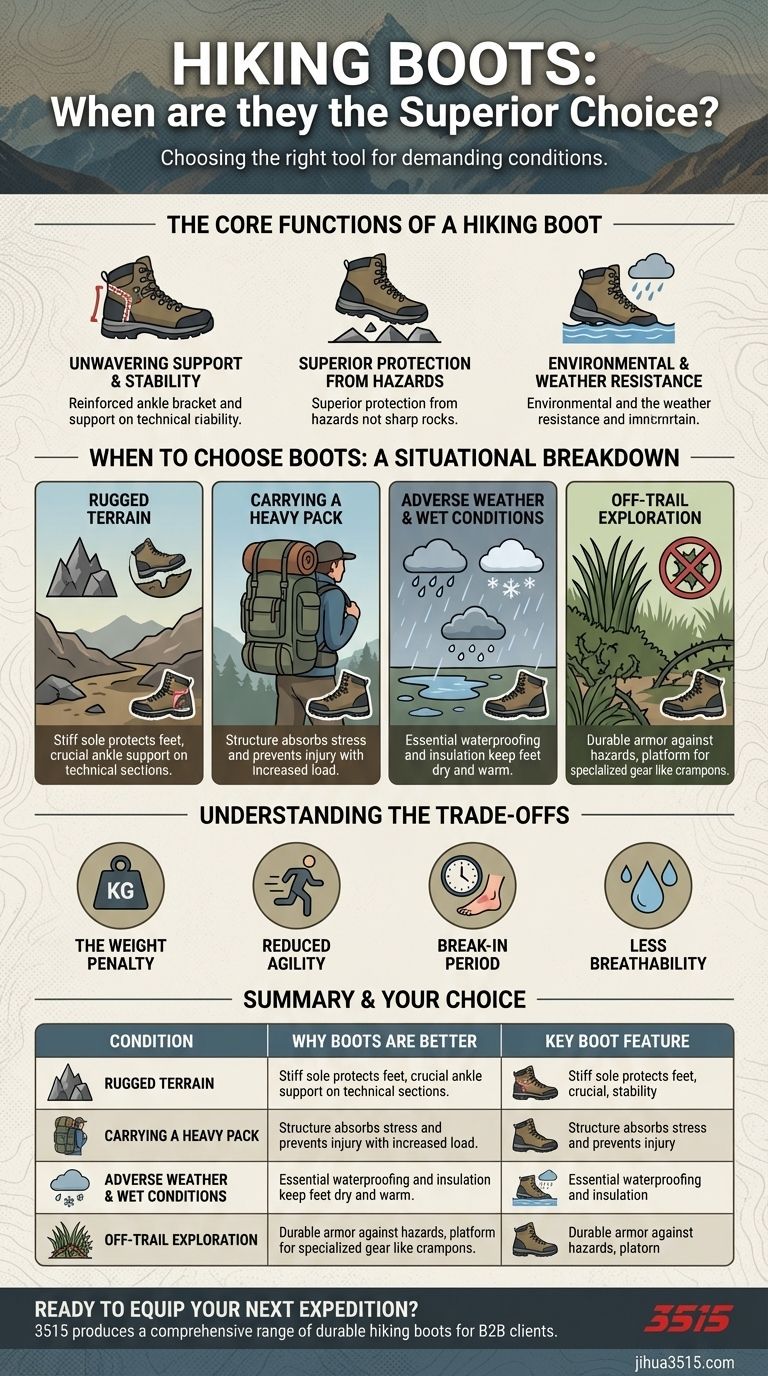
To understand when boots are necessary, we must first understand what they are engineered to do. They serve distinct purposes that lighter footwear often cannot replicate.
Unwavering Support and Stability
A boot's primary advantage is its rigid structure, especially around the ankle. This design helps prevent sprains and provides stability when carrying the extra weight of a multi-day pack, which can alter your center of gravity.
Superior Protection from Hazards
The thick materials and sturdy construction of hiking boots act as armor for your feet. They offer significant protection from external threats like sharp rocks, protruding roots, snake bites, and dense, thorny vegetation.
Environmental and Weather Resistance
Boots, particularly waterproof models, create a formidable barrier against the elements. They are essential for keeping feet dry and warm when crossing shallow streams, trudging through mud, or hiking in snow.
When to Choose Boots: A Situational Breakdown
Certain scenarios clearly demand the specific advantages that only a hiking boot can provide. In these cases, choosing lighter footwear can compromise both comfort and safety.
For Unpredictable or Rugged Terrain
If your trail is poorly maintained, rocky, or involves steep, technical sections, a boot is the safer choice. The stiff sole protects your foot from sharp objects underfoot, and the ankle support is crucial on uneven ground.
When Carrying a Heavy Pack
Once your pack weight increases significantly, the force on your ankles and feet multiplies with every step. The structure of a hiking boot is designed to absorb this stress and provide the necessary support to prevent injury over long distances.
In Adverse Weather and Wet Conditions
For hiking in cold, wet, or snowy environments, boots are non-negotiable. They provide essential insulation and waterproofing that lightweight, breathable shoes lack, protecting you from discomfort and cold-related foot injuries.
For Off-Trail Exploration
Bushwhacking or navigating areas without a defined path introduces countless hazards. Boots provide the durability and protection needed to push through rough vegetation and unpredictable ground. They are also the required platform for attaching specialized gear like crampons for icy terrain.
Understanding the Trade-offs
Opting for hiking boots is not without its compromises. Acknowledging these trade-offs is key to making an informed decision.
The Weight Penalty
Boots are significantly heavier than trail shoes. This added weight on your feet requires more energy to lift with every step, which can lead to fatigue over a long day.
Reduced Agility and "Trail Feel"
The same rigidity that provides support also makes boots feel more cumbersome. They reduce your ability to feel the trail beneath your feet and can feel less agile compared to a flexible, lightweight shoe.
The Break-in Period
Most sturdy hiking boots require a break-in period to soften and mold to your feet. Wearing them on a long hike straight out of the box is a common cause of painful blisters and hot spots.
Less Breathability in Warm Weather
In hot, dry conditions, the robust, often waterproof construction of a boot can trap heat and sweat. This can lead to discomfort and increase the likelihood of blisters. Lighter, more breathable footwear often excels in this environment.
Making the Right Choice for Your Hike
Your footwear choice should be a direct response to the demands of your planned hike. Use these guidelines to select the right tool for your objective.
- If your primary focus is multi-day backpacking with a heavy pack: Opt for the structure and support of a traditional hiking boot.
- If your primary focus is fast day-hiking on established trails: Lightweight trail shoes will likely provide better comfort and agility.
- If you are hiking in wet, muddy, or snowy conditions: The weather resistance and protection of a waterproof boot are essential.
- If you have a history of ankle instability: Prioritize the enhanced ankle support offered by a mid or high-cut boot, regardless of trail conditions.
By matching your footwear to your specific objective, you ensure every step is taken with confidence and comfort.
Summary Table:
| Condition | Why Boots Are Better | Key Boot Feature |
|---|---|---|
| Rugged, Technical Terrain | Superior ankle support and protection from sharp rocks/roots. | Ankle Support & Rigid Sole |
| Carrying a Heavy Pack | Provides stability and absorbs stress to prevent injury. | Structured Support |
| Wet, Muddy, or Snowy Conditions | Essential waterproofing and insulation keep feet dry and warm. | Weatherproof Construction |
| Off-Trail Bushwhacking | Durable armor against thorns, vegetation, and unpredictable ground. | Toe & Ankle Protection |
Ready to equip your next expedition with the right footwear?
As a large-scale manufacturer, 3515 produces a comprehensive range of durable hiking boots for distributors, brand owners, and bulk clients. Our production capabilities ensure you get high-quality footwear designed for performance and protection in the toughest conditions.
Contact us today to discuss your specific needs and discover how we can support your business with reliable, high-performance hiking boots.
Visual Guide
Related Products
- Wholesale High-Traction Camo Boots - Custom Manufacturer for Brands
- Durable Rubber Sole Outdoor Shoes Wholesale & Custom Manufacturing
- Durable Spiked Camouflage Boots Wholesale & Factory Production
- Wholesale Lightweight Tactical Boots Custom Manufacturer for Desert & Combat Use
- Wholesale Waterproof Tactical Boots Custom Suede & High-Traction Soles
People Also Ask
- What are the key features of the new line of camo boots? Built for Extreme Cold & Rugged Terrain
- Are camo boots necessary for hunting success? Prioritize Performance Over Pattern
- What is the technical logic behind using closed-eye testing for tactical boots? Unlocking Peak Footwear Stability
- How does the Rank Score Test identify the primary causes of premature failure in tactical and work boots? Key Insights
- What shoes to wear for a security job? Durable, Protective Footwear for Long Shifts