
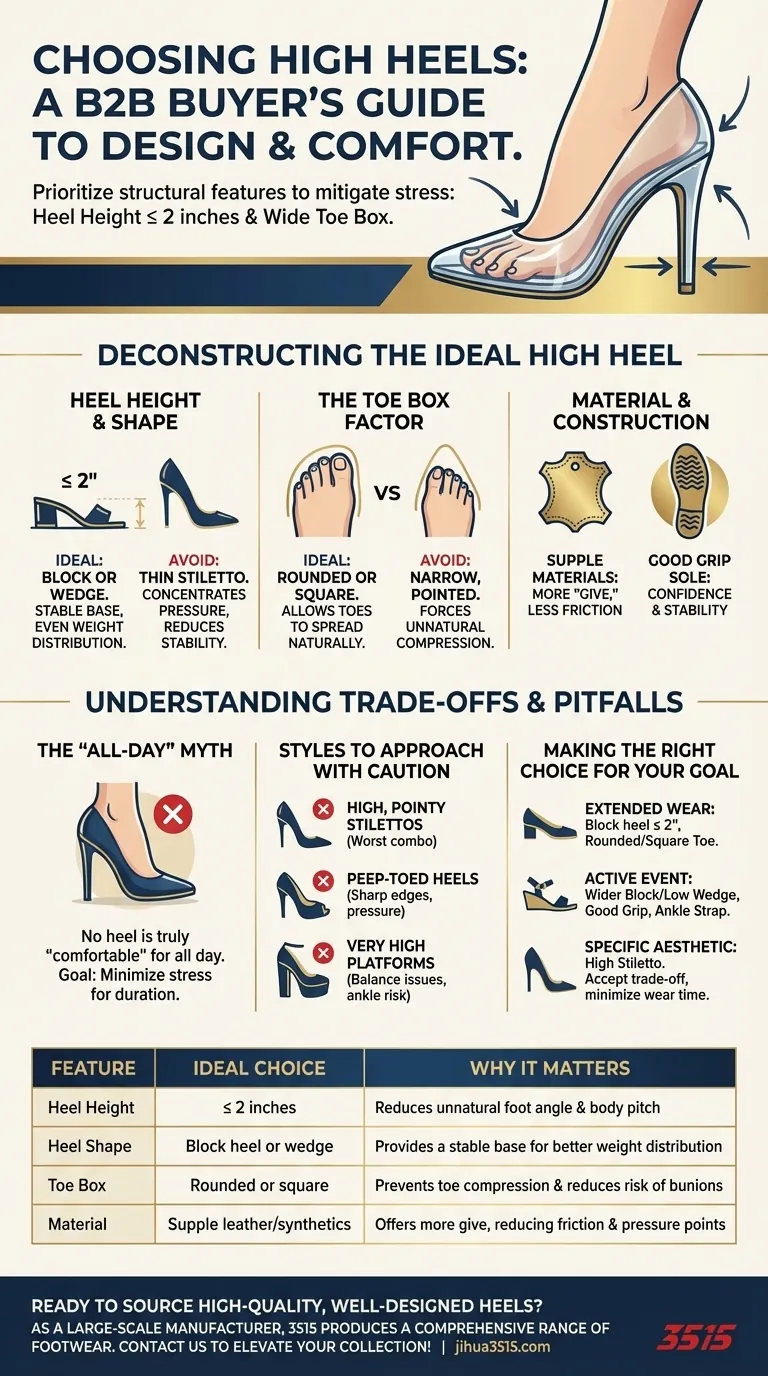
To choose a better high heel, you must prioritize two structural features above all else: a heel height of two inches or less and a wide, accommodating toe box. These elements are most critical because they directly reduce the unnatural angle of your foot and prevent the painful compression of your toes, addressing the primary sources of high-heel-related stress.
The challenge isn't finding a "comfortable" high heel, as all heels place stress on the body. The real goal is to understand the inherent trade-offs and select a shoe whose design and material best match the specific demands of your intended activity and duration of wear.
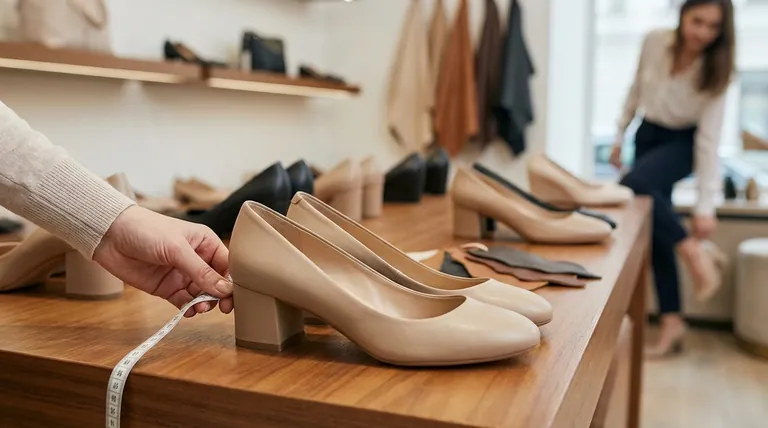
Deconstructing the Ideal High Heel
While the term "ideal" is relative, certain design principles universally contribute to a more stable and less damaging shoe. Understanding these factors empowers you to look past aesthetics and evaluate the functional reality of any heel.
The Critical Role of Heel Height and Shape
The most significant factor in a heel's impact is its height. Experts consistently recommend staying at or below two inches to minimize the severe forward pitch of your body weight.
The shape of the heel is equally important. A block heel or a thicker wedge provides a wider, more stable base, distributing your weight more evenly. A thin stiletto, by contrast, concentrates immense pressure onto a single point, requiring constant, fatiguing muscle adjustments to maintain balance.
Why the Toe Box Matters
The front of the shoe, or the toe box, dictates the position of your forefoot. A narrow, pointed toe box forces your toes into an unnatural, cramped position.
Look for a rounded or square toe box that allows your toes to lie flat and spread naturally. This simple choice can dramatically reduce the risk of nerve pain, bunions, and blisters.
Assessing Material and Construction
The quality of a shoe's materials directly impacts its comfort and longevity. Supple leather or high-quality synthetics will have more "give" than rigid, unforgiving materials, reducing friction and pressure points.
Pay attention to the sole as well. A sole with a good grip provides confidence and stability, reducing the subconscious muscle tension that comes from guarding against a slip.
Understanding the Trade-offs and Common Pitfalls
True expertise lies in acknowledging limitations. No high heel is a health product, and being aware of the inherent compromises is key to making smarter choices.
The Myth of the "All-Day" High Heel
Even a well-designed heel fundamentally alters your posture and gait. The concept of an all-day, comfortable high heel is largely a myth. The goal should be to select a shoe that causes the least amount of stress for the required duration.
Styles to Approach with Caution
Certain styles are inherently more problematic due to their design.
- High, Pointy Stilettos: This combination represents the worst of all worlds—extreme height, a narrow toe box, and a pinpoint base of support.
- Peep-Toed Heels: While stylish, the opening can create a sharp edge that puts direct pressure on your toes, leading to blisters and discomfort.
- Very High Platforms or Wedges: While they may feel more stable than a stiletto, extremely high platforms can still cause significant balance issues and increase the risk of ankle twists.
Making the Right Choice for Your Goal
Your choice of heel should be a conscious decision based on your activity. By aligning the shoe's features with your intended use, you can mitigate discomfort and risk.
- If your primary focus is minimizing pain for extended wear: Prioritize a block heel under two inches with a rounded or square toe box.
- If your primary focus is stability for an active event: Choose a wider block heel or a low wedge with good grip, and consider a design with an ankle strap for added support.
- If your primary focus is a specific aesthetic with a high stiletto: Accept the trade-off and employ strategies to minimize wear time, such as wearing other shoes for travel and changing into the heels upon arrival.
By applying these principles, you can make informed decisions that better align your footwear choices with your body's long-term well-being.
Summary Table:
| Feature | Ideal Choice | Why It Matters |
|---|---|---|
| Heel Height | ≤ 2 inches | Reduces unnatural foot angle and body pitch |
| Heel Shape | Block heel or wedge | Provides a stable base for better weight distribution |
| Toe Box | Rounded or square | Prevents toe compression and reduces risk of bunions |
| Material | Supple leather or quality synthetics | Offers more give, reducing friction and pressure points |
Ready to source high-quality, well-designed heels that prioritize comfort and style? As a large-scale manufacturer, 3515 produces a comprehensive range of footwear for distributors, brand owners, and bulk clients. Our production capabilities encompass all types of shoes and boots, ensuring you get durable, expertly crafted products tailored to your market needs. Contact us today to discuss your requirements and elevate your footwear collection!
Visual Guide
Related Products
- Durable High-Ankle Tactical Boots Wholesale Manufacturer for Custom & Bulk Orders
- Durable High-Ankle Tactical Boots for Wholesale & Custom Manufacturing
- Durable Leather High-Ankle Tactical Boots for Wholesale & Custom Manufacturing
- Wholesale Durable Camouflage Canvas Shoes with High-Traction Cleated Rubber Sole
- Comfortable Block Heel Pumps Wholesale & Custom Factory Production
People Also Ask
- What specialized protections do tactical boots offer? Maximize Endurance with High-Performance Footwear
- How do tactical boots protect against injuries? Discover the Integrated Safety System
- What are the ideal use cases for tactical boots? Empower Your Performance in Demanding Scenarios
- Can tactical boots be stylish for everyday wear? Yes, with the right styling and features.
- What are the primary benefits of wearing tactical boots for everyday use? Get All-Day Comfort & Durability


















