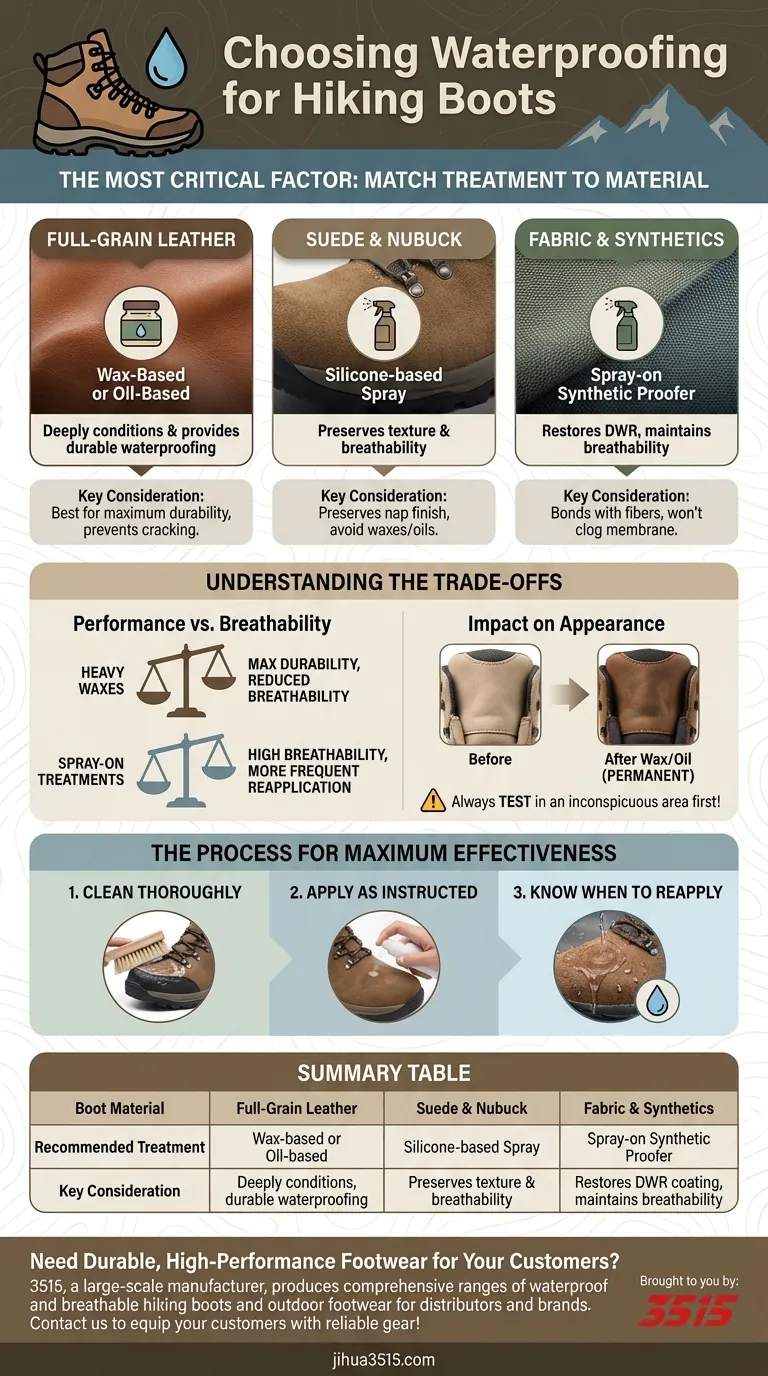
The most critical factor in choosing a waterproofing treatment is your hiking boot's material. Treatments are specifically formulated for either smooth, full-grain leather or textured materials like suede, nubuck, and fabric. Using the wrong product can be ineffective at best and permanently damage your boots at worst.
The goal isn't just to block water out, but to do so while preserving the specific material's integrity and breathability. Your choice of treatment is a commitment to the long-term health and performance of your footwear.
The First Principle: Match the Treatment to Your Boot's Material
The outer material of your boot dictates the type of waterproofing agent it can properly absorb and bond with. This is the non-negotiable starting point of your decision.
For Full-Grain Leather Boots
Full-grain leather is a durable, natural material that requires treatments that both waterproof and condition it to prevent cracking.
Wax-based or oil-based treatments are ideal for this purpose. They penetrate deep into the leather's pores, providing robust, long-lasting water repellency while keeping the material supple.
For Suede and Nubuck Boots
Suede and nubuck are leathers that have been abraded to create a soft, velvety texture known as a "nap."
Heavy waxes or oils will ruin this finish, matting it down and permanently altering the boot's appearance. Instead, use a silicone-based spray-on treatment specifically designed for these materials to maintain their texture and breathability.
For Fabric and Synthetic Boots
Boots made from nylon, polyester, or other synthetic fabrics often have a factory-applied Durable Water Repellent (DWR) coating that wears off over time.
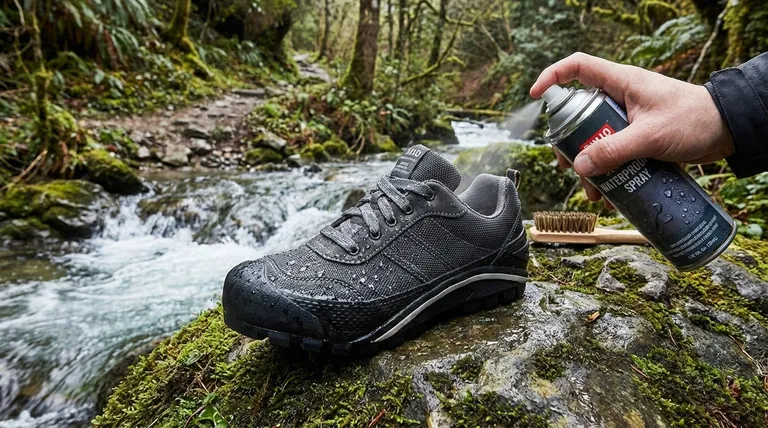
These boots require a spray-on synthetic proofer. These products are formulated to bond with fabric fibers without impeding the boot's built-in waterproof membrane (like GORE-TEX), ensuring breathability is maintained.
Understanding the Trade-offs
Selecting a treatment involves balancing performance with other factors. Being aware of the potential downsides is crucial for making an informed choice.
Performance vs. Breathability
Heavier wax-based products offer the most durable waterproofing but can slightly reduce the leather's natural breathability.
Spray-on treatments are highly breathable but may require more frequent reapplication to maintain peak performance, especially in high-wear areas.
Impact on Appearance
Waterproofing treatments, particularly waxes and oils, can darken the color of leather. This effect is often permanent.
Always test any product on a small, inconspicuous area of the boot first, like the inner side of the tongue, to see how it affects the color and texture before treating the entire boot.
The Process for Maximum Effectiveness
The best treatment in the world will fail if applied improperly. The preparation is just as important as the product itself.
Step 1: Clean Your Boots Thoroughly
Always start with clean, dry boots. Remove laces and use a brush and water to scrub away all mud and debris, as dirt can prevent the treatment from absorbing evenly.
Step 2: Apply the Treatment as Instructed
Follow the product's specific instructions. Some treatments are applied to damp leather, while others require a completely dry surface. Apply the product evenly across the entire boot, paying special attention to seams.
Step 3: Know When to Reapply
The clear sign that your boots need reproofing is when water stops beading up and rolling off the surface. If the outer material darkens and absorbs water (a phenomenon called "wetting out"), it is time to reapply.
Making the Right Choice for Your Boots
Your boot material is the primary guide, but your specific goals help finalize the decision.
- If your primary focus is maximum durability for full-grain leather: Choose a high-quality wax-based treatment to deeply condition and provide the longest-lasting protection.
- If your primary focus is preserving the look of suede or nubuck: Use only a dedicated spray-on treatment designed for textured leathers to avoid damaging the nap.
- If your primary focus is maintaining breathability in fabric or synthetic boots: Select a modern, spray-on polymer or silicone-based proofer that restores water repellency without clogging the material's pores.
Ultimately, proper boot care is an investment in keeping your feet dry and your gear performing for years to come.
Summary Table:
| Boot Material | Recommended Treatment | Key Consideration |
|---|---|---|
| Full-Grain Leather | Wax-based or oil-based | Deeply conditions and provides durable waterproofing |
| Suede & Nubuck | Silicone-based spray | Preserves texture and breathability |
| Fabric & Synthetics | Spray-on synthetic proofer | Restores DWR coating without clogging pores |
Need durable, high-performance footwear for your customers? As a large-scale manufacturer, 3515 produces a comprehensive range of hiking boots and outdoor footwear for distributors, brand owners, and bulk clients. Our production capabilities encompass all types of waterproof and breathable boots designed to meet the highest standards of comfort and protection. Let us help you equip your customers with reliable gear—contact us today to discuss your needs!
Visual Guide
Related Products
- High Performance Fire-Retardant Waterproof Safety Boots
- Premium Flame-Retardant Waterproof Safety Boots and Shoes
- Premium High-Cut Waterproof Safety Boots Manufacturing & Wholesale Solutions
- Premium Wholesale Waterproof Safety Boots High Performance Protection for Industrial Markets
- Wholesale Waterproof Tactical Boots Custom Suede & High-Traction Soles
People Also Ask
- Why are waterproof safety boots recommended for certain work environments? Essential Protection for Wet & Hazardous Jobs
- What roles do 3D vision systems and industrial robots play in the manufacturing of fire safety boots? Smart Automation
- What are the drawbacks of waterproof boots? The Breathability vs. Protection Trade-Off
- How can you ensure your feet stay dry during winter walks? A Two-Part Defense System for Total Comfort
- What should you look for to ensure boots are fully waterproof? The Essential 2-Part System