
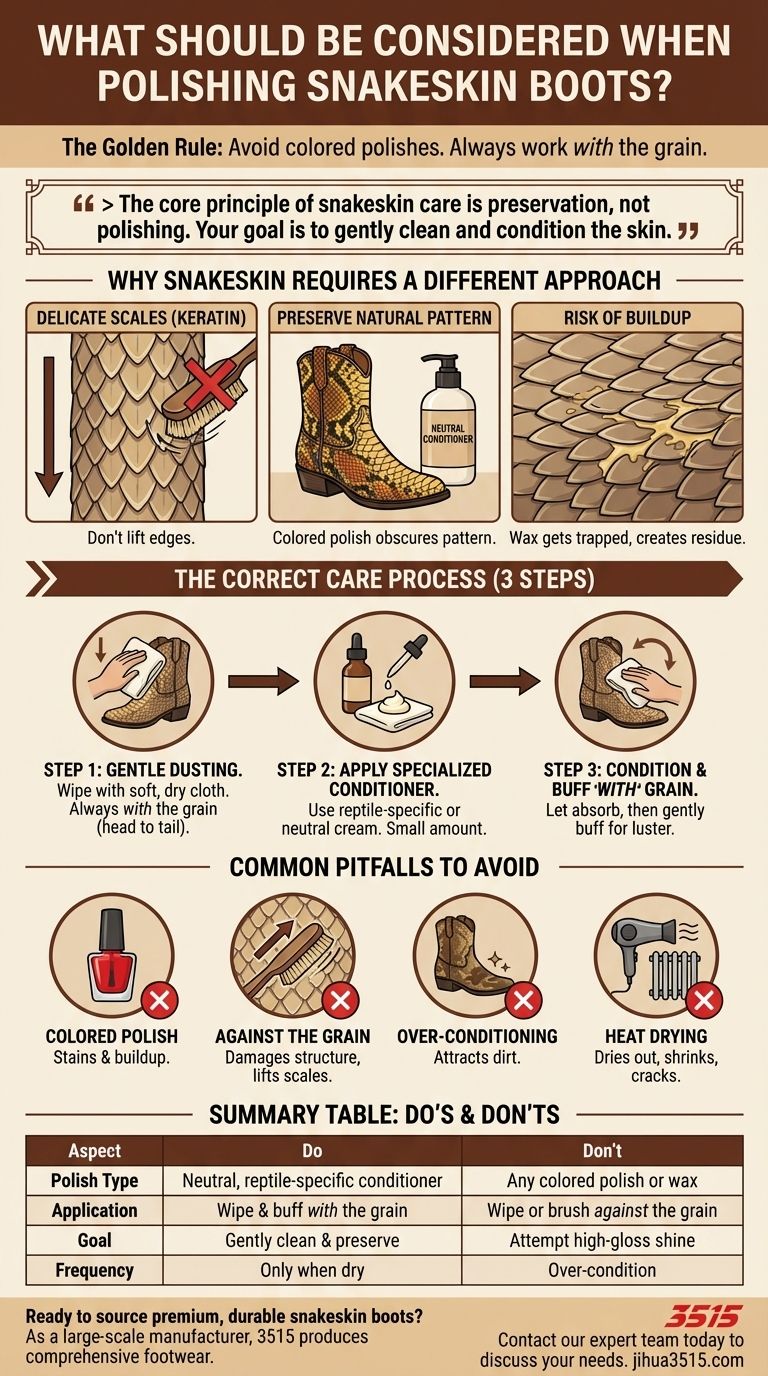
When polishing snakeskin boots, the most critical rule is to avoid colored polishes entirely and to always work with the grain of the scales, never against them. Unlike standard leather, snakeskin is a delicate material composed of individual scales, and traditional care methods can cause irreversible damage, discoloration, and buildup.
The core principle of snakeskin care is preservation, not polishing. Your goal is to gently clean and condition the skin to maintain its natural pattern and prevent the scales from drying out or lifting.
Why Snakeskin Requires a Different Approach
Understanding the unique structure of snakeskin is the key to its proper care. It is fundamentally different from a uniform material like cowhide.
The Delicate Nature of Scales
Each scale is an individual, overlapping piece of keratin. Wiping or brushing against the grain can lift the edges of these scales, causing them to bend, flake, or even break off over time.
Preserving the Natural Pattern
The value and beauty of snakeskin lie in its intricate, natural coloration and pattern. Colored polishes and heavy waxes will obscure this pattern, build up unevenly between the scales, and ruin the boot's unique aesthetic.
The Risk of Buildup
Standard shoe polish is designed to fill in the pores of smooth leather. On snakeskin, this wax gets trapped under the edges of the scales, creating a caked, unnatural look that is difficult to remove.
The Correct Care Process for Snakeskin
Follow this simple, three-step process to clean and condition your boots safely. The key is a gentle touch and the right products.
Step 1: Gentle Dusting and Cleaning
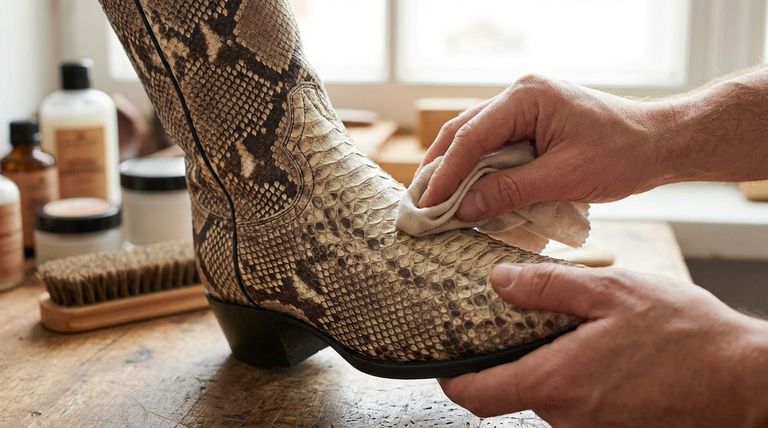
Before applying any product, use a soft, dry cloth to gently wipe the boots down. Always move in the same direction as the scales, from head to tail, to remove any surface dust or debris.
Step 2: Apply a Specialized Conditioner
Use a conditioner made specifically for reptile or exotic leathers. If one isn't available, a high-quality, neutral-colored leather conditioning cream is the next best choice. Apply a very small amount to a clean, soft cloth.
Step 3: Condition and Buff With the Grain
Gently rub the conditioner onto the boots, always following the direction of the scales. Allow the conditioner to absorb for about 15-20 minutes, then take another clean, soft cloth and lightly buff the boots (again, with the grain) to bring out a soft, natural luster.
Common Pitfalls to Avoid
Mistakes with snakeskin are often difficult or impossible to reverse. Avoiding these common errors is essential for protecting your investment.
Using Any Colored Polish
This is the most critical mistake. It will stain the lighter parts of the pattern and create a thick, unsightly residue under the scales. Stick to neutral or reptile-specific products only.
Wiping or Brushing Against the Grain
This action directly damages the structure of the skin. It will lift the scales, making them prone to catching on things and breaking off, which permanently mars the finish.
Over-Conditioning
Applying too much conditioner or doing it too frequently can leave the boots feeling greasy and can actually attract more dirt. Condition them only when they begin to look or feel dry.
Using Heat to Dry
If your boots get wet, let them air dry naturally away from direct sunlight or heat sources. Using a hairdryer or placing them near a radiator can cause the delicate skin to dry out, shrink, and crack.
Making the Right Choice for Your Goal
Proper care extends the life and beauty of your boots. Tailor your approach to the immediate need.
- If your primary focus is routine maintenance: Gently wipe with a dry cloth after each wear and use a specialized conditioner only once every few months or when the skin appears dry.
- If your primary focus is restoring a dull appearance: A proper conditioning and gentle buffing (always with the grain) is all that's needed to restore the natural sheen.
- If your primary focus is dealing with a stain or deep scuff: Do not experiment with harsh cleaners. Take the boots to a professional cobbler who has experience with exotic leathers.
Ultimately, treating snakeskin with a light and careful touch will preserve its unique character for years to come.
Summary Table:
| Aspect | Do | Don't |
|---|---|---|
| Polish Type | Use neutral, reptile-specific conditioner. | Use any colored polish or wax. |
| Application | Wipe and buff with the grain of the scales. | Wipe or brush against the grain. |
| Goal | Gently clean and condition to preserve the skin. | Attempt to build a high-gloss shine. |
| Frequency | Condition only when the skin looks/feels dry. | Over-condition, which attracts dirt. |
Ready to source premium, durable snakeskin boots that are built to last with proper care?
As a large-scale manufacturer, 3515 produces a comprehensive range of footwear for distributors, brand owners, and bulk clients. Our production capabilities encompass all types of shoes and boots, including expertly crafted exotic leather styles. We ensure quality materials and construction from the start, making long-term care and preservation easier.
Contact our expert team today to discuss your footwear manufacturing needs and discover how we can add value to your product line.
Visual Guide
Related Products
- Durable Leather Tactical Boots Wholesale & Custom Manufacturing for Brands
- Durable Leather High-Ankle Tactical Boots for Wholesale & Custom Manufacturing
- High-Traction Suede Tactical Boots Wholesale & Custom Manufacturing
- Durable High-Ankle Tactical Boots Wholesale Manufacturer for Custom & Bulk Orders
- Factory Direct Wholesale Rain Boots Durable Waterproof & Fully Customizable
People Also Ask
- What specialized protections do tactical boots offer? Maximize Endurance with High-Performance Footwear
- What features should law enforcement officers look for in tactical boots? Essential Guide for Safety & Performance
- Importance of Professional Tactical Boots in Loess Gully Regions: Ensure Safety and Precision for Field Monitoring
- What is rucking, and why are tactical boots suitable for it? Discover the Ultimate Footwear for Heavy Loads
- What makes the traction of tactical boots superior? Unlock the Science of Unbeatable Grip
















