To choose the right medical boot, you must go beyond a simple size match. The correct choice depends on three core factors: the specific nature of your injury, the structural integrity and fit of the boot itself, and the demands of your daily environment. These elements work together to ensure the device provides protection while promoting proper healing.
The most effective medical boot is not simply the most expensive or feature-rich option. It is the one that precisely matches your medical prescription, offers uncompromising stability for your specific injury, and integrates safely into your daily life.
The Foundation: Medical Requirements and Fit
Before considering any other feature, the boot must satisfy its primary medical purpose. This is the non-negotiable starting point.
Adhering to Your Prescription
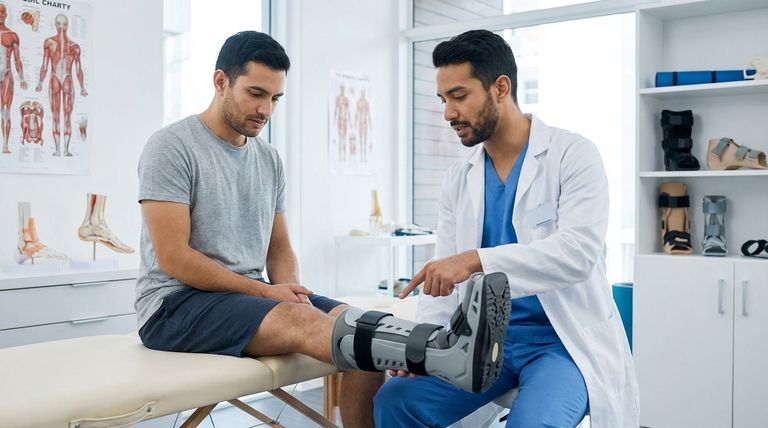
A medical boot is a prescribed medical device. Your doctor or physical therapist will specify the type of boot needed—such as a high-top or low-top walker, or one with specific joint articulation—based on your diagnosis. Deviating from this prescription can compromise your recovery.
The Critical Importance of Sizing
Proper fit is paramount for both effectiveness and comfort. The boot should be snug enough to prevent your foot from shifting, which could re-injure the area, but not so tight that it restricts blood flow. There should be no significant slipping at the heel.
Support and Immobilization
The primary function of most medical boots is to immobilize the foot and ankle. The boot's structure, from the rigidity of its uprights to the security of its straps, must provide the level of support required for your specific condition, whether it's a fracture, tendon injury, or severe sprain.
Aligning the Boot with Your Daily Environment
Once medical needs are met, you must consider how the boot will function in your day-to-day life. A boot that is unsafe or impractical for your environment is the wrong boot.
Traction and Slip Resistance
Preventing a fall is critical during recovery. A high-quality medical boot will have a slip-resistant outsole with excellent traction to provide a secure footing on various surfaces, from tile floors to outdoor pavement.
Durability and Materials
The boot will be your constant companion for weeks or months. It needs to be made from durable materials like synthetics or supportive neoprene that can withstand daily use without degrading.
Weather and Water Resistance
If you need to navigate wet or cold conditions, consider a boot with some degree of water resistance. This helps keep your foot and any underlying dressings dry, which is essential for hygiene and preventing complications.
Key Factors for Comfort and Healing
Comfort is not a luxury; it directly impacts your ability to wear the device as prescribed. Key features facilitate both comfort and a healthy healing environment.
Weight and Mobility
A lighter boot reduces fatigue and makes it easier to move around. However, this must be balanced with the need for structural support. An overly heavy boot can feel cumbersome and may alter your gait significantly.
Breathability and Hygiene
A healing foot needs a clean environment. Look for boots with breathable liners that help manage moisture and heat. The liner should ideally be removable and washable to prevent the buildup of bacteria and reduce the risk of infection.
Cushioning and Ergonomic Design
A well-cushioned insole absorbs shock and reduces pressure on the foot. Many boots feature a "rocker" sole, an ergonomically curved design that helps you maintain a more natural walking motion, which can reduce strain on your other leg and your back.
Understanding the Inherent Trade-offs
Selecting a medical boot involves balancing competing factors. Understanding these compromises is key to making an informed decision.
Protection vs. Mobility
The most protective and rigid boots offer the highest degree of immobilization. However, they are often heavier and more restrictive. A less severe injury might allow for a lighter, more flexible boot that permits greater mobility.
Water-Resistance vs. Breathability
Materials that are highly water-resistant are often less breathable. This can trap moisture and heat, which may not be ideal for all-day wear or for patients with wound-care needs. You must prioritize based on your climate and condition.
The Myth of a "Break-In" Period
Unlike a standard work or hiking boot, a medical boot should not require a "break-in" period. It is a medical device that must fit correctly and feel acceptably comfortable from the first moment you put it on. If it causes significant pain or pressure points, it is not the right fit.
Making the Right Choice for Your Recovery
Your selection should be a deliberate process guided by your specific healing journey.
- If your primary focus is maximum immobilization (e.g., severe fracture): Prioritize the rigid, high-top boot specifically prescribed by your doctor over lightweight flexibility.
- If your primary focus is moderate, weight-bearing activity (e.g., minor sprain): Look for a balance of structural support, lighter weight, and a rocker-bottom sole to aid in a more natural gait.
- If your primary focus is protecting a wound (e.g., post-surgical site): Emphasize breathability, a washable liner, and a fit that avoids direct pressure on the sensitive area.
Choosing the correct medical boot is an active step in taking control of your recovery process.
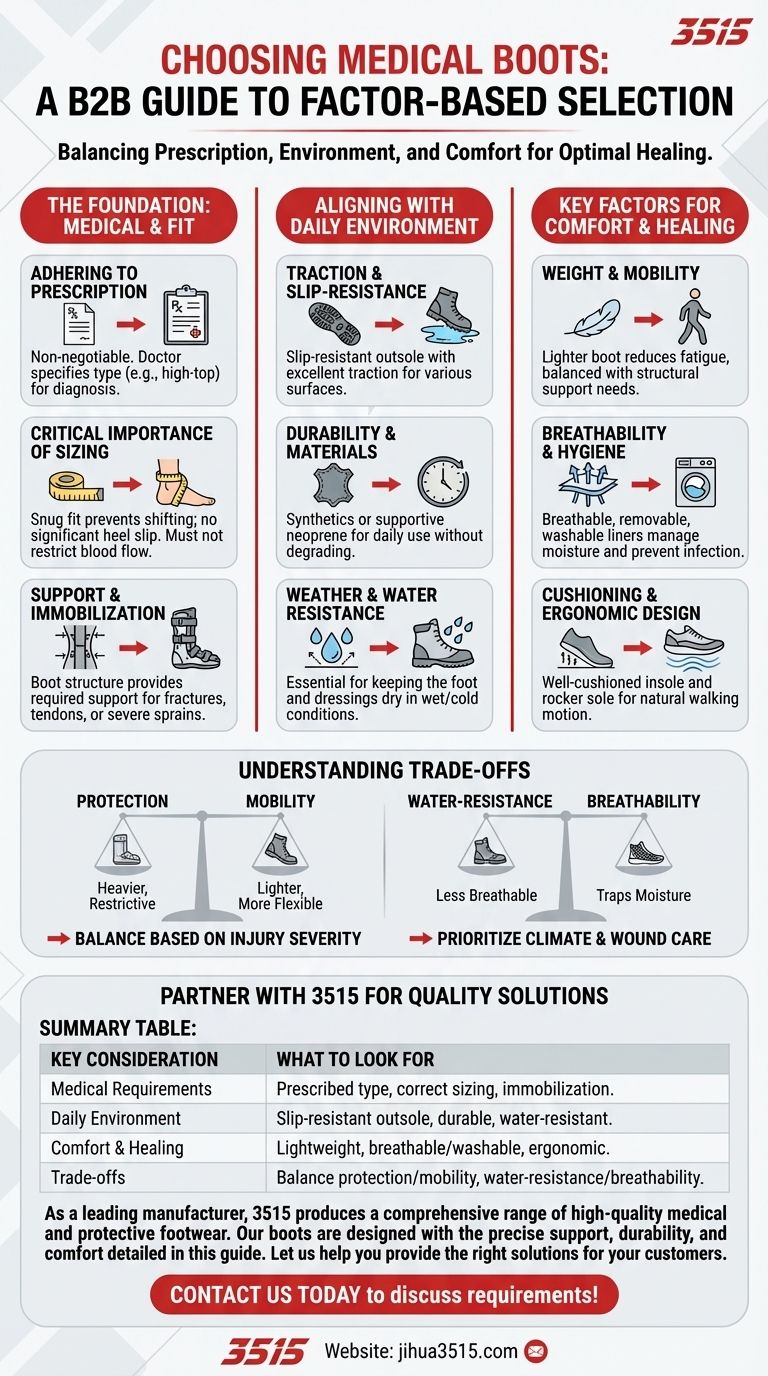
Summary Table:
| Key Consideration | What to Look For |
|---|---|
| Medical Requirements | Prescribed type (e.g., high-top), correct sizing, and immobilization level. |
| Daily Environment | Slip-resistant outsole, durable materials, and water resistance if needed. |
| Comfort & Healing | Lightweight design, breathable/washable liner, and ergonomic cushioning. |
| Trade-offs | Balance protection vs. mobility, and water-resistance vs. breathability. |
As a leading manufacturer, 3515 produces a comprehensive range of high-quality medical and protective footwear for distributors, brand owners, and bulk clients. Our boots are designed with the precise support, durability, and comfort detailed in this guide. Let us help you provide the right solutions for your customers' recovery needs. Contact us today to discuss your requirements!
Visual Guide
Related Products
- Durable Military Combat Boots with Water Drainage for Wholesale & OEM
- High-Traction Suede Tactical Boots Wholesale & Custom Manufacturing
- Wholesale Waterproof Tactical Boots Custom Suede & High-Traction Soles
- Durable High-Ankle Tactical Boots for Wholesale & Custom Manufacturing
- Wholesale Safety Boots Manufacturer for Custom & Private Label Orders
People Also Ask
- Why must gait validation for military applications be conducted in combat boots? Ensure Data Accuracy for Soldiers
- What are the common types of combat boots? Find the Right Boot for Your Mission
- What factors should be considered when choosing military boots for hiking? Durability vs. Weight for Your Terrain
- What are the key considerations when choosing military boots? Prioritize Compliance, Environment & Fit
- How should the midfoot and heel fit in military boots? Achieve a Snug, Secure Fit for Blister Prevention