
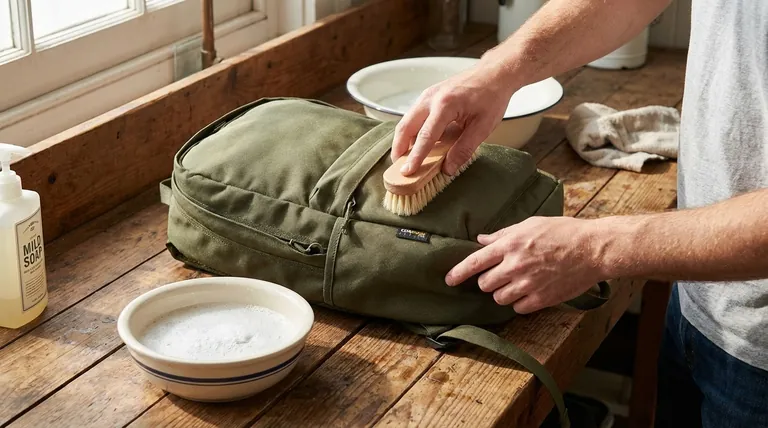
To clean Cordura fabric effectively, use a solution of mild soap and warm water. Apply it with a soft brush or cloth, scrub lightly, and rinse the item thoroughly to remove all soap residue before allowing it to air dry.
The key to preserving Cordura's durability is gentle care. The fabric's strength comes from its unique nylon fiber construction, which can be compromised by harsh chemicals, high heat, and abrasive scrubbing. A simple, low-impact cleaning process is the best way to protect your investment.
The Essential Cleaning Protocol
Proper cleaning is less about aggressive scrubbing and more about using the right materials to lift dirt without damaging the fabric's integrity.
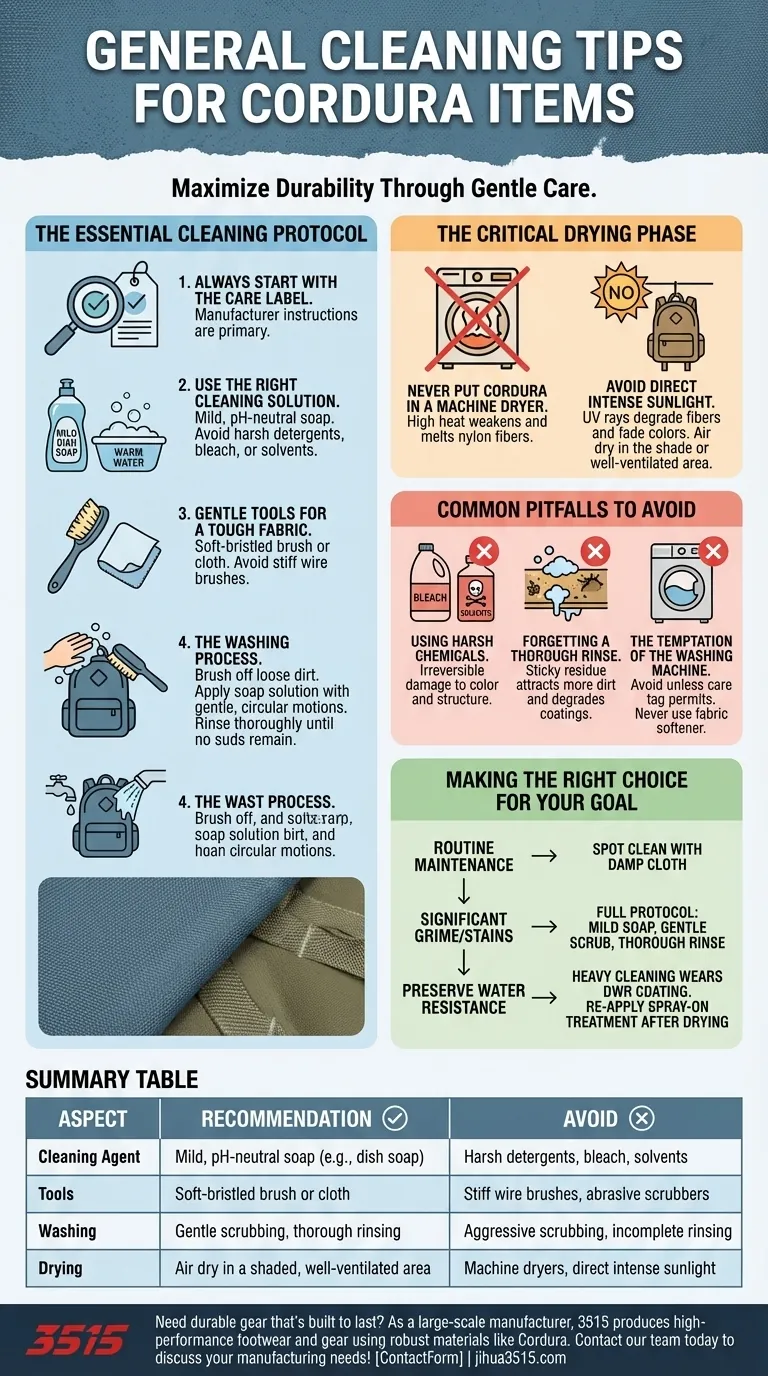
Always Start with the Care Label
Before you do anything else, check the item's care label. The manufacturer's instructions are your primary guide, as they account for other materials like zippers, liners, or padding that may have different cleaning requirements.
The Right Cleaning Solution
Your ideal cleaning agent is a mild, pH-neutral soap. A simple solution of dish soap and warm water is perfect. Avoid using harsh detergents, bleach, or solvents, as these can break down the fabric's fibers and strip away any factory-applied water-repellent coatings.
Gentle Tools for a Tough Fabric
Use a soft-bristled brush or a simple cloth. While Cordura is exceptionally resistant to abrasion, a stiff wire brush can still fray the surface over time, compromising its appearance and performance. The goal is to agitate the dirt, not wear down the fabric.
The Washing Process
First, brush off any loose dirt or debris. Then, apply your soap solution and work it in with your soft brush using gentle, circular motions. Once clean, rinse the item completely with clean water until no soap suds remain.
The Critical Drying Phase
How you dry your Cordura item is just as important as how you wash it. Improper drying is the fastest way to cause permanent damage.
Why Air Drying is Non-Negotiable
Never put Cordura in a machine dryer. The high heat can weaken, shrink, or even melt the nylon fibers that give the fabric its signature strength and structure.
The Danger of Direct Sunlight
While you should air dry your gear, avoid placing it in direct, intense sunlight for prolonged periods. The sun's UV rays can degrade the fibers over time, causing them to become brittle and leading to color fading. Hang the item in a well-ventilated area, preferably in the shade or indoors.
Common Pitfalls to Avoid
Steering clear of these common mistakes will ensure your gear lasts for years.
Using Harsh Chemicals
The most common mistake is reaching for a powerful household cleaner. Bleach and other aggressive chemicals will cause irreversible damage to the fabric's color and structural integrity. Stick to mild soap.
Forgetting a Thorough Rinse
Failing to rinse all the soap out is a subtle but significant error. Leftover soap residue becomes sticky when dry, attracting even more dirt and grime than before and potentially degrading any water-repellent finish.
The Temptation of the Washing Machine
Unless the care tag explicitly allows it, avoid the washing machine. If you must use one, select a gentle cycle with cold water. Never use fabric softener, as it can clog the fabric's weave and impair its performance characteristics.
Making the Right Choice for Your Goal
Your cleaning approach can be tailored to the situation.
- If your primary focus is routine maintenance: Spot cleaning minor dirt with a damp cloth is often all that is required.
- If you are dealing with significant grime or stains: Follow the full protocol of mild soap, gentle scrubbing, and a thorough rinse.
- If your goal is to preserve water resistance: Be aware that heavy cleaning can wear down the DWR (Durable Water Repellent) coating, and you may need to re-apply a spray-on treatment after the item is fully dry.
By treating it with care, you ensure your Cordura gear continues to deliver the rugged performance it was designed for.
Summary Table:
| Aspect | Recommendation | Avoid |
|---|---|---|
| Cleaning Agent | Mild, pH-neutral soap (e.g., dish soap) | Harsh detergents, bleach, solvents |
| Tools | Soft-bristled brush or cloth | Stiff wire brushes, abrasive scrubbers |
| Washing | Gentle scrubbing, thorough rinsing | Aggressive scrubbing, incomplete rinsing |
| Drying | Air dry in a shaded, well-ventilated area | Machine dryers, direct intense sunlight |
Need durable gear that's built to last? As a large-scale manufacturer, 3515 produces a comprehensive range of high-performance footwear and gear using robust materials like Cordura for distributors, brand owners, and bulk clients. Our production capabilities encompass all types of shoes and boots designed to withstand tough conditions. Let us help you equip your customers with reliable products. Contact our team today to discuss your manufacturing needs!
Visual Guide
Related Products
People Also Ask
- What waterproof technology is used in tactical boots? Unlock All-Weather Performance & Protection
- What are the advantages and disadvantages of waterproof tactical boots? A Guide to the Key Trade-Offs
- What is the significance of waterproof functionality in tactical boots? Essential for Health & Performance
- What is the role of professional 3D medical imaging software in optimizing tactical boot design and performance?
- What features enhance breathability and comfort in tactical boots? A Guide to Superior Footwear Performance
