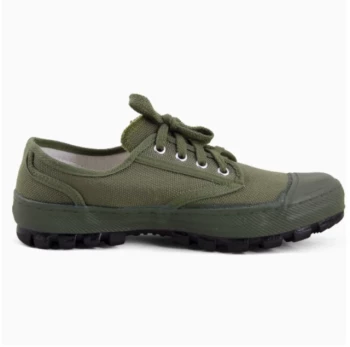
Professional anti-slip outsole technology fundamentally alters the physics of foot-to-ground contact to mitigate fall risks. By employing high-friction materials and specialized groove engineering, these outsoles create a stable platform that actively resists the insufficient friction responsible for slips in wet or uneven environments.
The primary role of this technology is to re-establish surface contact where environmental conditions have compromised it. By combining specific rubber formulations with deep drainage channels, these outsoles effectively displace fluids to prevent the hydroplaning effect common in high-risk fall scenarios.
The Mechanics of Friction and Stability
Material Composition and Grip
The core of this technology lies in the use of high friction coefficient materials.
Manufacturers utilize specific rubber hardness formulations designed to grip rather than slide. This material science ensures that the outsole adheres more effectively to the walking surface, even when that surface is slick or polished.
Engineering for Fluid Displacement
Material alone is insufficient if a layer of water or mud separates the shoe from the ground.
Professional outsoles feature deep drainage and mud-clearing grooves. These channels act similarly to tire treads, directing water and debris away from the pressure points of the foot to maintain direct contact with the ground.
Addressing High-Risk Zones
Fall risk studies frequently identify specific environments—such as kitchens, bathrooms, and wet outdoor areas—as primary danger zones.
Anti-slip technology directly addresses the insufficient friction inherent in these settings. By establishing a stable contact surface, the outsole compensates for the environmental hazards found in these liquid-prone areas.
Understanding the Limitations
The Necessity of Tread Maintenance
The effectiveness of these outsoles is entirely dependent on the depth of the grooves and the condition of the rubber.
As the outsole wears down, the drainage capabilities diminish. A worn anti-slip shoe loses its ability to clear mud or water, reverting the risk levels back to that of a standard shoe.
Environmental Specificity
While these outsoles improve traction, they rely on the interaction between the specific rubber formulation and the ground.
Users must recognize that "anti-slip" does not mean "slip-proof." Extremely viscous substances or overwhelming volumes of mud can still clog the clearing grooves, momentarily reducing the friction coefficient.
Making the Right Choice for Your Environment
If your primary focus is indoor wet areas (Kitchens/Bathrooms): Prioritize outsoles with specific rubber hardness formulations designed to maximize the friction coefficient on smooth, wet tiles.
If your primary focus is outdoor uneven terrain: Select outsoles featuring aggressive, deep mud-clearing grooves to ensure the tread remains unclogged and in contact with the ground.
Success in fall prevention relies on pairing the right outsole engineering with the specific hazards of your environment.
Summary Table:
| Feature | Technical Mechanism | Benefit |
|---|---|---|
| Material Science | High friction coefficient rubber | Prevents sliding on polished or wet surfaces |
| Groove Engineering | Deep drainage & mud-clearing channels | Displaces fluids to prevent hydroplaning |
| Surface Contact | Active pressure point stability | Re-establishes grip in high-risk environmental zones |
| Maintenance | Tread depth monitoring | Ensures long-term drainage and slip-resistance efficacy |
Partner with 3515 for High-Performance Safety Footwear
As a premier large-scale manufacturer serving global distributors and brand owners, 3515 delivers the engineering precision required to combat workplace fall risks. Our professional anti-slip technology is a cornerstone of our flagship Safety Shoes series, designed to exceed industry standards for grip and stability.
From tactical boots and training sneakers to dress and formal shoes, we provide comprehensive production capabilities tailored to your bulk requirements. Enhance your product lineup with footwear that prioritizes safety and durability.
Contact 3515 Today to Discuss Your Bulk Requirements
References
- Charupa Lektip, Jiraphat Nawarat. Construction of the Short-Form Thai-Home Fall Hazard Assessment Tool (Thai-HFHAT-SF) and Testing Its Validity and Reliability in the Elderly. DOI: 10.3390/ijerph19095187
This article is also based on technical information from 3515 Knowledge Base .
Related Products
- Advanced KPU Athletic Safety Shoe with Steel Toe Cap Anti-Slip Rotary Lacing System
- Premium Suede Sport Safety Shoes for Wholesale & Bulk Orders
- Durable Goodyear Welt Leather Work Boots for Wholesale & Private Label
- Durable Leather Moc Toe Work Boots for Wholesale & Custom Manufacturing
- Factory-Direct Wholesale Canvas Boots with High-Traction Rubber Soles
People Also Ask
- What are the key differences between steel toe and composite toe caps? Choose the Right Safety for Your Job
- What impact do steel toe caps have on toe skin health? Prevent Friction and Pressure in Your Safety Shoes
- What are the primary protective functions of safety shoes with steel toes in the automotive repair industry?
- What type of safety shoe is recommended for workers exposed to heavy machinery? Steel Toe Boots for Ultimate Protection
- How does defining specific friction interface models in FEA assist in predicting safety shoe toe cap failure modes?