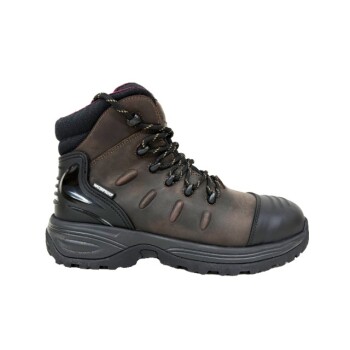
The mechanical body shaker serves as the primary actuation engine within the performance evaluation system for industrial footwear. Its function is to convert electrical signals into precise physical mechanical displacement and vibrations. By residing beneath a vibration platform, the shaker directly excites the piezoelectric transducers embedded in the footwear to mimic the conditions of an industrial floor.
The shaker provides a controlled method to simulate the subtle vibrations of operating machinery. Its central purpose is to validate that the footwear’s sensors can successfully convert this ambient mechanical energy into sufficient electricity to power internal electronics.
How the Shaker Drives the Evaluation
Converting Signal to Motion
The mechanical body shaker acts as an electro-mechanical transducer. It receives an electrical input signal and translates it into physical movement.
Direct Transducer Excitation
The device is installed directly underneath a vibration platform. This positioning allows the shaker to transfer kinetic energy efficiently through the platform and into the piezoelectric elements integrated into the boot.
Simulating Industrial Environments
The shaker does not just shake randomly; it is tuned to replicate specific conditions. It simulates the subtle, continuous vibrations generated by heavy operating machinery found in industrial settings.
Validating Energy Harvesting Capabilities
Testing Conversion Efficiency
The core metric for piezoelectric sensors is their ability to change mechanical stress into electrical charge. The shaker provides the consistent mechanical input required to measure this conversion efficiency accurately.
Confirming Power Sufficiency
The ultimate goal of the system is to power the electronics housed within the industrial boots. The shaker test confirms whether the harvested energy is sufficient to operate these onboard systems reliably.
Understanding the Trade-offs
Simulation vs. Real-World Complexity
While a mechanical shaker offers high precision and repeatability, it remains a simulation. It isolates specific vibration frequencies but may not perfectly replicate the chaotic, multi-directional vibration patterns found on a complex factory floor.
Coupling Efficiency
The accuracy of the test depends heavily on the interface between the shaker, the platform, and the footwear. Any mechanical play or poor contact in this setup can dampen the vibration, leading to understated energy harvesting data.
Making the Right Choice for Your Goal
To ensure your piezoelectric footwear is ready for deployment, use the shaker data to guide your design decisions.
- If your primary focus is Sensor Sensitivity: Calibrate the shaker to deliver very low-amplitude vibrations to verify the transducers can harvest energy even when machinery is idling.
- If your primary focus is Power Management: Use the shaker to determine the continuous vibration duration required to fully charge the boot's onboard energy storage.
The mechanical body shaker serves as the critical bridge between theoretical sensor design and practical, self-powered industrial safety wear.
Summary Table:
| Component/Metric | Role in Evaluation System | Key Benefit |
|---|---|---|
| Actuation Engine | Converts electrical signals into mechanical motion | Provides precise, repeatable vibration control |
| Vibration Platform | Transfers kinetic energy to footwear sensors | Mimics stable industrial floor conditions |
| Excitation Tuning | Replicates specific machinery frequencies | Validates sensor sensitivity and efficiency |
| Power Output Test | Measures electrical charge generation | Confirms sufficiency for onboard electronics |
Power Your Distribution with Cutting-Edge Safety Footwear
As a large-scale manufacturer serving global distributors and brand owners, 3515 offers comprehensive production capabilities for all footwear types. Whether you are looking for advanced self-powered sensors or rugged durability, our flagship Safety Shoes series is engineered to meet the highest industrial standards.
Our extensive portfolio covers work and tactical boots, outdoor shoes, training shoes, and sneakers, as well as Dress & Formal shoes to meet your diverse bulk requirements. Partner with us to bring high-performance, energy-harvesting footwear to your market.
Ready to elevate your product line? Contact us today to discuss your manufacturing needs!
References
- Francesco Rigo, Alessandro Pozzebon. Piezoelectric Sensors as Energy Harvesters for Ultra Low-Power IoT Applications. DOI: 10.3390/s24082587
This article is also based on technical information from 3515 Knowledge Base .
Related Products
- Durable Leather Work Boots for Wholesale & Custom Manufacturing
- Puncture-Resistant Velcro Safety Boots for Wholesale & Custom Manufacturing
- Durable Leather Work Boots for Wholesale & Custom OEM Manufacturing
- Wholesale Customizable Safety Boots Durable & Protective Footwear Manufacturing
- Wholesale Heavy-Duty Waterproof Steel Toe Work Boots OEM Manufacturer
People Also Ask
- What is the difference between full-grain and top-grain leather? Premium Material Guide for Boot Manufacturers
- What are the common workplace hazards that can be mitigated with the right work boots? Protect Your Workforce
- What are the common foot issues workers face due to uncomfortable work boots? Prevent Pain & Deformities
- What are the advantages of leather versus synthetic work boots? A Guide to Choosing the Right Material
- What are the key components of modern work boots? Engineered for Ultimate Durability and Comfort