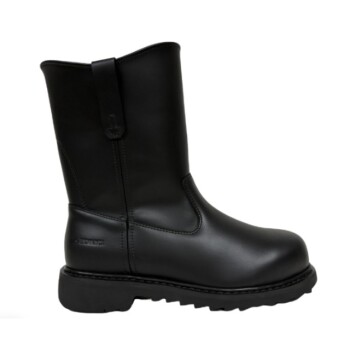
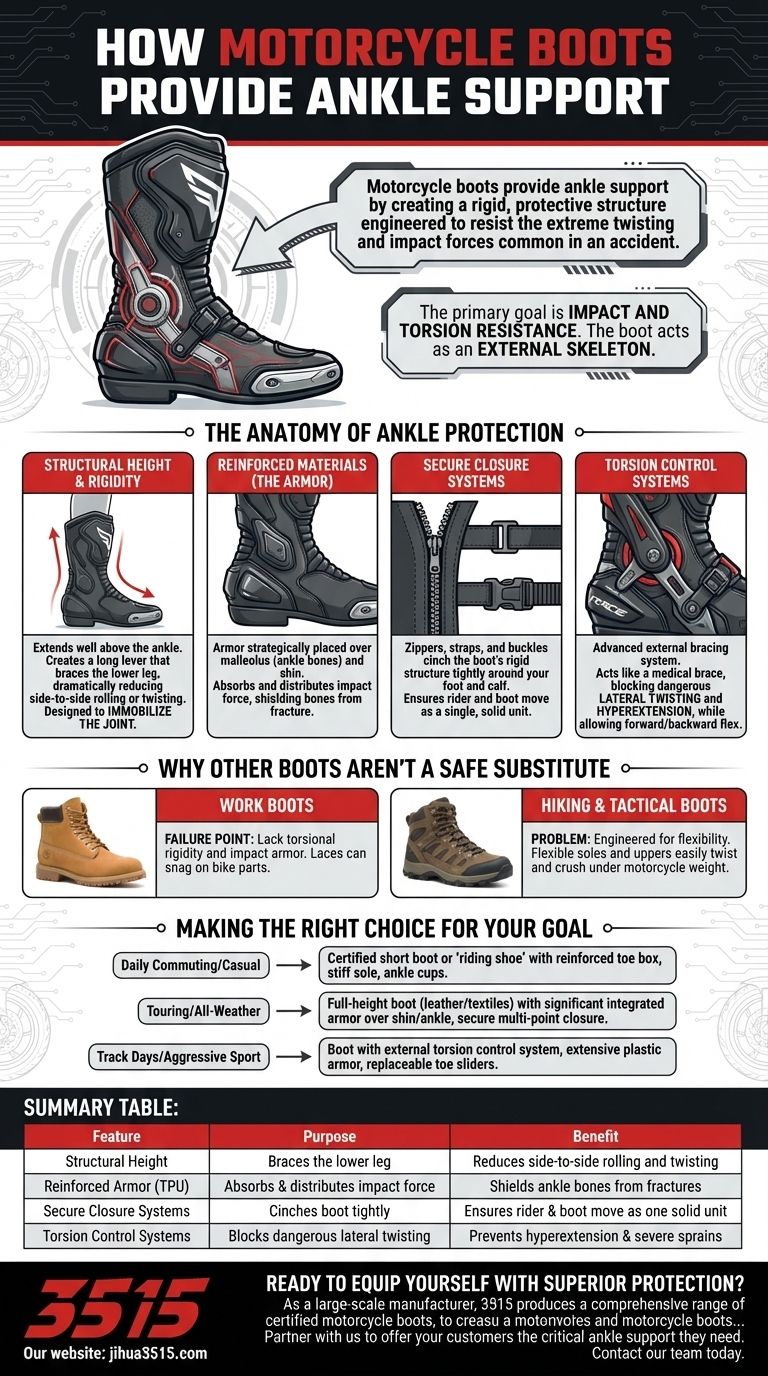
Motorcycle boots provide ankle support by creating a rigid, protective structure engineered to resist the extreme twisting and impact forces common in an accident. Unlike regular footwear, they use a combination of structural height, reinforced materials like hard plastics, and secure closure systems to immobilize the ankle joint and prevent sprains, fractures, and hyperextension.
The primary goal of a motorcycle boot's ankle support isn't comfort or flexibility—it's impact and torsion resistance. The boot acts as an external skeleton, intentionally sacrificing off-bike mobility to ensure the joint stays within its natural range of motion during a crash.
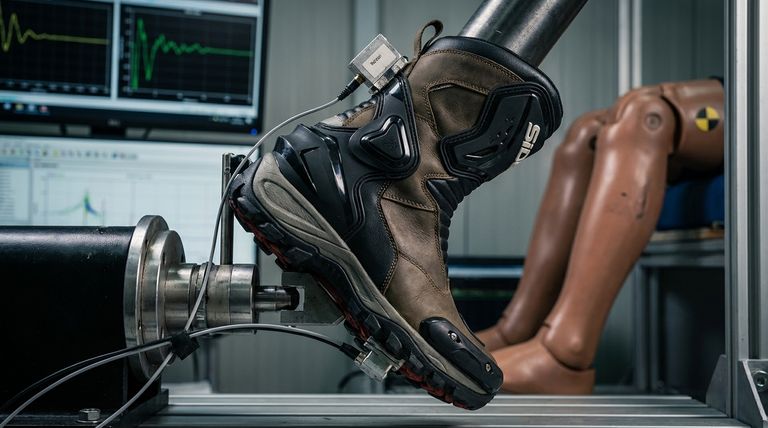
The Anatomy of Ankle Protection
A motorcycle boot is a system of components working together. Each feature is designed to counter a specific type of force that can cause severe injury during an accident.
Structural Height and Rigidity
The most fundamental feature is that the boot extends well above the ankle. This height creates a long lever that braces the lower leg, dramatically reducing the potential for side-to-side rolling or twisting.
This rigid structure is designed to immobilize the joint, preventing it from bending in unnatural ways when trapped under a sliding motorcycle or during a high-side crash.
Reinforced Materials (The Armor)
Motorcycle boots integrate "armor" directly into their construction, often using hard Thermoplastic Polyurethane (TPU) or similar plastics.
This armor is strategically placed over the vulnerable ankle bones (the malleolus), the heel, and the shin. It serves to absorb and distribute the force from a direct impact, shielding the bones from fracture.
Secure Closure Systems
A boot's support system is only effective if it is securely fastened to your leg. High-quality boots use a combination of zippers, hook-and-loop straps, and often ratcheting buckles.
These systems cinch the boot's rigid structure tightly around your foot and calf. This ensures the rider and the boot move as a single, solid unit, transferring protective duties from your ligaments to the boot's chassis.
Torsion Control Systems
More advanced race and sport-touring boots feature external bracing or "torsion control" systems. These are often articulated plastic or carbon fiber structures on the sides of the boot.
This "specialized ankle support system" acts like a medical brace. It allows for the necessary forward and backward flex for shifting and braking but physically blocks dangerous lateral twisting and hyperextension, which are common causes of the most severe ankle injuries.
Why Other Boots Aren't a Safe Substitute
While other rugged boots seem protective, they are designed for entirely different purposes and fail to protect against the specific forces of a motorcycle crash.
The Failure Point of Work Boots
Work boots are built to provide stability for walking on uneven surfaces and to protect from falling objects. They lack the torsional rigidity and impact armor needed for a sliding accident. Their laces can also easily snag on bike parts, creating a significant hazard.
The Problem with Hiking and Tactical Boots
These boots are engineered for flexibility and mobility over varied terrain. This design priority is the direct opposite of what is required for motorcycle protection. Their flexible soles and uppers will easily twist and crush under the weight of a motorcycle.
Making the Right Choice for Your Goal
Selecting the right boot means matching the level of protection to your type of riding.
- If your primary focus is daily commuting or casual riding: Look for a certified short boot or "riding shoe" that at least has a reinforced toe box, a stiff sole, and integrated, hardened cups protecting the ankle bones.
- If your primary focus is touring or all-weather riding: Prioritize a full-height boot made of leather or advanced textiles with significant integrated armor over the shin and ankle, and a secure, multi-point closure system.
- If your primary focus is track days or aggressive sport riding: Insist on a boot with an external torsion control system, extensive external plastic armor, and replaceable toe sliders.
Ultimately, the right motorcycle boot is a critical piece of safety equipment engineered specifically to protect your ankles from the unique forces of a motorcycle accident.
Summary Table:
| Feature | Purpose | Benefit |
|---|---|---|
| Structural Height | Braces the lower leg | Reduces side-to-side rolling and twisting |
| Reinforced Armor (TPU) | Absorbs and distributes impact force | Shields ankle bones from fractures |
| Secure Closure Systems | Cinches boot tightly to the leg | Ensures rider and boot move as one solid unit |
| Torsion Control Systems | Blocks dangerous lateral twisting | Prevents hyperextension and severe sprains |
Ready to Equip Yourself with Superior Protection?
As a large-scale manufacturer, 3515 produces a comprehensive range of certified motorcycle boots for distributors, brand owners, and bulk clients. Our production capabilities encompass all types of riding footwear, from durable commuter boots to advanced race boots with external torsion control systems.
We ensure every pair meets the highest standards of impact and torsion resistance. Partner with us to offer your customers the critical ankle support they need.
Contact our team today to discuss your requirements and receive a quote.
Visual Guide
Related Products
- Heavy-Duty Goodyear Welted Pull-On Safety Rigger Boot
- Wholesale Tactical Boots High-Traction & Reflective for Bulk & Brand Orders
- High Performance Fire-Retardant Waterproof Safety Boots
- Wholesale High-Traction Camo Boots - Custom Manufacturer for Brands
- Wholesale Waterproof Tactical Boots Custom Suede & High-Traction Soles
People Also Ask
- What are the key elements of quality boot construction? Ensure Longevity & Performance
- Are Goodyear welted boots worth it? The Ultimate Guide to Lifelong Footwear
- What is a Goodyear welt on a boot? The Secret to Durable, Repairable Footwear
- What makes Goodyear Welt boots suitable for harsh environments? Unmatched Durability & Repairability
- What additional high-quality materials are used in Goodyear Welt boots? A Guide to Advanced Components