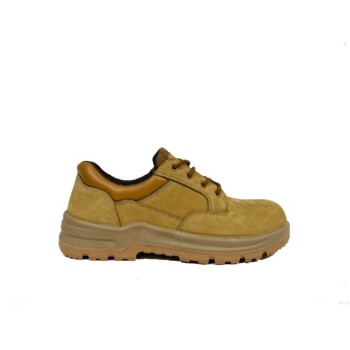
Professional anti-slip safety shoes function as the foundational physical interface between railway personnel and the hazardous track environment. They provide the essential grip and friction required to navigate uneven ballast and slopes, directly reducing slip-and-fall incidents and serving as a critical control measure within railway grid management systems.
Core Insight While often viewed merely as personal protective equipment (PPE), these shoes function as a strategic tool for dynamic risk control. By ensuring physical stability, they actively prevent the "habitual violations" caused by loss of balance or fatigue, thereby securing the integrity of the entire safety management grid.
The Physical Defense Against Complex Terrain
Mastering Grip and Friction
Railway environments are defined by instability, characterized by loose ballast, steep slopes, and complex track infrastructure.
Professional anti-slip safety shoes are engineered to provide superior friction in these specific conditions. This enhanced grip allows workers to traverse irregular surfaces without losing traction, acting as the first line of defense against gravity and terrain-based hazards.
Ensuring Stability on Slopes
The risk of falling increases significantly when workers operate on the sloped embankments common in railway grids.
Specialized footwear converts these variable surfaces into manageable terrain. By anchoring the worker effectively, the shoes ensure stability during operations, preventing the uncontrolled movements that often precede an accident.
The Link Between Stability and Compliance
Reducing Habitual Violations
A unique aspect of railway safety is the concept of "habitual violations"—unsafe behaviors that become routine often due to physical difficulty or instability.
When workers lack proper traction, they may adopt unsafe postures or shortcuts to maintain balance. By providing reliable physical protection, anti-slip shoes remove the physical struggle from the equation, directly reducing the probability of these habitual safety violations.
A Core Safeguard for Risk Control
In a grid management system, risks must be controlled dynamically as conditions change.
These shoes serve as a core safeguard for human safety. They act as a constant variable of control amidst the changing variables of weather and terrain, ensuring that the physical foundation of the workforce remains secure.
Enhancing Human Performance
Mitigating Operator Fatigue
Beyond slip prevention, the physical toll of walking on tracks affects safety.
Utilizing scientific arch support structures, professional safety shoes alleviate foot fatigue caused by prolonged standing or walking on hard, uneven surfaces. A less fatigued worker is more alert and less prone to errors.
Improving Operational Efficiency
Safety and efficiency are inextricably linked in grid management.
By incorporating special anti-slip outsoles and support features, these shoes improve operational stability. Workers can move with confidence and speed, ensuring maintenance and inspection tasks are completed efficiently without compromising safety.
Understanding the Trade-offs
The Maintenance Imperative
Anti-slip properties are not permanent; they degrade with use, particularly on abrasive railway ballast.
A common pitfall is assuming that once issued, safety shoes provide indefinite protection. Regular inspection of the outsole tread is required to ensure the "superior friction" cited in safety protocols remains effective.
Balancing Protection and Agility
While support is crucial for fatigue management, over-engineered footwear can sometimes reduce agility.
The goal is to find the balance where the shoe provides robust arch support and impact protection without becoming heavy enough to induce the very fatigue it aims to prevent.
Integrating Footwear into Safety Strategy
To maximize the effectiveness of grid management operations, safety footwear should be selected based on specific operational goals.
- If your primary focus is Immediate Physical Safety: Prioritize outsoles with deep tread patterns designed specifically for maximum friction on loose ballast and wet slopes.
- If your primary focus is Long-Term Health and Efficiency: Select models emphasizing scientific arch support to minimize fatigue during extended shifts.
- If your primary focus is Regulatory Compliance: Standardize footwear that explicitly addresses "habitual violation" triggers by stabilizing worker posture on uneven ground.
By treating professional footwear as a critical component of the risk control system rather than a simple commodity, you secure the foundation upon which safe railway operations are built.
Summary Table:
| Feature | Function in Railway Environment | Benefit to Grid Management |
|---|---|---|
| Anti-Slip Outsole | Provides superior friction on loose ballast and wet slopes | Prevents slip-and-fall accidents and loss of balance |
| Scientific Arch Support | Alleviates foot fatigue from prolonged track walking | Improves worker alertness and reduces human error |
| Structural Stability | Anchors the worker on steep embankments | Minimizes "habitual violations" caused by instability |
| Impact Protection | Shields feet from sharp ballast and track hazards | Ensures physical integrity and long-term health |
Secure Your Railway Workforce with Industry-Leading Safety Footwear
As a large-scale manufacturer serving distributors and brand owners, 3515 offers comprehensive production capabilities for all footwear types, anchored by our flagship Safety Shoes series. Our extensive portfolio covers specialized work and tactical boots, outdoor shoes, training shoes, and sneakers, as well as Dress & Formal shoes to meet diverse bulk requirements.
By partnering with 3515, you gain access to high-performance footwear engineered for the most demanding railway environments. We provide the stability your teams need to maintain grid compliance and operational efficiency.
Ready to elevate your safety standards? Contact us today to discuss your bulk manufacturing needs and how our tailored footwear solutions can protect your workforce.
References
- Huafeng Zhang, Mingyuan Ma. Grid-Based Employee Safety Behavior Risk Assessment of the Train Operation Department. DOI: 10.3390/pr10050913
This article is also based on technical information from 3515 Knowledge Base .
Related Products
- Advanced KPU Athletic Safety Shoe with Steel Toe Cap Anti-Slip Rotary Lacing System
- Premium Suede Sport Safety Shoes for Wholesale & Bulk Orders
- Heavy-Duty Waterproof Nubuck Safety Boots Safety Shoes for Bulk Supply
- Wholesale Anti-Smash & Puncture-Proof Safety Shoes Custom Manufacturing for Brands
- Wholesale Durable 6-Inch Work Boots | Custom & Private Label Manufacturer
People Also Ask
- What are the key differences between steel toe and composite toe caps? Choose the Right Safety for Your Job
- What impact do steel toe caps have on toe skin health? Prevent Friction and Pressure in Your Safety Shoes
- What are the primary protective functions of safety shoes with steel toes in the automotive repair industry?
- What type of safety shoe is recommended for workers exposed to heavy machinery? Steel Toe Boots for Ultimate Protection
- How does defining specific friction interface models in FEA assist in predicting safety shoe toe cap failure modes?