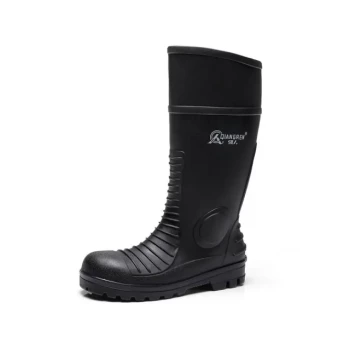
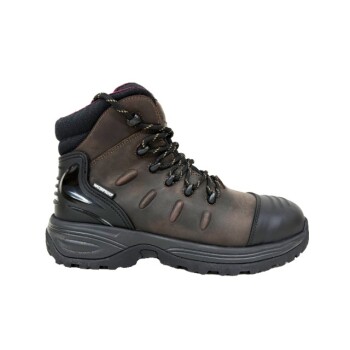
Industrial adhesives act as the physical foundation for the structural integrity of footwear. They function as critical consumables that create high-performance bonds between dissimilar materials such as leather, rubber, and synthetic fibers. By establishing a robust bonding layer, these adhesives prevent delamination and ensure the shoe retains its shape and durability throughout its lifecycle.
Industrial adhesives do not simply hold parts together; they utilize chemical reactions or physical curing to create a unified structural entity. This bonding layer is the essential backbone that allows mixed materials to function as a single, durable product.
The Mechanics of Structural Bonding
Creating a Physical Foundation
The primary role of an adhesive in footwear is to act as a load-bearing interface. It forms a strong bonding layer that sits between components.
This layer serves as the physical foundation for the shoe, ensuring that stress applied to the sole or upper is distributed evenly without causing separation.
Curing Mechanisms
To achieve this strength, industrial-grade adhesives—such as neoprene or epoxy resins—undergo specific transformation processes.
They rely on either chemical reactions or physical curing properties. These mechanisms solidify the liquid or semi-solid adhesive into a permanent, rigid, or flexible bond depending on the requirement.
Application Across Materials and Processes
Bridging Diverse Materials
Footwear manufacturing rarely involves a single material type. Adhesives are essential for joining leather, rubber, and synthetic fibers.
Because these materials have different textures and porosities, the adhesive provides the necessary chemical bridge to unite them securely.
Critical Manufacturing Stages
Adhesives are integrated into multiple phases of the production line to ensure structural continuity.
They are heavily utilized during folding, coating, and assembly. In each of these stages, the adhesive locks components in place, transforming loose parts into a structured boot or shoe.
Understanding the Constraints
Dependence on Curing Conditions
The strength of the "physical foundation" is entirely dependent on the success of the curing process.
If the chemical reaction is interrupted or the physical curing is incomplete, the structural integrity of the footwear will be compromised immediately.
Material Compatibility Risks
While adhesives like epoxy and neoprene are versatile, they are not universally interchangeable.
Using the wrong adhesive type for a specific substrate (e.g., a rigid epoxy on a flexible rubber) can lead to bond failure, regardless of the adhesive's quality.
Ensuring Long-Term Durability
To maximize the structural integrity of footwear, you must align the adhesive properties with your manufacturing goals.
- If your primary focus is Durability: Prioritize adhesives like epoxy resins that offer high-strength chemical bonding layers to withstand heavy structural stress.
- If your primary focus is Material Versatility: Ensure the selected adhesive (such as neoprene) is compatible with all substrates involved, particularly when bonding synthetics to natural leather.
Ultimately, the reliability of a shoe is defined not just by its materials, but by the quality of the curing process that binds them.
Summary Table:
| Role/Feature | Function & Impact | Key Materials Involved |
|---|---|---|
| Physical Foundation | Creates a load-bearing bonding layer between components | Leather, Rubber, Synthetics |
| Curing Mechanisms | Uses chemical reactions or physical curing for permanent bonds | Neoprene, Epoxy Resins |
| Stress Distribution | Evenly distributes load across the sole and upper to prevent separation | All Footwear Structures |
| Process Integration | Locks components during folding, coating, and assembly | Tactical & Safety Boots |
| Material Bridging | Unites dissimilar materials with varying porosity and texture | Mixed-material Sneakers |
Partner with 3515 for High-Performance Footwear Manufacturing
As a large-scale manufacturer serving distributors and brand owners, 3515 leverages advanced bonding technologies and rigorous curing processes to ensure every pair of shoes meets the highest standards of durability. Our comprehensive production capabilities cover all footwear types, anchored by our flagship Safety Shoes series. From work and tactical boots to outdoor shoes, training shoes, and dress & formal footwear, we provide the structural integrity your customers demand.
Ready to elevate your product line with a reliable manufacturing partner? Contact us today to discuss your bulk requirements and discover how our expertise in footwear construction can drive your brand's success.
References
- Judy Angel D., Prakash Muthuperumal. Prevalence and factors associated with occupational health problems among leather footwear manufacturing workers in Ambur town, Thirupathur district, Tamil Nadu, India. DOI: 10.18203/2394-6040.ijcmph20221762
This article is also based on technical information from 3515 Knowledge Base .
Related Products
- Puncture-Resistant Velcro Safety Boots for Wholesale & Custom Manufacturing
- Premium Wholesale Tactical Style Safety Shoes Boots with Quick Lacing
- Wholesale Customizable Safety Boots Durable & Protective Footwear Manufacturing
- Wholesale Durable Safety Boots | Custom Steel Toe & Puncture-Resistant Manufacturing
- Wholesale Mesh Steel Toe Safety Shoes with Dial Closure Factory Production
People Also Ask
- Why are industrial safety boots with steel toes necessary for machine operators? Essential Foot Protection for Safety
- What are the characteristics of steel toe safety boots? Maximum Protection, Key Trade-offs
- Is it true that steel toes can cause toes to get cut off? Debunking the Dangerous Myth
- What are the primary safety functions of safety boots with steel-toe designs? Essential Protection for Industry
- What are the different types of safety toe boots available? Choose the Right Protection for Your Job