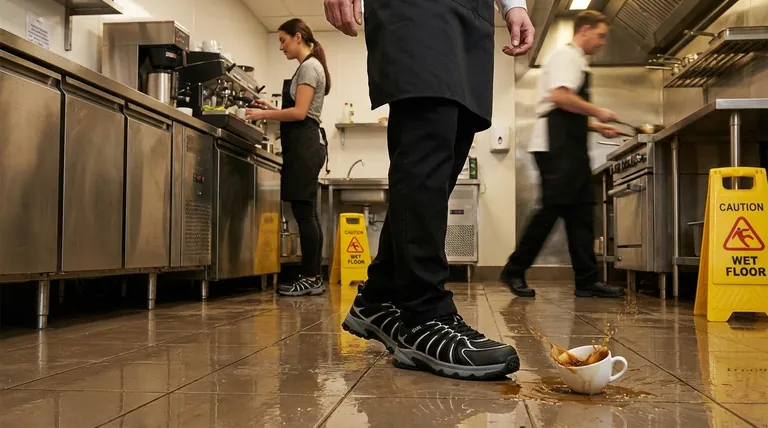
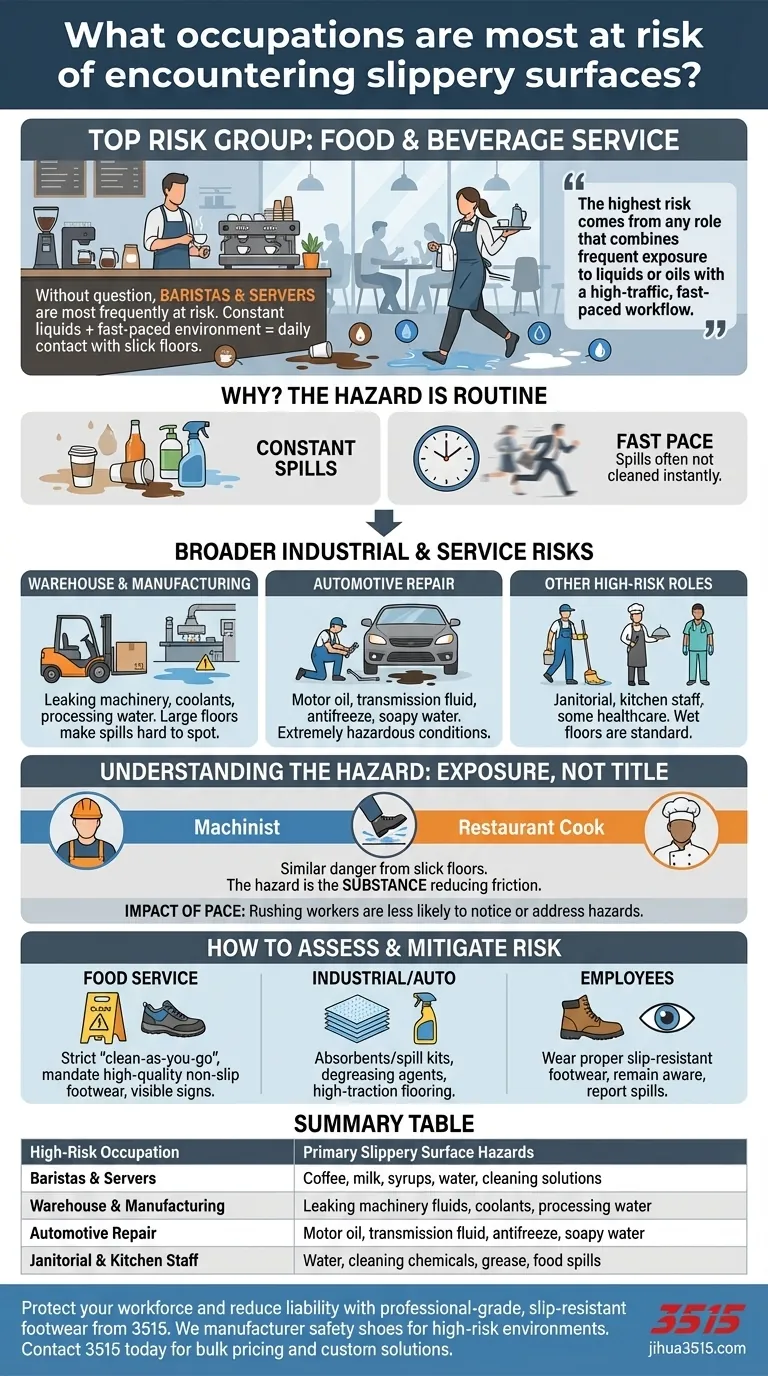
Without question, the occupations most frequently at risk of encountering slippery surfaces are baristas and servers. Due to the constant presence of liquids in a fast-paced environment, these roles involve a higher likelihood of daily contact with slick floors than nearly any other profession.
The specific job title is less important than the work environment itself. The highest risk comes from any role that combines frequent exposure to liquids or oils with a high-traffic, fast-paced workflow.
The Primary Risk Group: Food and Beverage Service
The core of the risk in the food and beverage industry comes down to the constant handling and movement of liquids. This creates a persistent, often unpredictable, hazard.
Why Baristas and Servers Top theList
These professionals work in environments where spills are not an exception but a routine part of operations. The fast pace required to serve customers means spills can happen frequently and may not be cleaned up instantly.
The Nature of the Spills
Hazards in these settings range from water and ice to coffee, milk, syrups, and cleaning solutions. This variety creates different types of slick surfaces that can be difficult to see, especially on certain types of flooring.
Broader Industrial and Service Environments
While food service workers face the most frequent exposure, several other industries present significant risks due to the nature of the materials they handle.
Warehouse and Manufacturing
Workers in these sectors often deal with slick floors caused by leaking machinery, coolants, or water used in processing. Large floor spaces can make it difficult to spot and manage isolated spills quickly.
Automotive Repair
Automotive technicians and service workers are constantly exposed to spilled fluids. These commonly include motor oil, transmission fluid, antifreeze, and soapy water from vehicle washing bays, creating extremely hazardous conditions.
Other High-Risk Service Roles
Beyond the obvious, roles like janitorial staff, kitchen cooks, dishwashers, and even some healthcare workers regularly face wet and slippery floors as a standard part of their work environment.
Understanding the Underlying Hazard
Focusing on the job title alone can be misleading. The actual risk is a function of the environment and the tasks performed within it.
It's About Exposure, Not Just Title
A machinist and a restaurant cook face similar dangers from slick floors, though the source of the hazard differs. The fundamental risk is the presence of a substance that reduces the friction between footwear and the floor.
The Impact of Pace and Workflow
High-traffic and fast-paced work settings amplify the danger. When workers are rushing, they are less likely to notice a hazard or may not have time to address it immediately, increasing the probability of a slip-and-fall incident for themselves or a colleague.
How to Assess Your Workplace Risk
Your approach to mitigating risk depends on the specific environment you operate in.
- If your primary focus is food service management: Implement strict "clean-as-you-go" policies, mandate high-quality, non-slip footwear, and use highly visible wet floor signs.
- If your primary focus is an industrial or automotive setting: Ensure absorbent materials and spill kits are readily available, use degreasing agents for cleanup, and invest in flooring with high-traction surfaces.
- If you are an employee in any high-risk role: Always wear the proper slip-resistant footwear, remain aware of your path, and report any spills immediately.
Ultimately, proactive awareness is the most effective tool for preventing workplace injuries from slippery surfaces.
Summary Table:
| High-Risk Occupation | Primary Slippery Surface Hazards |
|---|---|
| Baristas & Servers | Coffee, milk, syrups, water, cleaning solutions |
| Warehouse & Manufacturing | Leaking machinery fluids, coolants, processing water |
| Automotive Repair | Motor oil, transmission fluid, antifreeze, soapy water |
| Janitorial & Kitchen Staff | Water, cleaning chemicals, grease, food spills |
Protect your workforce and reduce liability with professional-grade, slip-resistant footwear from 3515.
As a large-scale manufacturer, we produce a comprehensive range of safety shoes and boots specifically designed for high-risk environments like food service, manufacturing, and automotive repair. Our footwear provides the critical traction your team needs to prevent costly slip-and-fall incidents.
Contact 3515 today for bulk pricing and custom solutions for distributors, brand owners, and bulk clients.
Visual Guide
Related Products
- Premium Suede Sport Safety Shoes for Wholesale & Bulk Orders
- Heavy-Duty Waterproof Nubuck Safety Boots Safety Shoes for Bulk Supply
- Advanced KPU Athletic Safety Shoe with Steel Toe Cap Anti-Slip Rotary Lacing System
- Durable High-Traction Canvas Sneakers Wholesale & Custom Manufacturing
- Durable Leather Moc Toe Work Boots for Wholesale & Custom Manufacturing
People Also Ask
- What are the primary functions of professional safety shoes? Maximize Safety in Water Supply Confined Spaces
- What industries have specific OSHA footwear requirements? Ensure Compliance & Protect Your Workforce
- What role do specialized safety shoes play in preventing falls? Engineering Stability in Industrial Environments
- How do I choose the best safety shoes? Match Certified Features to Your Hazards
- What are the main components of safety shoes? A Guide to Protective Footwear Design