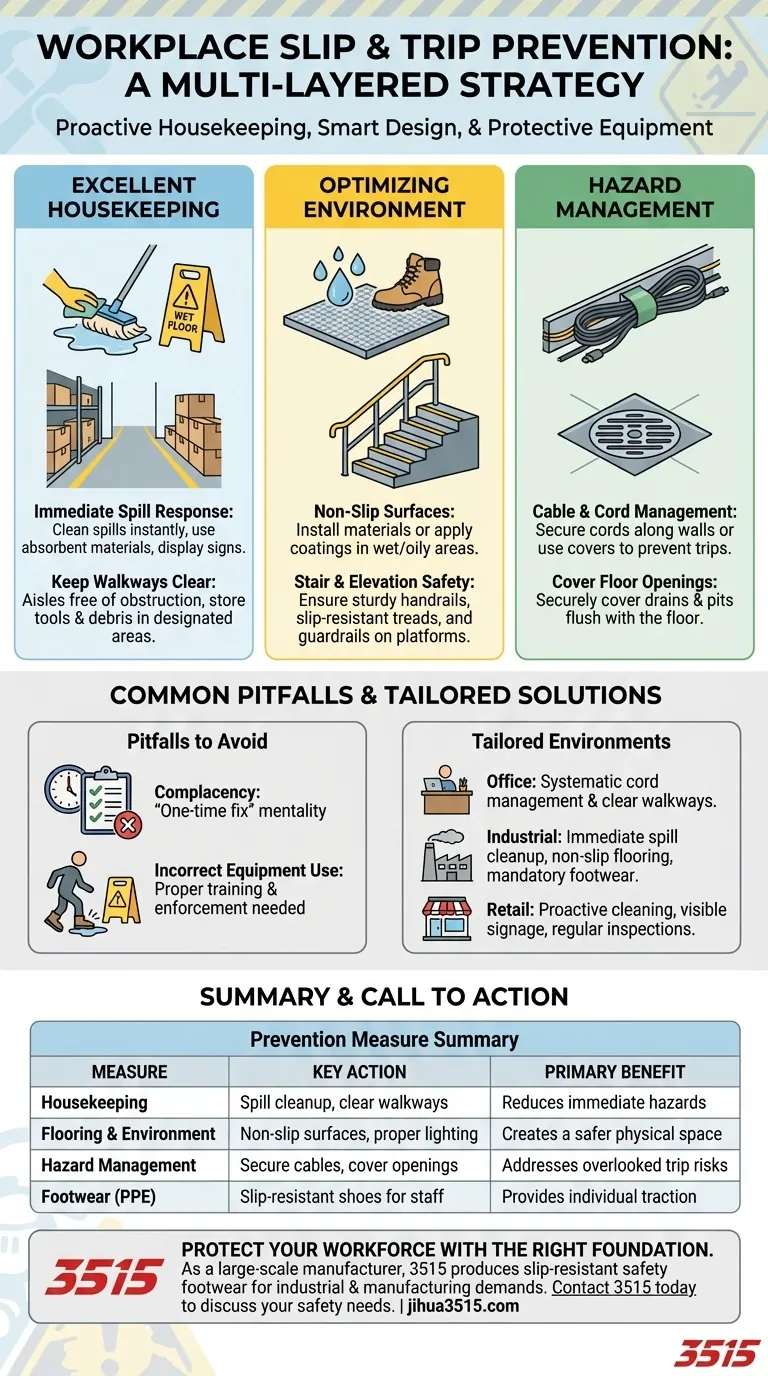
To effectively prevent slips and trips in the workplace, you must implement a multi-layered strategy that combines proactive housekeeping, smart environmental design, and appropriate personal protective equipment. This involves immediately cleaning spills, ensuring walkways are clear and well-maintained, using non-slip surfaces, and organizing potential hazards like cords and cables.
The core principle of slip and trip prevention is not just about cleaning up messes, but about designing a workplace where these hazards are systematically eliminated or controlled before they can cause an incident.
A Proactive Approach to Workplace Safety
Slips, trips, and falls are among the most common workplace injuries, but they are also highly preventable. A successful prevention strategy moves beyond simple reaction and builds safety into the daily operations and physical environment of the workspace. This involves three key areas: housekeeping, flooring and walkways, and hazard management.
Foundational Step: Excellent Housekeeping
Good housekeeping is the first line of defense and the most critical daily practice for preventing incidents.
Immediate Spill Response
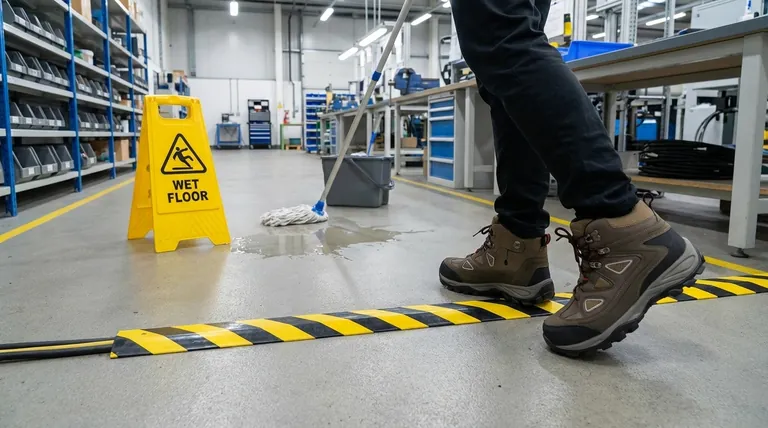
Spills of any kind—water, oil, or other fluids—must be addressed immediately. Use absorbent materials to clean the spill completely and display "wet floor" signs until the area is fully dry.
Keeping Walkways Clear
All walkways, aisles, and corridors must remain free of obstructions. Boxes, equipment, tools, and debris create immediate trip hazards and must be stored in designated areas, not in traffic paths.
Optimizing the Physical Environment
The design and maintenance of your workspace surfaces and pathways play a crucial role in long-term safety.
Flooring and Surfaces
Install non-slip flooring materials in areas prone to getting wet or oily, such as kitchens, entryways, or production zones. Applying non-slip coatings or mats can also be an effective retrofitting solution.
Stair and Elevation Safety
All stairs must be equipped with sturdy handrails. Treads should be made of or coated with a slip-resistant material and kept in good repair. Any elevated platforms or walkways require guardrails and toeboards to prevent falls.
Ensuring Proper Aisle Width
Aisles and walkways should be wide enough to accommodate foot traffic and any necessary equipment safely. Clearly marking these pathways can help reinforce their purpose and keep them clear.
Managing Common Trip Hazards
Many trips are caused by small, often overlooked items that can be easily managed with foresight.
Cable and Cord Management
Loose cords and cables are a primary trip hazard. Secure all cords by running them along walls, mounting them under desks, or using dedicated cord covers that lie flat on the floor.
Covering Drains and Openings
Any drains, pits, or openings in the floor must be securely covered with grates or covers designed to support foot traffic. Ensure these covers sit flush with the surrounding floor.
Understanding the Trade-offs and Common Pitfalls
Implementing these measures is straightforward, but their effectiveness can be undermined by common oversights.
Complacency is the Biggest Risk
The most significant pitfall is complacency. A "one-time fix" mentality is dangerous. Safety is an ongoing process of vigilance, not a checklist to be completed once. Regular inspections and reinforcement are essential.
Focusing Only on Major Hazards
While it's easy to focus on obvious dangers like large spills, it's often the small, overlooked items that cause trips. A stray power cord or a slightly buckled mat can be just as dangerous as a large puddle of oil.
Incorrect Equipment Use
Providing safety equipment is only half the battle. Slip-resistant shoes are ineffective if not worn, and "wet floor" signs are useless if not placed correctly and removed promptly once the floor is dry. Proper training and enforcement are key.
Making the Right Choice for Your Environment
Your prevention strategy should be tailored to the specific risks present in your workplace.
- If your primary focus is an office environment: Prioritize systematic cord management and ensure clear, unobstructed walkways between desks and common areas.
- If your primary focus is a manufacturing or industrial setting: Emphasize immediate spill cleanup protocols, the use of non-slip flooring materials, and mandatory slip-resistant footwear.
- If your primary focus is a retail or public-facing space: Concentrate on proactive floor cleaning, highly visible signage for wet areas, and regular inspections of entryways and high-traffic aisles.
Ultimately, creating a safe workplace is a continuous commitment to identifying and controlling hazards before they can lead to injury.
Summary Table:
| Prevention Measure | Key Action | Primary Benefit |
|---|---|---|
| Housekeeping | Immediate spill cleanup, clear walkways | Reduces immediate hazards |
| Flooring & Environment | Non-slip surfaces, proper lighting | Creates a safer physical space |
| Hazard Management | Secure cables, cover floor openings | Addresses overlooked trip risks |
| Footwear (PPE) | Slip-resistant shoes for staff | Provides individual traction and protection |
Protect your workforce with the right foundation. Slips and trips are preventable with the right strategy and equipment. As a large-scale manufacturer, 3515 produces a comprehensive range of slip-resistant safety footwear and boots for distributors, brand owners, and bulk clients. Our high-traction outsoles and durable designs are engineered to meet the specific demands of industrial, manufacturing, and service environments.
Contact 3515 today to discuss your safety footwear needs and enhance your workplace prevention program.
Visual Guide