
At its core, the comfort of a chukka boot is determined by a precise combination of three elements: a supple upper that flexes with your foot, a shock-absorbing outsole that grounds you, and an interior designed for support and breathability. The most comfortable chukkas minimize the typical break-in period and provide immediate, lasting ease from the very first step.
True comfort in a chukka boot isn't about a single feature. It's the result of a complete system—fit, materials, and construction—working in harmony to support the natural mechanics of your foot.

The Anatomy of a Comfortable Chukka Boot
A chukka boot is a simple design, but small variations in its components have a significant impact on how it feels over a full day of wear. Understanding these parts empowers you to identify a truly comfortable boot.
The Upper: Flexibility and Breathability
The material covering your foot is the first point of contact and is critical for out-of-the-box comfort.
Look for supple, relatively thin uppers made from soft suede or pliable full-grain leather. This flexibility drastically reduces or even eliminates a painful break-in period.
Breathable materials are also non-negotiable. They allow moisture to escape, keeping your feet dry and preventing the discomfort and blisters that come from a sweaty environment.
The Outsole: Your Foundation for Support
The outsole is the boot's interface with the ground, responsible for shock absorption, stability, and durability.
A rubber outsole is a hallmark of a comfortable, practical chukka. It provides excellent cushioning and grip on various surfaces and is far more durable than softer alternatives.
The sole's geometry also matters. A heel with a wider base, like a block heel, offers more stability than a narrow one, reducing ankle strain during long periods of standing or walking.
The Interior: Cushioning and Climate Control
What happens inside the boot is just as important as the exterior. The insole and lining are the hidden engines of comfort.
A high-quality, cushioned insole provides essential arch support, which helps distribute your weight evenly and reduce foot fatigue.
Additionally, a breathable, moisture-wicking lining, often made of soft leather, helps manage the interior climate, ensuring your feet stay dry and comfortable throughout the day.
The Critical Importance of Proper Fit
Even a boot made with the world's best materials will be painfully uncomfortable if it doesn't fit correctly. Fit is the foundation upon which all other comfort features are built.
Why Fit Overrides All Else
A boot that is too tight will pinch and create pressure points, while a boot that is too loose will allow your foot to slide, causing friction and blisters.
The goal is a snug fit around the heel and midfoot to prevent slipping, with enough room in the toe box for your toes to splay naturally.
How to Test for the Right Fit
To ensure you get the best possible fit, always try on boots at the end of the day when your feet are slightly swollen.
Wear the same type of socks you would normally wear with the boots. Walk around indoors on a hard surface to get a true feel for the support and cushioning.
Understanding the Trade-offs
Choosing the perfect chukka involves balancing different material properties. There is no single "best" material, only the best material for a specific need.
Sole Material: Durability vs. Cushioning
Rubber soles offer the best all-around performance, providing a great balance of durability, cushioning, and all-weather grip.
Crepe soles are exceptionally soft and cushioned but are less durable, stain easily, and can become sticky in high heat.
Leather soles are traditional and formal, but they offer minimal cushioning and poor traction in wet conditions until they are well-worn.
Upper Material: Suede vs. Leather
Suede is typically softer and more flexible from the start, making it ideal for casual comfort. However, it requires more maintenance and is less resistant to water.
Full-grain leather is more durable and weather-resistant, making it a great choice for a versatile, year-round boot. It may, however, require a short break-in period to achieve maximum comfort.
Making the Right Choice for Your Goal
Your ideal chukka boot depends entirely on how you plan to use it. Use your primary goal to guide your selection.
- If your primary focus is all-day walking and maximum comfort: Prioritize a boot with a flexible suede upper, a well-cushioned insole, and a durable rubber outsole.
- If your primary focus is a versatile business-casual look: Opt for a full-grain leather upper with a streamlined rubber sole for a perfect balance of durability and refined style.
- If your primary focus is casual, warm-weather wear: A lightweight chukka with an unlined suede upper and a soft crepe sole offers the best breathability and flexibility.
By evaluating a boot based on these core principles, you can confidently select a pair that provides exceptional comfort for your specific needs.
Summary Table:
| Comfort Feature | Key Benefit | Ideal For |
|---|---|---|
| Supple Upper (Suede/Leather) | Flexible fit, minimal break-in | Immediate comfort |
| Cushioned Insole | Arch support, reduced fatigue | All-day walking |
| Rubber Outsole | Shock absorption, stability | Versatile wear |
| Breathable Lining | Moisture-wicking, climate control | Warm weather |
As a large-scale manufacturer, 3515 produces a comprehensive range of footwear for distributors, brand owners, and bulk clients. Our production capabilities encompass all types of shoes and boots, including chukkas built with the exact comfort features detailed above—supple uppers, cushioned insoles, and durable outsoles. Let us help you deliver exceptional comfort to your customers. Contact us today to discuss your chukka boot needs!
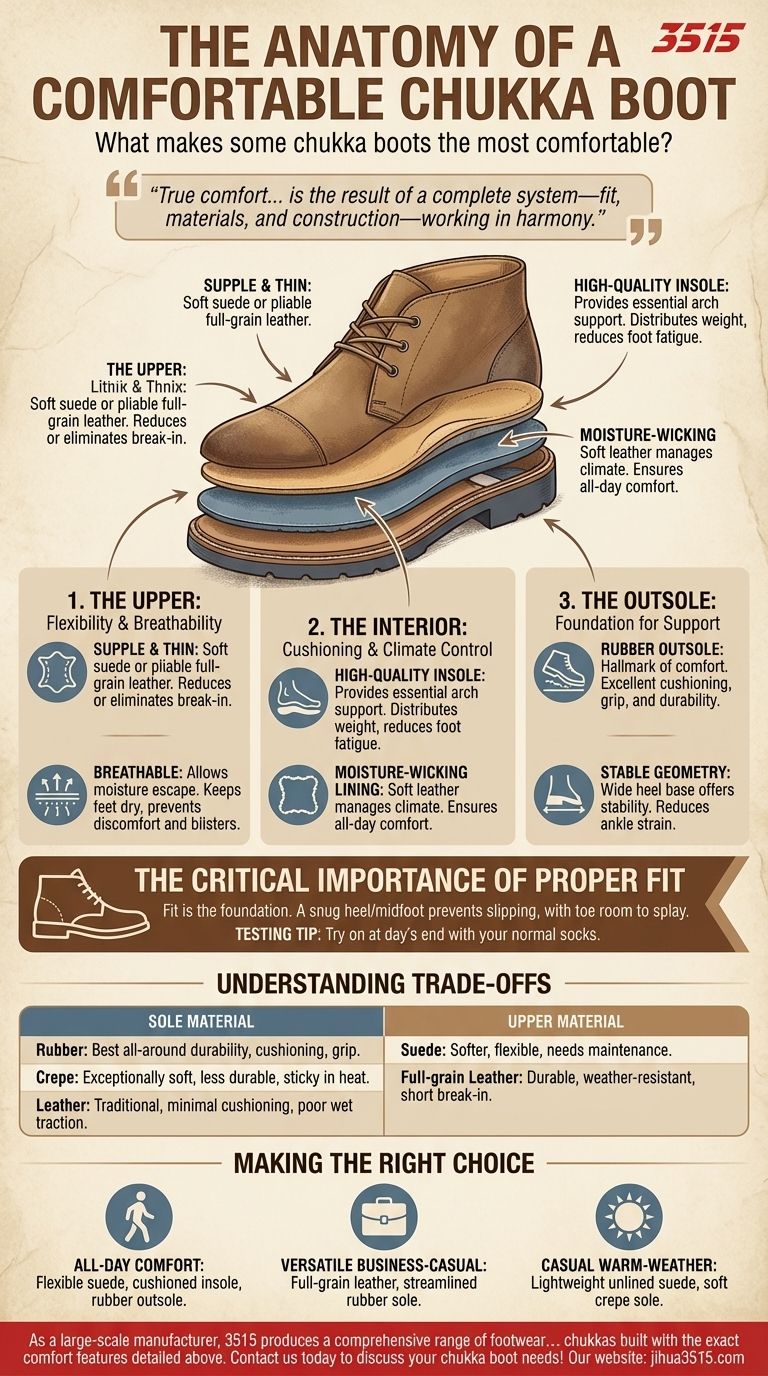
Visual Guide
Related Products
- Premium Wholesale Tactical Style Safety Shoes Boots with Quick Lacing
- Wholesale Safety Boots Manufacturer for Custom & Private Label Orders
- Factory Direct Wholesale Rain Boots Durable Waterproof & Fully Customizable
- Wholesale High-Traction Camo Boots - Custom Manufacturer for Brands
- Durable Leather High-Ankle Tactical Boots for Wholesale & Custom Manufacturing
People Also Ask
- How are gait analysis research findings applied to the functional design of safety shoes and tactical boots?
- Why is the synchronization of craftsmanship and UX development emphasized for bulk customization of safety shoes?
- How does anthropomorphic design influence material selection? Enhance Footwear Performance through Biological Alignment
- How do quality certification standards for safety shoes reduce perceived risk? Buy Online with Technical Certainty
- How can specialized footwear mitigate safety risks? High-Volume OEM/ODM Solutions since 1951



















