
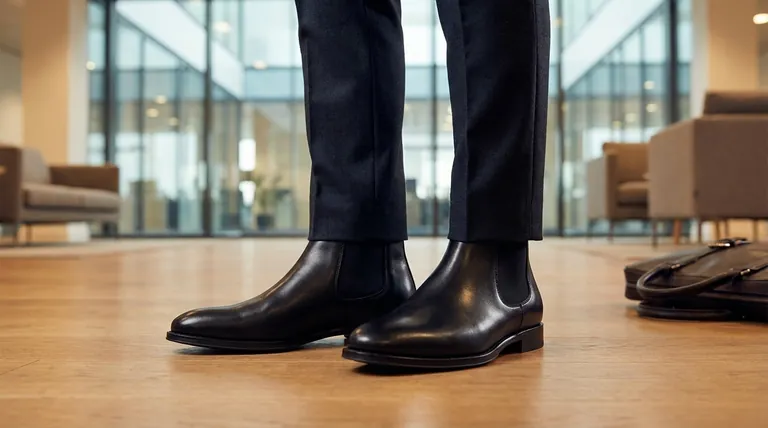
At its core, the sleekness of a Chelsea boot comes from its clean, uninterrupted silhouette. Its signature laceless design and elastic side panels create a seamless, streamlined profile that flows elegantly from a tailored trouser, projecting a modern and sophisticated image without the visual clutter of other footwear.
The true value of the Chelsea boot isn't just its sleek appearance, but its unique ability to bridge the gap between formal dress shoes and casual boots, making it an indispensable asset for modern business casual attire.
The Anatomy of a Sophisticated Boot
The sophisticated look of a Chelsea boot is not an accident; it's the result of several intentional design elements working in harmony.
The Clean, Uninterrupted Vamp
The most defining feature of a Chelsea boot is its vamp—the upper part of the shoe—which is free of laces, buckles, or broguing. This minimalism is the primary source of its sleekness, creating a single, clean surface.
The Streamlined Silhouette
Originating in the Victorian era, the design uses elastic side panels (the "gore") to ensure a snug fit around the ankle. This creates a slim, continuous line that complements and elongates the leg, especially when paired with slim or tailored trousers.
The Versatile Foundation
Chelsea boots come in a variety of toe shapes, from rounded to chiseled. This versatility allows them to adapt to different levels of formality, with a sleeker, more pointed toe appearing dressier than a rounder, more casual one.
Navigating Dress Codes: Where the Chelsea Boot Fits
Understanding a shoe's place within professional dress codes is crucial for making the right impression. The Chelsea boot occupies a specific and valuable niche.
The Ideal Business Casual Choice
The Chelsea boot is a cornerstone of business casual style. It is definitively dressier than other common boots or casual footwear like boat shoes and sneakers, elevating an entire outfit with its polished structure.
The Boundary of Business Professional
For the most conservative business professional environments, a traditional lace-up dress shoe, such as a plain or cap-toe Oxford, remains the undisputed standard. While a pristine black leather Chelsea boot can work in some modern corporate settings, the classic Oxford is the safer and more traditional choice.
Understanding the Trade-offs
To choose the right Chelsea boot, you must understand how material and construction impact its formality and function.
Material Matters: Leather vs. Suede
A polished leather boot in black or dark brown offers the most formality and versatility for professional settings. Suede, while equally stylish, presents a softer, more casual texture that is better suited for less formal offices or creative environments.
Sole Construction Defines the Vibe
The sole has a significant impact on the boot's formality. A thin leather or refined rubber sole maintains a sleek, dressy profile. In contrast, a thick or "chunky" lug sole is inherently casual and is not appropriate for most business attire.
The Fit is Non-Negotiable
Unlike a lace-up shoe that can be adjusted, the fit of a Chelsea boot is fixed. A proper fit is essential; it should be snug around the ankle and foot without being constricting. A poor fit not only causes discomfort but completely undermines the boot's streamlined silhouette.
How to Apply This to Your Wardrobe
Use your specific workplace goal to determine the right footwear.
- If your primary focus is maximum formality: A black or dark brown cap-toe Oxford remains the most appropriate and respected choice.
- If your primary focus is elevating your business casual look: A sleek leather Chelsea boot in black, oxblood, or dark brown is the perfect tool for the job.
- If your primary focus is versatility for a creative office and weekends: A high-quality suede Chelsea boot offers a stylish and adaptable option.
Ultimately, the Chelsea boot's enduring appeal lies in its ability to project quiet confidence through clean, intentional design.
Summary Table:
| Feature | Impact on Style & Formality |
|---|---|
| Laceless Design | Creates a clean, uninterrupted, and sleek silhouette. |
| Elastic Side Panels | Ensures a snug fit and a streamlined profile. |
| Material (Leather/Suede) | Leather is more formal; suede is more casual. |
| Sole Type | Thin soles are dressy; thick lug soles are casual. |
| Toe Shape | Pointed/chiseled toes are dressier than rounded toes. |
Ready to elevate your footwear collection with sophisticated, high-quality boots?
As a large-scale manufacturer, 3515 produces a comprehensive range of footwear for distributors, brand owners, and bulk clients. Our production capabilities encompass all types of shoes and boots, including premium Chelsea boots crafted with the precise attention to detail and quality materials discussed in this article.
Let us help you provide your customers with the polished style they demand. Contact our team today to discuss your manufacturing needs and discover the 3515 advantage.
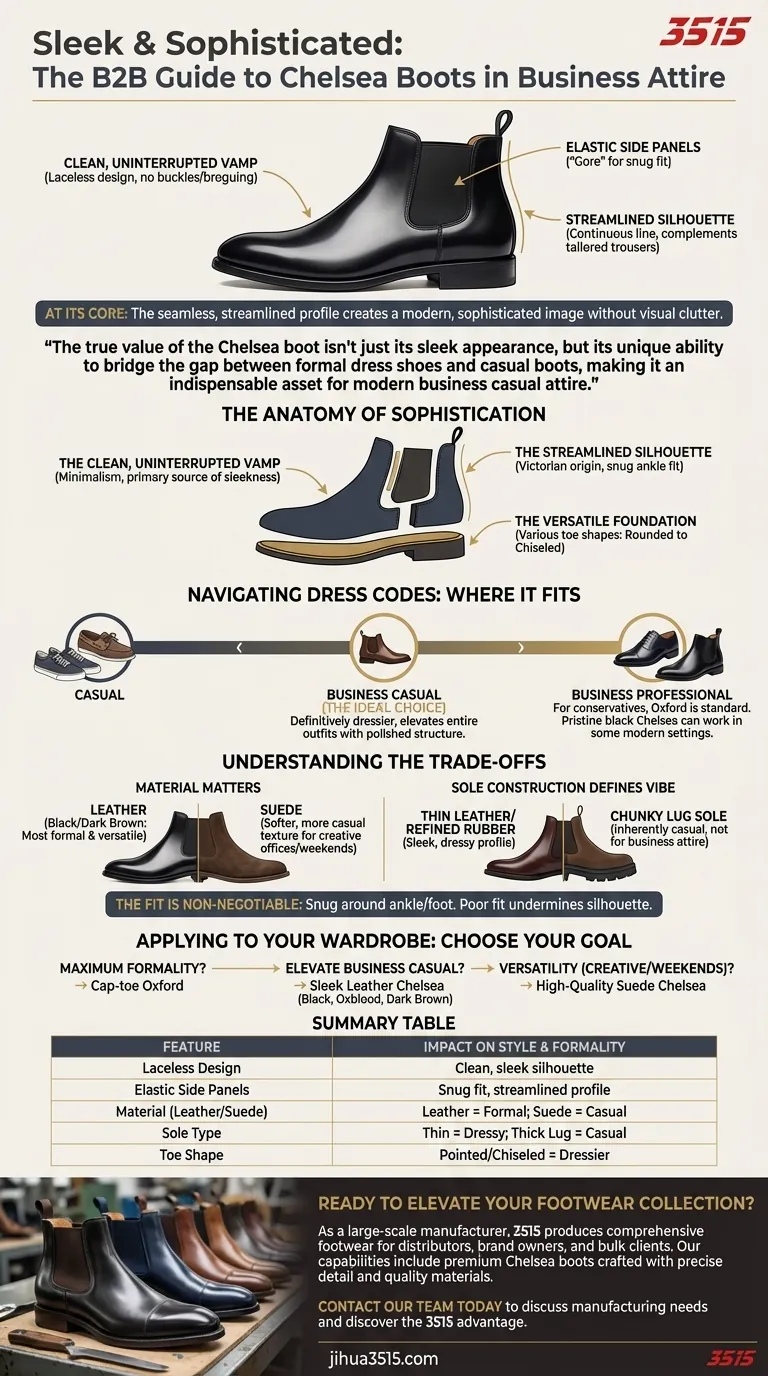
Visual Guide
Related Products
- Wholesale Suede Chelsea Safety Boots for Custom & Private Label Manufacturing
- Durable Leather High-Ankle Tactical Boots for Wholesale & Custom Manufacturing
- Durable High-Ankle Tactical Boots Wholesale Manufacturer for Custom & Bulk Orders
- Wholesale Tactical Boots High-Traction & Reflective for Bulk & Brand Orders
- Wholesale Waterproof Tactical Boots Custom Suede & High-Traction Soles
People Also Ask
- Why are chelsea boots considered a versatile style? The Ultimate Wardrobe Foundation
- What makes Chelsea boots a popular choice and how can they be styled? A Guide to Versatile Footwear
- Why are Chelsea boots easy to wear? Slip-On Style & Timeless Versatility
- Why are Chelsea boots so popular? Discover the Secret to Effortless, Timeless Style
- What are the characteristics of Chelsea boots? The Ultimate Guide to Style & Function



















