
Choosing the right footwear is a direct investment in your long-term health. Properly selected shoes are a primary defense against a cascade of chronic issues, most notably persistent foot, knee, and back pain. These conditions often arise from poor biomechanical alignment and a lack of support, especially for individuals who spend significant time standing or walking on hard surfaces.
Your feet are the foundation of your entire body. Improper footwear disrupts this foundation, creating a chain reaction of misalignment and stress that travels up through your ankles, knees, hips, and spine, leading to chronic pain and joint degradation over time.
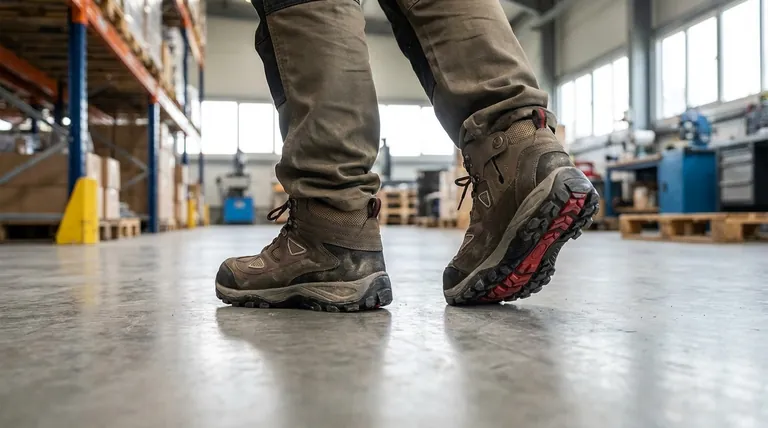
The Kinetic Chain: Why Your Feet Affect Your Entire Body
To understand how footwear prevents long-term problems, you must see the body as an interconnected system. What happens at your feet does not stay at your feet.
The Foundation of Your Posture
Your feet set the alignment for your entire skeletal structure. A shoe that causes your foot to roll inward (pronate) or outward (supinate) forces your ankles, knees, and hips to compensate.
This subtle, daily misalignment alters your posture, placing uneven stress on muscles and ligaments far from the source of the problem.
Shock Absorption and Joint Health
Every step you take, especially on hard surfaces like concrete, sends a shockwave up your leg. A core function of proper footwear is to absorb a significant portion of this impact.
Without adequate cushioning, that force is transmitted directly to your cartilage, the connective tissue that protects your joints. Over years, this leads to premature wear and tear.
Preventing Muscle Imbalances
Ill-fitting shoes can force certain muscles in your feet and lower legs to work harder than others to maintain stability.
This overcompensation leads to chronic tightness in some muscles and weakness in others. This imbalance is a primary driver of repetitive strain injuries and persistent pain.
Common Issues Caused by Poor Footwear
Ignoring the importance of footwear doesn't just cause temporary discomfort. It is a direct contributor to debilitating long-term conditions.
Chronic Foot Pain
Conditions like plantar fasciitis (inflammation of the tissue on the bottom of the foot), bunions, and hammertoes are often caused or severely exacerbated by shoes that lack support or constrict the foot's natural shape.
Knee and Hip Degradation
When your foot's alignment is off or shock absorption is poor, your knees and hips take the brunt of the force. This is a significant contributing factor to the development of osteoarthritis, a degenerative joint disease.
Persistent Lower Back Pain
A lack of arch support can cause your feet to flatten, which in turn causes your knees to rotate inward. This rotation can tilt your pelvis forward, placing constant strain on the muscles and ligaments of your lower back.
Understanding the Trade-offs: Function vs. Fashion
Making an informed choice requires acknowledging the conflict that often exists between a shoe's design and its impact on your health.
The High Cost of Style
Many fashionable shoe designs—such as high heels, pointed toes, or completely flat, unsupportive soles—are fundamentally at odds with the natural mechanics of the human foot.
While acceptable for short-term wear, their regular use actively contributes to the misalignment and stress that cause long-term harm.
The Myth of "Breaking In"
A shoe that fits your foot correctly should feel comfortable from the start. A long and painful "breaking in" period is a clear signal of a poor match between the shoe's shape and your foot's anatomy.
Forcing your foot to conform to the shoe is a recipe for creating pressure points and biomechanical problems.
Making the Right Choice for Your Well-being
Your ideal footwear depends entirely on your daily activities and physical needs.
- If your primary focus is preventing pain from long hours of standing: Prioritize shoes with substantial cushioning and excellent arch support to absorb impact and maintain proper alignment.
- If your primary focus is avoiding general joint pain: Select footwear with a stable, supportive sole that prevents your foot from rolling and ensures your body remains in a neutral position.
- If your primary focus is preventing injury during physical activity: Always choose sport-specific footwear designed to handle the unique stresses of that activity, such as lateral support for court sports or forward-motion cushioning for running.
Investing in proper footwear is one of the most effective and proactive steps you can take to safeguard your mobility and overall health for years to come.
Summary Table:
| Preventable Health Issue | How Proper Footwear Helps |
|---|---|
| Chronic Foot Pain | Provides arch support, prevents plantar fasciitis, and avoids constriction. |
| Knee & Hip Degradation | Ensures proper alignment and absorbs impact to protect cartilage. |
| Persistent Lower Back Pain | Maintains a neutral posture by supporting the foot's foundation. |
| Muscle Imbalances | Promotes even muscle use to prevent repetitive strain injuries. |
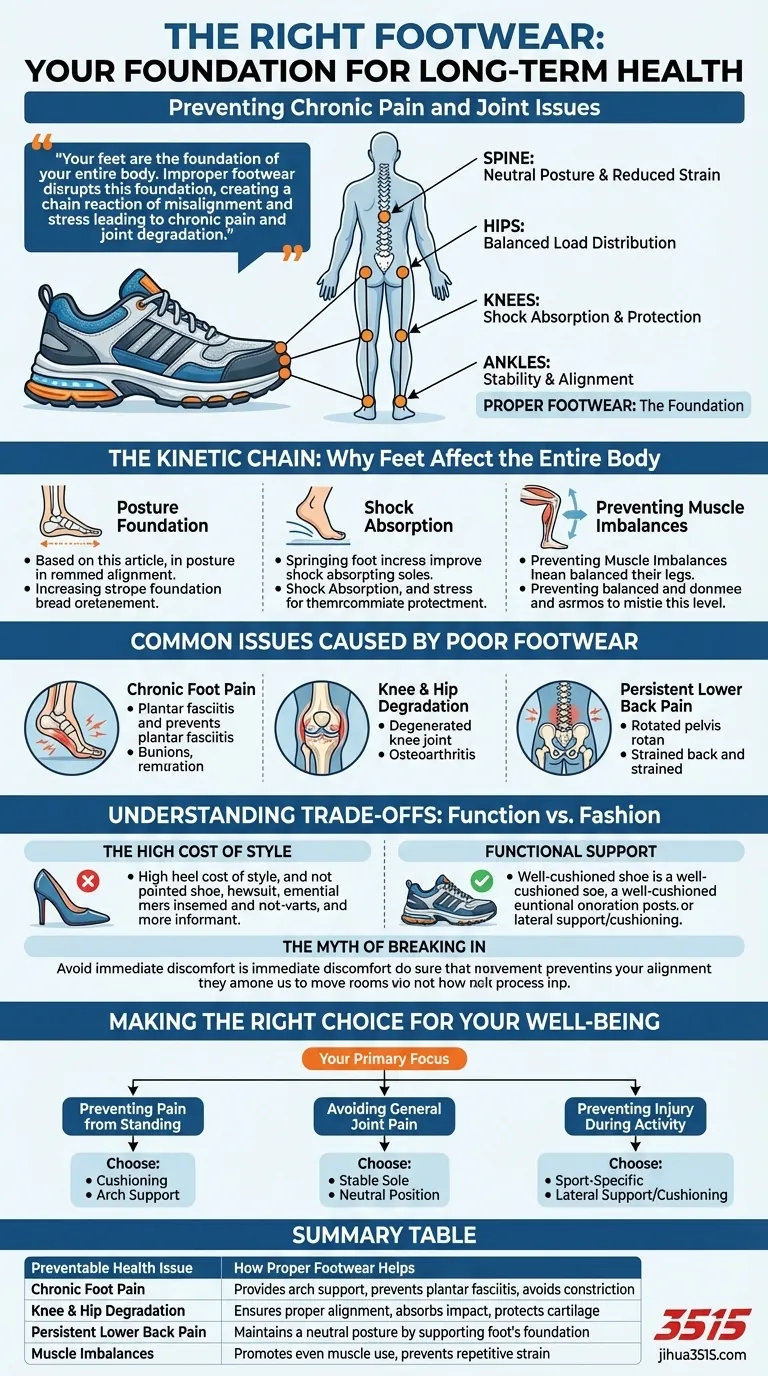
Visual Guide
Related Products
- Wholesale Durable Camouflage Canvas Shoes with High-Traction Cleated Rubber Sole
- Lightweight Breathable Training Shoes for Wholesale & Custom OEM Manufacturing
- Wholesale Breathable Training Shoes Custom Athletic Footwear Manufacturer
- Durable Leather High-Ankle Tactical Boots for Wholesale & Custom Manufacturing
- Durable Waterproof Rain Boots | Custom Manufacturer for Wholesale & Brands
People Also Ask
- Why is the selection of high-strength fabric materials necessary in the production of canvas shoes and training shoes?
- What are the properties of canvas as a shoe material? A Guide to Lightweight Comfort & Style
- Can canvas shoes be worn in rainy conditions? The Truth About Water Resistance
- What are some examples of vulcanized shoes? Discover the Flexibility and Board Feel of Classic Sneakers
- What are the characteristics of canvas as a shoe material? A Guide to Lightweight, Breathable Footwear


















