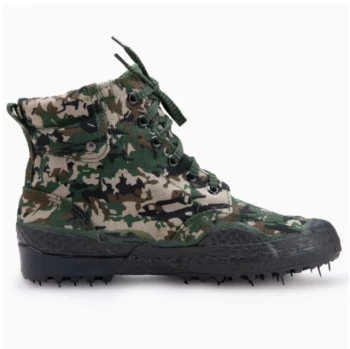
Beyond a simple checklist, the key features to look for in hiking boots are a combination of functional components and, most importantly, a precise fit. The essential technical features include durable materials, high ankle support, waterproofing, aggressive traction, and protective cushioning. However, these features are only effective if the boot perfectly accommodates your foot shape and hiking style.
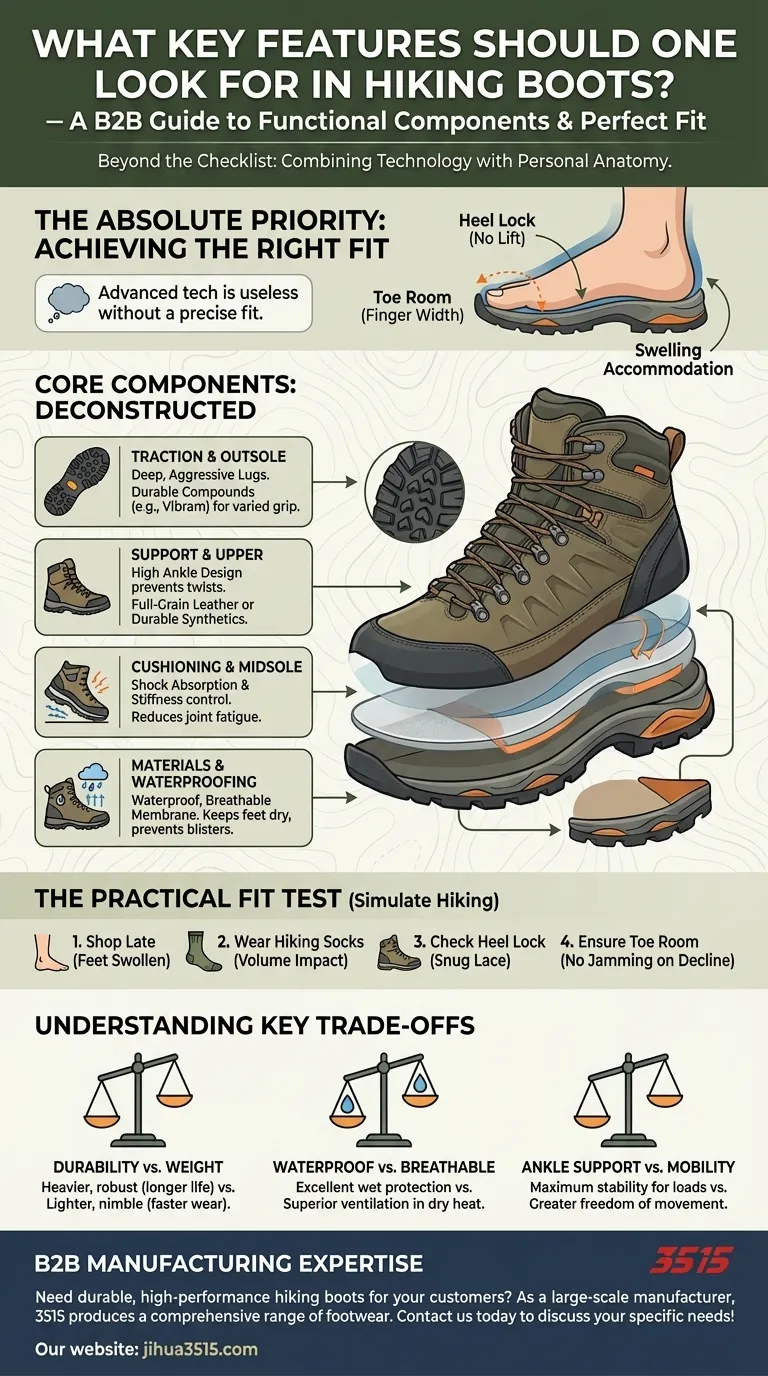
The most advanced boot technology is rendered useless by a poor fit. While features like waterproofing and traction are critical, the absolute priority is finding a boot that secures your heel, gives your toes ample room, and matches the unique demands of your feet and your hiking objectives.
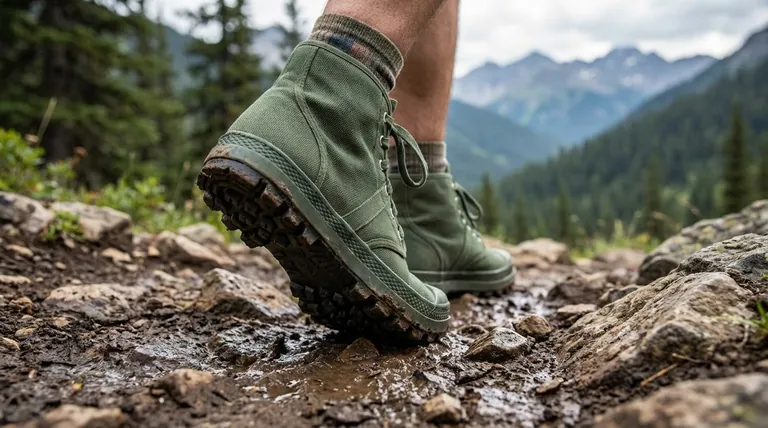
Deconstructing the Hiking Boot: The Core Components
To make an informed choice, you must understand how each part of a boot contributes to its performance on the trail. These components work together as a system to provide comfort, support, and safety.
Traction and the Outsole
The outsole is your connection to the trail. Look for boots with deep, aggressive treads (lugs) designed to grip varied surfaces like rock, mud, and dirt. Hard rubber compounds, such as those made by Vibram, offer excellent durability and reliable traction.
Support and the Upper
The upper part of the boot wraps around and supports your foot. Boots designed for rugged terrain typically extend over the ankle to prevent twists and provide stability, especially when carrying a heavy pack. Uppers made from full-grain leather offer maximum durability, while synthetics provide a lighter, more breathable alternative.
Cushioning and the Midsole
The midsole provides cushioning, absorbs shock, and determines the boot's stiffness. A stiffer boot offers more support and protection on rocky, uneven ground. The level of cushioning is critical for long-distance comfort, reducing the fatigue felt in your joints.
Materials and Waterproofing
Modern hiking boots often incorporate a waterproof, breathable membrane to keep your feet dry from external moisture (like rain or streams) while allowing sweat vapor to escape. This combination is crucial for preventing blisters and maintaining comfort in a wide range of conditions.
The Absolute Priority: Achieving the Right Fit
A boot's features mean nothing if it causes pain. Fit is not just about length and width; it's a dynamic relationship between your foot and the boot, which changes as you hike.
Why Static Measurements Fail
Your feet swell and expand during a long hike, especially in warmer weather. A boot that feels perfect in the store can become painfully tight after a few miles. Furthermore, every person's foot volume and shape are unique, making a "perfect" static last impossible.
The Practical Fit Test
To find the right fit, you must simulate hiking conditions as closely as possible.
- Shop late in the day when your feet are at their largest.
- Wear the exact socks you plan to hike in, as they significantly impact volume.
- Lace the boots snugly and ensure your heel is locked in place. When you walk, there should be minimal to no lift.
- Check for adequate toe room. On a small ramp or stairs, ensure your toes do not jam into the front of the boot. You should have about a finger's width of space between your longest toe and the end of the boot.
Understanding the Key Trade-offs
Choosing a hiking boot involves balancing competing characteristics. There is no single "best" boot, only the best boot for a specific purpose.
Durability vs. Weight
Heavier, robust boots made with one-piece leather uppers and stitchdown construction are incredibly durable and can often be resoled. However, their weight can lead to fatigue on long hikes. Lighter synthetic boots are more nimble but will wear out faster.
Waterproofing vs. Breathability
A waterproof membrane is excellent for wet, muddy trails but can reduce breathability. In hot, dry climates, this can lead to sweaty feet. Non-waterproof boots with mesh panels offer superior ventilation but provide no protection from water.
Ankle Support vs. Mobility
High-cut boots provide maximum ankle support, which is critical for carrying heavy loads or traversing unstable terrain. However, this support comes at the cost of mobility and can feel restrictive to some hikers.
Making the Right Choice for Your Objective
Select your boot by prioritizing features that align with your primary hiking goals.
- If your primary focus is day hiking on maintained trails: Prioritize a lighter weight and good breathability over maximum durability and stiffness.
- If your primary focus is multi-day backpacking with a heavy pack: Prioritize high ankle support, a stiff midsole, and durable construction to handle the load.
- If your primary focus is navigating wet, muddy, or rugged off-trail terrain: Prioritize aggressive traction, reliable waterproofing, and robust toe protection.
Ultimately, the best boot is the one you forget you are wearing.
Summary Table:
| Key Feature | Why It Matters | What to Look For |
|---|---|---|
| Traction | Prevents slips on varied terrain | Deep, aggressive lugs; durable rubber (e.g., Vibram) |
| Support | Stabilizes ankles, especially under load | High-cut ankle design; sturdy upper materials |
| Waterproofing | Keeps feet dry in wet conditions | Breathable membrane (e.g., Gore-Tex) |
| Cushioning | Reduces joint fatigue on long hikes | Shock-absorbing midsole with appropriate stiffness |
| Fit | Ensures comfort and prevents blisters | Heel lock, toe room, and accommodation for foot swelling |
Need durable, high-performance hiking boots for your customers? As a large-scale manufacturer, 3515 produces a comprehensive range of footwear for distributors, brand owners, and bulk clients. Our production capabilities encompass all types of shoes and boots, ensuring you get the right combination of features, materials, and fit for your target market. Contact us today to discuss your specific needs and leverage our expertise in functional footwear manufacturing!
Visual Guide
Related Products
- Wholesale High-Traction Camo Boots - Custom Manufacturer for Brands
- Durable Rubber Sole Outdoor Shoes Wholesale & Custom Manufacturing
- Durable Spiked Camouflage Boots Wholesale & Factory Production
- Wholesale Lightweight Tactical Boots Custom Manufacturer for Desert & Combat Use
- Wholesale Waterproof Tactical Boots Custom Suede & High-Traction Soles
People Also Ask
- What are the key features of the new line of camo boots? Built for Extreme Cold & Rugged Terrain
- Are camo boots necessary for hunting success? Prioritize Performance Over Pattern
- How does the Rank Score Test identify the primary causes of premature failure in tactical and work boots? Key Insights
- What is the technical logic behind using closed-eye testing for tactical boots? Unlocking Peak Footwear Stability
- What shoes to wear for a security job? Durable, Protective Footwear for Long Shifts