
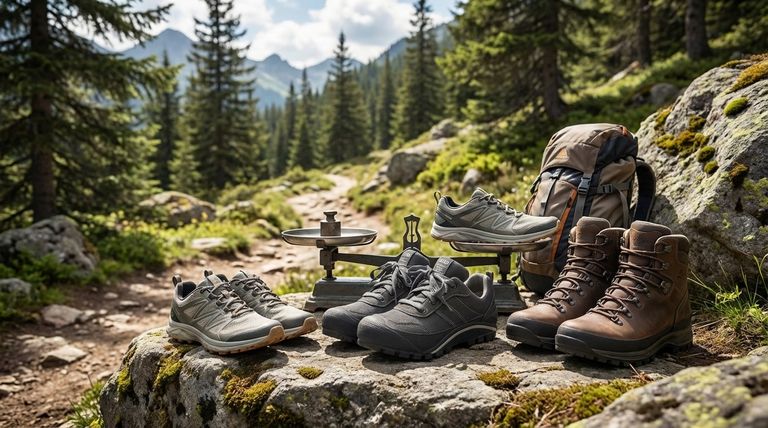
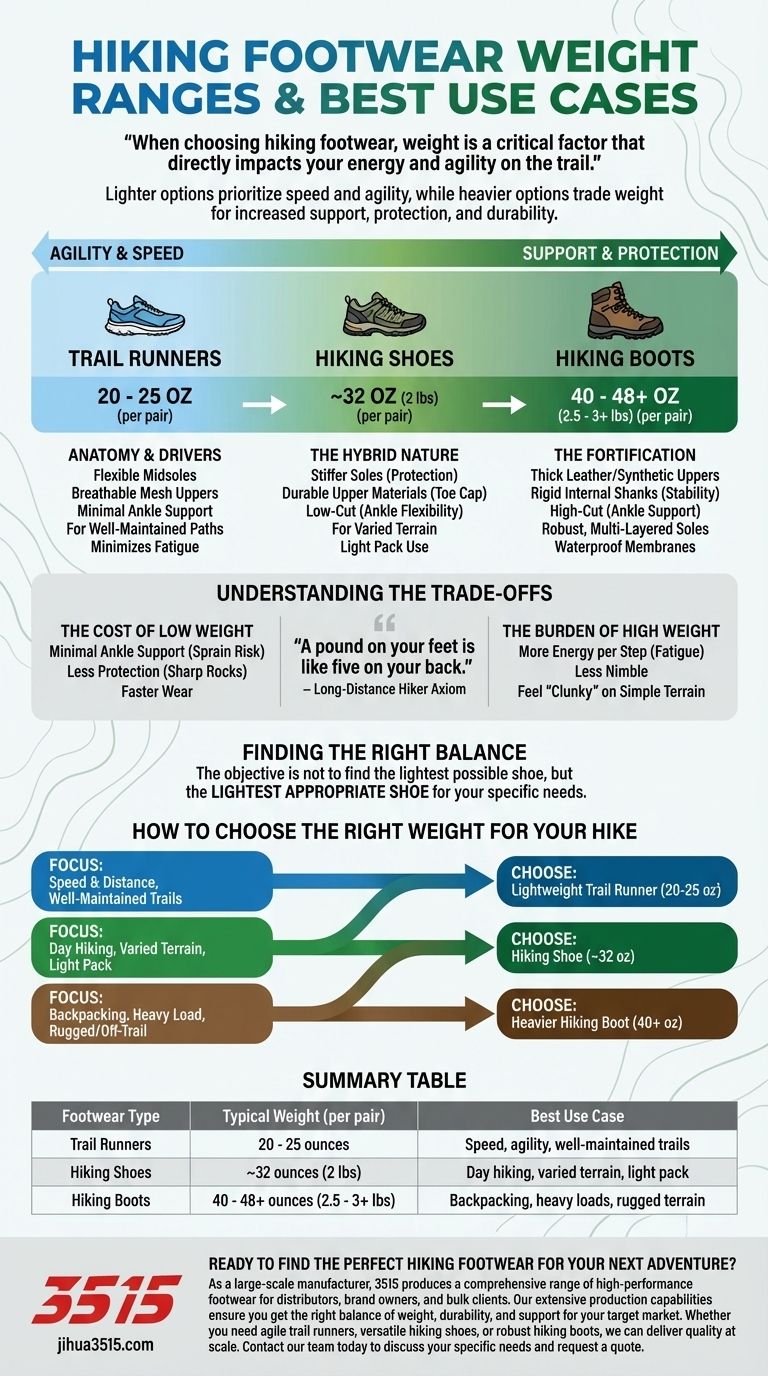
When choosing hiking footwear, weight is a critical factor that directly impacts your energy and agility on the trail. A pair of lightweight trail runners typically weighs between 20 and 25 ounces. Hiking shoes occupy the middle ground at around two pounds (32 oz), while traditional hiking boots provide the most support and weigh from two and a half to over three pounds (40-48+ oz) per pair.
The weight of your footwear is a direct indicator of its intended use. Lighter options prioritize speed and agility for simple terrain, while heavier options trade weight for increased support, protection, and durability on demanding trails.
What Drives the Weight Difference?
The weight of footwear is not arbitrary; it is a direct result of the materials and structural components chosen to achieve a specific level of performance, support, and durability.
The Anatomy of a Trail Runner (20-25 oz)
Trail runners are essentially ruggedized running shoes designed for speed and comfort on the trail.
Their low weight comes from flexible midsoles, breathable mesh uppers, and a design that forgoes significant ankle support. This minimalist construction is ideal for minimizing fatigue on well-maintained paths.
The Hybrid Nature of a Hiking Shoe (~32 oz)
Hiking shoes strike a balance between the agility of a trail runner and the sturdiness of a boot.
They are heavier due to stiffer soles that offer better protection from rocks and more durable upper materials, often including a robust toe cap. They remain low-cut, preserving ankle flexibility for general trail use with a light pack.
The Fortification of a Hiking Boot (40-48+ oz)
Hiking boots are engineered for maximum protection and support, which inherently adds significant weight.
The weight comes from features like thick leather or synthetic uppers, rigid internal shanks for stability under heavy loads, and high-cut designs for ankle support. Robust, multi-layered soles and integrated waterproof membranes also contribute to their heft.
Understanding the Trade-offs
Choosing footwear is a classic engineering problem: you cannot maximize one attribute without compromising another. The primary trade-off is weight versus support.
The Cost of Low Weight
The lightest shoes, trail runners, achieve their low weight by sacrificing key features.
They offer minimal ankle support, increasing the risk of sprains on highly technical or uneven ground. Their lighter materials also mean they provide less protection from sharp rocks and tend to wear out much faster than heavier options.
The Burden of High Weight
There is a well-known axiom among long-distance hikers: a pound on your feet is like five on your back.
Heavier boots demand more energy to lift with every single step, which can lead to significant fatigue over a long day. Their rigidity can also make them feel less nimble and more "clunky" on simple terrain.
Finding the Right Balance
The objective is not to find the lightest possible shoe, but the lightest appropriate shoe for your specific needs.
Consider the terrain, the weight of your pack, and your own ankle strength. A heavy boot is unnecessary on a simple day hike, while a trail runner can be inadequate for a multi-day backpacking trip in the mountains.
How to Choose the Right Weight for Your Hike
Base your decision on the demands of your intended activity, not just the number on the scale.
- If your primary focus is speed and distance on well-maintained trails: A lightweight trail runner (20-25 oz) is your best tool for staying fast and agile.
- If your primary focus is day hiking on varied terrain with a light pack: A hiking shoe (~32 oz) offers the ideal balance of durable protection and walking comfort.
- If your primary focus is backpacking with a heavy load or hiking on rugged, off-trail terrain: A heavier hiking boot (40+ oz) provides the critical support and protection needed to prevent injury and manage the load.
Choosing the correct footwear is about balancing the burden of weight against the need for protection, ensuring every step is both efficient and secure.
Summary Table:
| Footwear Type | Typical Weight (per pair) | Best Use Case |
|---|---|---|
| Trail Runners | 20 - 25 ounces | Speed, agility, well-maintained trails |
| Hiking Shoes | ~32 ounces (2 lbs) | Day hiking, varied terrain, light pack |
| Hiking Boots | 40 - 48+ ounces (2.5 - 3+ lbs) | Backpacking, heavy loads, rugged terrain |
Ready to find the perfect hiking footwear for your next adventure?
As a large-scale manufacturer, 3515 produces a comprehensive range of high-performance footwear for distributors, brand owners, and bulk clients. Our extensive production capabilities ensure you get the right balance of weight, durability, and support for your target market.
Whether you need agile trail runners, versatile hiking shoes, or robust hiking boots, we can deliver quality at scale. Contact our team today to discuss your specific needs and request a quote.
Visual Guide
Related Products
- Durable Rubber Sole Outdoor Shoes Wholesale & Custom Manufacturing
- Wholesale High-Traction Camo Boots - Custom Manufacturer for Brands
- Wholesale Lightweight Tactical Boots Custom Manufacturer for Desert & Combat Use
- Wholesale Durable & Breathable Training Shoes for Custom Brands
- Wholesale Waterproof Tactical Boots Custom Suede & High-Traction Soles
People Also Ask
- What is the function of the sole in outdoor shoes? Find the Perfect Grip and Support
- What role do outdoor shoes and sneakers play in navigating external terrains? Engineered Stability for Every Surface
- How is AI utilized in the design of outdoor and safety footwear? Harnessing Big Data for Market-Driven Shoe Innovation
- Why is durability important when selecting outdoor shoes? A Guide to Safety & Long-Term Value
- What are the key components of outdoor shoes that affect comfort and sturdiness? A Guide to Durable, High-Performance Footwear



















