
At its core, the tongue of a hiking shoe is the padded strip of material that sits between the laces and the top of your foot. Its primary functions are to distribute the pressure from tightened laces, provide comfort, and shield your foot from the lacing hardware.
While often overlooked, the tongue is a critical interface component. It's not just for comfort; it plays a vital role in the shoe's overall protection, fit, and ability to keep out trail debris.
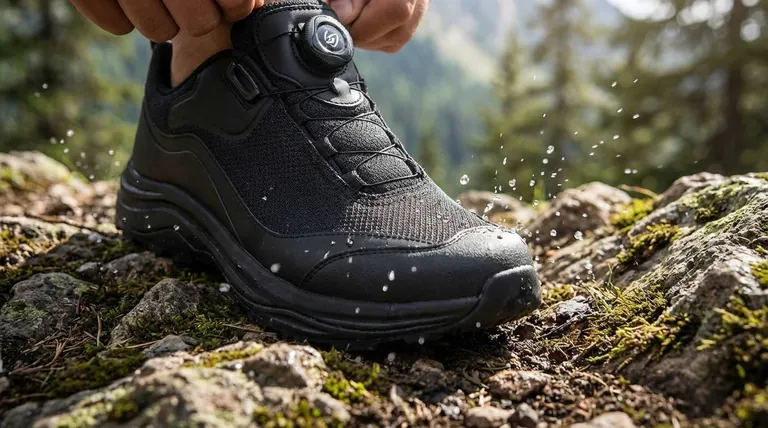
The Anatomy and Purpose of the Tongue
A hiking shoe's tongue is more than just a simple flap. It's an engineered component designed to solve specific problems encountered on the trail.
Primary Function: Pressure Distribution
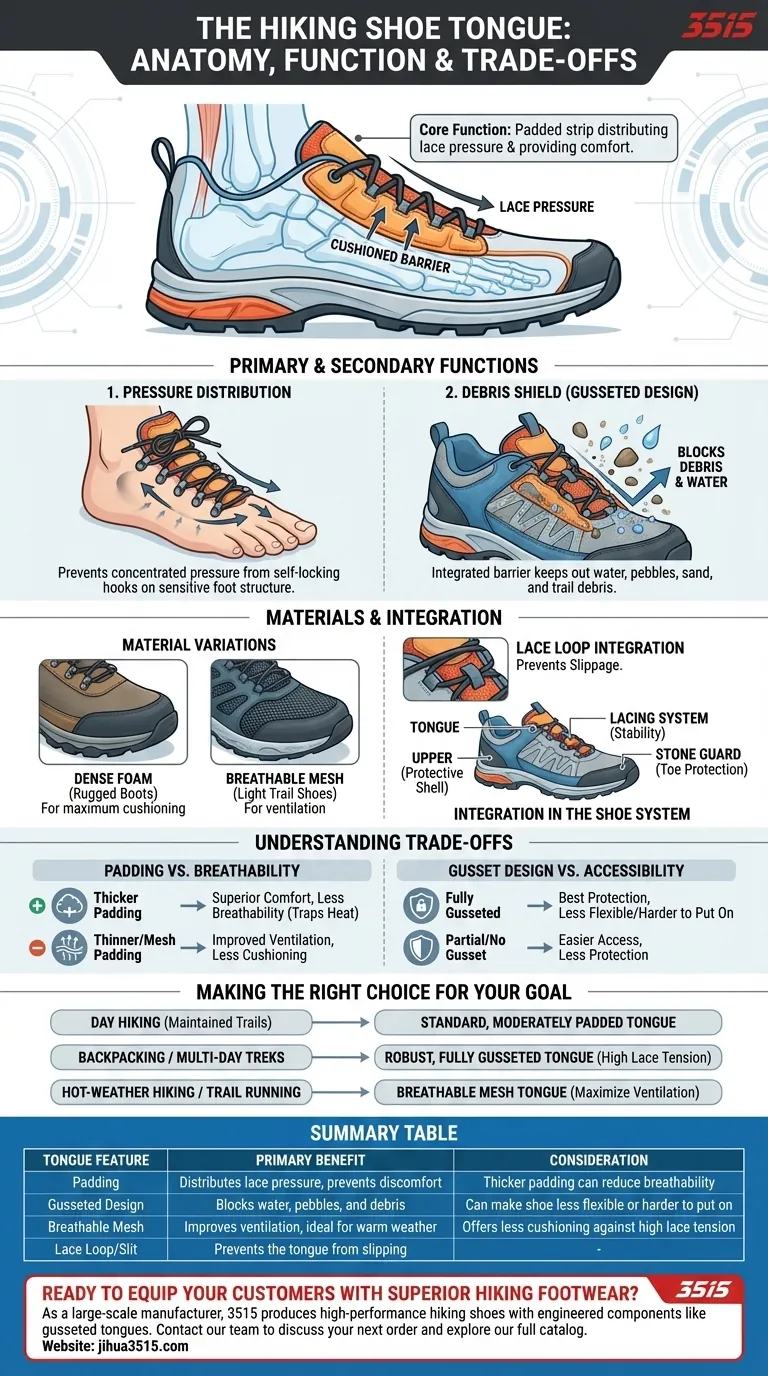
The most immediate job of the tongue is to create a cushioned barrier. As you tighten your laces over self-locking hooks, you create significant tension, and the tongue's padding prevents that pressure from concentrating on the sensitive tendons and bones on the top of your foot.
Critical Secondary Function: The Debris Shield
In most quality hiking shoes, the tongue is gusseted, meaning it's attached to the shoe's upper along the sides. This design creates a barrier that effectively blocks water, pebbles, sand, and other trail debris from entering the shoe.
Material and Padding
The material and thickness of the padding are key. Some tongues use dense foam for maximum cushioning on rugged boots, while others use breathable mesh on lighter trail shoes to improve ventilation.
How the Tongue Integrates with the Shoe
The tongue doesn't work in isolation. Its effectiveness is directly tied to how it functions as part of the entire shoe system.
The Lacing System
The tongue works in direct opposition to the lacing system and its hooks. The laces provide stability by securing your foot, and the tongue ensures this stability doesn't come at the cost of comfort or circulation.
The Upper
The tongue is an integral part of the shoe's upper—the entire part of the shoe that covers the foot. In a gusseted design, it's seamlessly integrated to create a protective shell.
The Stone Guard
While the stone guard at the front protects your toes from direct impact, the tongue protects the top of your foot from the constant, pressing force of the laces, which can be just as problematic over a long hike.
Understanding the Trade-offs
Choosing a shoe involves balancing competing features, and the tongue is no exception. Understanding these nuances is key to finding the right fit for your needs.
Padding vs. Breathability
A thickly padded tongue offers superior comfort and protection from lace bite. However, this extra material can reduce breathability, trapping heat and moisture inside the shoe, which can be a liability in hot weather.
Gusset Design vs. Accessibility
A fully gusseted tongue offers the best protection against debris and water. The trade-off is that it can sometimes make the shoe slightly more difficult to put on and take off and may feel less flexible to some users.
Potential for Slippage
A common annoyance is a shoe tongue that constantly slips to one side. To combat this, many shoes include a small loop or slit in the middle of the tongue through which you can thread the laces, holding it securely in place.
Making the Right Choice for Your Goal
When evaluating a hiking shoe, pay close attention to the tongue's design and how it aligns with your intended use.
- If your primary focus is day hiking on maintained trails: A standard, moderately padded tongue will provide all the necessary comfort and protection.
- If your primary focus is backpacking or multi-day treks: Look for a robust, fully gusseted tongue to handle high lace tension from a heavy pack and keep debris out.
- If your primary focus is hot-weather hiking or trail running: Prioritize a tongue made with breathable mesh to maximize ventilation, even if it means slightly less padding.
By understanding this single component, you can better assess how a hiking shoe will perform as a complete system for your foot on the trail.
Summary Table:
| Tongue Feature | Primary Benefit | Consideration |
|---|---|---|
| Padding | Distributes lace pressure, prevents discomfort | Thicker padding can reduce breathability |
| Gusseted Design | Blocks water, pebbles, and debris from entering | Can make the shoe less flexible or harder to put on |
| Breathable Mesh | Improves ventilation, ideal for warm weather | Offers less cushioning against high lace tension |
| Lace Loop/Slit | Prevents the tongue from slipping to the side | - |
Ready to Equip Your Customers with Superior Hiking Footwear?
As a large-scale manufacturer, 3515 produces a comprehensive range of high-performance hiking shoes and boots for distributors, brand owners, and bulk clients. Our expertise in engineering critical components—like the gusseted tongue for ultimate protection—ensures your customers get the perfect blend of comfort, durability, and trail-ready performance.
Let's discuss your next order. Contact our team today to explore our full catalog and manufacturing capabilities.
Visual Guide
Related Products
- Durable Rubber Sole Outdoor Shoes Wholesale & Custom Manufacturing
- Wholesale High-Traction Camo Boots - Custom Manufacturer for Brands
People Also Ask
- What is the function of the sole in outdoor shoes? Find the Perfect Grip and Support
- What role do outdoor shoes and sneakers play in navigating external terrains? Engineered Stability for Every Surface
- How is AI utilized in the design of outdoor and safety footwear? Harnessing Big Data for Market-Driven Shoe Innovation
- Why is durability important when selecting outdoor shoes? A Guide to Safety & Long-Term Value
- What are the key components of outdoor shoes that affect comfort and sturdiness? A Guide to Durable, High-Performance Footwear

