The standard business casual uniform is a combination of chinos or dress pants paired with a button-down dress shirt. A sport coat or blazer can be added for a more structured look, but a tie is generally not required. This outfit serves as a reliable baseline for most professional environments that do not require a full suit.
Business casual is not a rigid uniform, but a flexible dress code designed to project professionalism without the formality of a suit. The real goal is to understand the underlying principles of balance and context, not just to replicate a single specific outfit.

Deconstructing the "Business Casual" Philosophy
The term "business casual" is notoriously ambiguous because it describes an approach to dressing, not a specific set of clothes. Understanding its purpose is the key to executing it successfully.
The Goal: Professionalism Without Formality
The core idea is to find the middle ground between a formal suit and casual weekend wear. It communicates that you are serious about your work but are in a modern, accessible, and comfortable professional environment.
Why It's a Framework, Not a Rulebook
Unlike a strict uniform, business casual adapts to its surroundings. What works in a creative agency in a major city may differ from the standard at a manufacturing firm's corporate headquarters. The core components remain similar, but the execution changes.
The Foundational Outfit
The standard outfit—chinos or dress pants with a button-down shirt—is considered the universal starting point. It is almost impossible to get this combination wrong, making it a safe and reliable foundation to build upon.
Key Components of the Standard Outfit
While flexible, the business casual framework is built on a few essential pieces that create a polished and appropriate look.
Trousers: Chinos or Dress Pants
These are the bedrock of the outfit. Chinos offer a more relaxed yet clean appearance, while wool dress trousers present a sharper, more formal edge within the business casual spectrum.
The Shirt: A Button-Down as the Standard
A collared button-down or button-up shirt is non-negotiable. It instantly signals a professional context. Solid colors like white and light blue are the most traditional and safest choices.
The Optional Layer: Sport Coats and Blazers
Adding a sport coat or blazer is the fastest way to elevate the entire outfit. It adds structure and authority, making it ideal for important meetings or when you want to make a stronger impression without wearing a full suit.
Understanding the Pitfalls and Trade-offs
The flexibility of business casual is also its biggest challenge. Navigating the space between "business" and "casual" means avoiding common mistakes on both ends of the spectrum.
The Risk of Being Too Casual
This is the most common error. Items like t-shirts, polo shirts (in some conservative offices), distressed denim, shorts, and athletic sneakers typically fall outside the accepted standard and can undermine a professional image.
The Risk of Being Too Formal
Conversely, wearing a full matching suit and a tie can make you appear out of sync with your company's culture. You might be perceived as overly rigid or as if you are interviewing for another job.
Balancing Professionalism and Personal Style
Business casual leaves room for individuality, but it should be done thoughtfully. You can express personal style through high-quality accessories like a classic watch, well-made leather shoes, or a subtle pattern on your shirt. As the references note, your choice of footwear is an excellent way to maintain professionalism while reflecting your own taste.
Making the Right Choice for Your Goal
Use the principles of business casual to adapt the standard uniform to your specific needs and environment.
- If your primary focus is safety and fitting in: Stick to the core formula of khaki or navy chinos with a white or light blue button-down shirt.
- If your primary focus is showing authority in a meeting: Add a structured navy blazer over the standard shirt and chinos.
- If your primary focus is adapting to a new workplace: Observe what your direct manager and other leaders wear for the first week before you invest in new clothing.
Ultimately, mastering business casual is about confidently communicating competence and respect for your professional environment.
Summary Table:
| Component | Standard Choice | Purpose & Notes |
|---|---|---|
| Trousers | Chinos or Dress Pants | Foundation of the outfit; chinos for relaxed, wool trousers for sharper look. |
| Shirt | Button-Down Dress Shirt | Non-negotiable for professionalism; solid colors like white/light blue are safest. |
| Layer (Optional) | Sport Coat or Blazer | Elevates the outfit; adds structure and authority for important meetings. |
| Footwear | Leather Shoes (e.g., Loafers, Oxfords) | Critical for polish; avoid athletic sneakers. |
| Goal | Professionalism Without Formality | Find the middle ground between a full suit and casual wear. |
Need a reliable source for professional footwear?
As a large-scale manufacturer, 3515 produces a comprehensive range of high-quality shoes and boots for distributors, brand owners, and bulk clients. Whether you're equipping a corporate workforce or building your brand's collection, we have the production capabilities to meet your needs for durable, professional footwear that complements any business casual uniform.
Contact us today to discuss your requirements and discover how we can support your business.
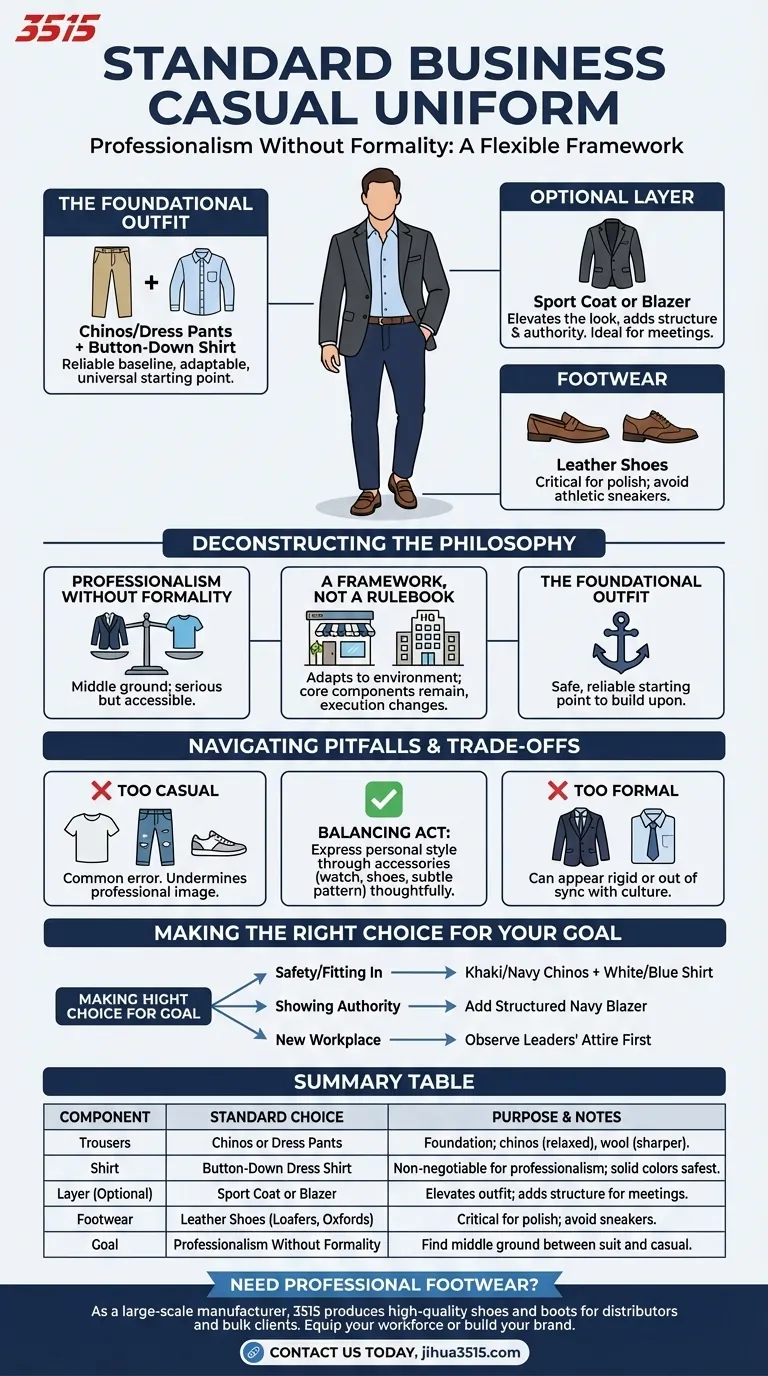
Visual Guide
Related Products
- Wholesale Comfortable Business Casual Shoes Custom Manufacturing
- Dial Closure Leather Business Casual Shoes for Wholesale & Private Label
- Wholesale Leather Business Casual Shoes with Dial Closure - Manufacturer of Comfort Dress Sneakers
- Wholesale Modern Perforated Leather Derby Shoes with Chunky Sole for Custom Branding
- Wholesale Comfort Dress Shoes with Dial Closure for Custom Manufacturing
People Also Ask
- What are the key characteristics of business casual shoes? Achieve Polished Versatility for Your Wardrobe
- What should be considered when selecting shoes for a casual business setting? Achieve the Perfect Balance of Style and Comfort
- Which types of shoes should be avoided with business casual attire? Maintain a Polished Professional Image
- What is the recommended approach to trying on business casual shoes? Ensure a Perfect Fit for Your Workday
- What are some types of business casual shoes? Build a Versatile & Professional Footwear Wardrobe