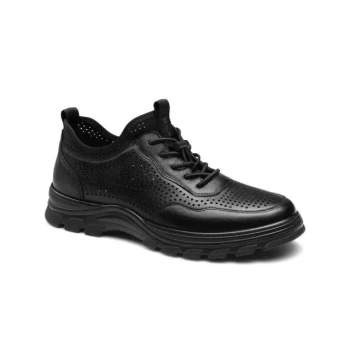
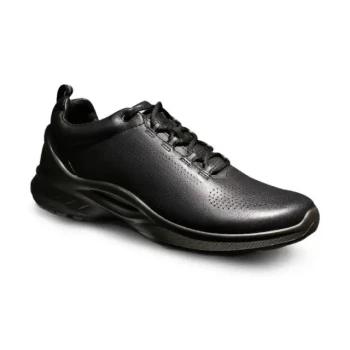
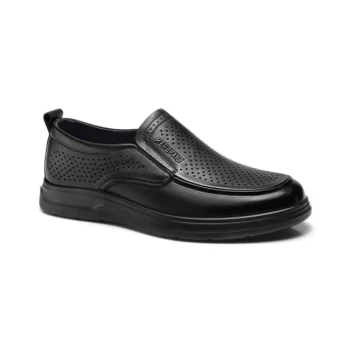
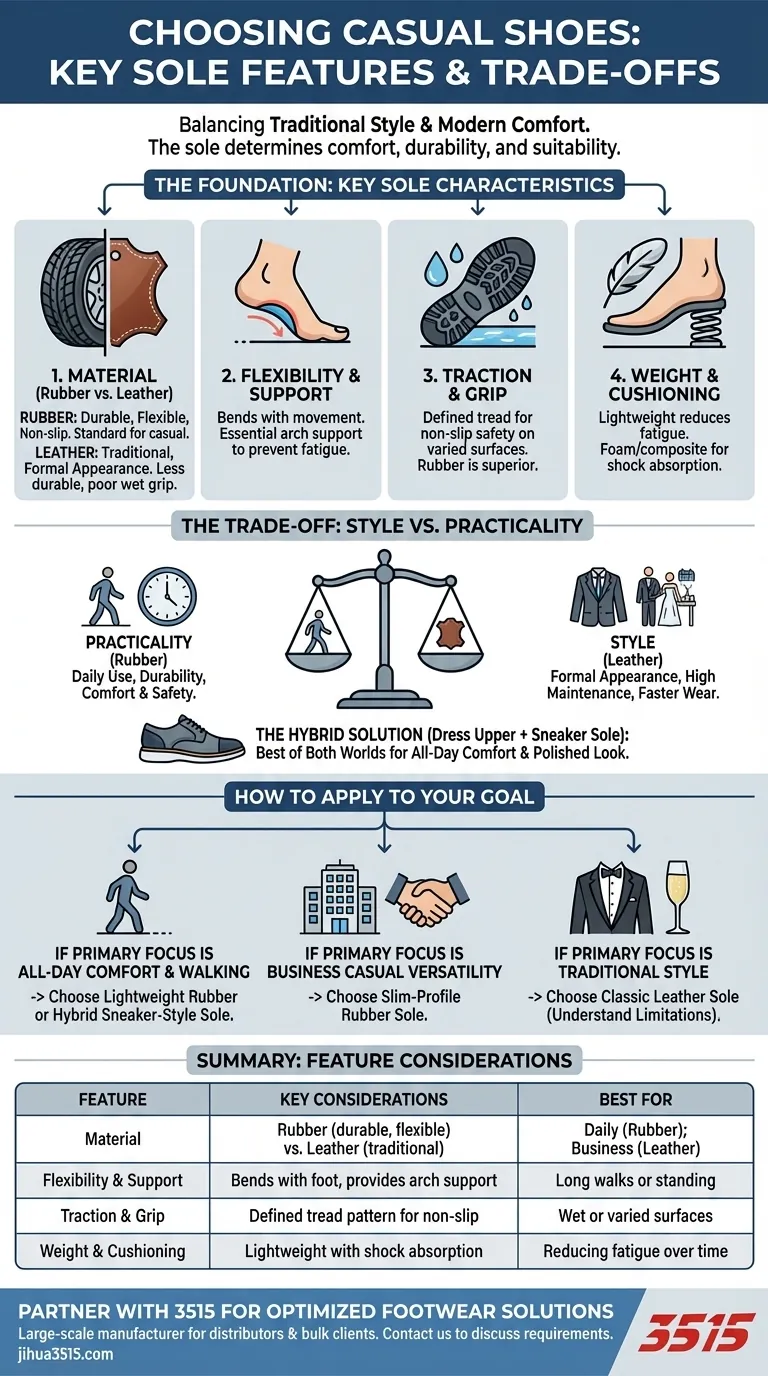
For casual shoes, the most critical sole features to consider are its material (typically rubber or leather), flexibility, traction, and overall weight. These characteristics directly determine the shoe's comfort, durability, and suitability for your daily activities.
The choice of a shoe's sole is fundamentally a trade-off between traditional style and modern comfort. Understanding this allows you to select a shoe that not only fits your aesthetic but also supports your lifestyle.
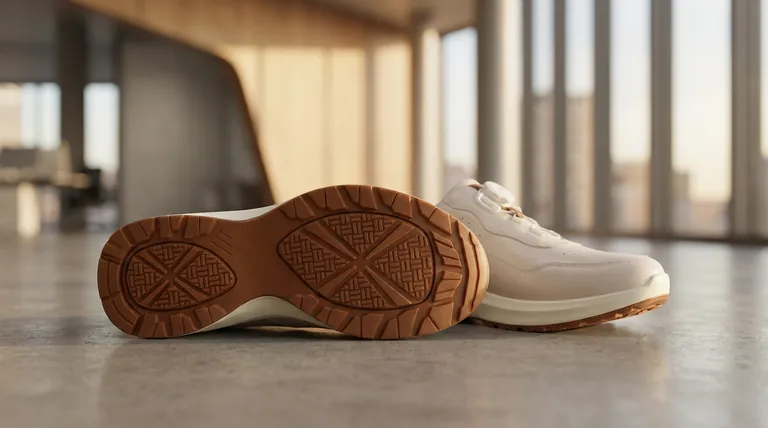
The Foundation of Comfort: Key Sole Characteristics
A shoe's sole is its engine. It dictates how the shoe feels after five minutes and after eight hours. Paying attention to its construction is the single best way to ensure long-term satisfaction.
### Material: Rubber vs. Leather
The material is the most significant factor. Rubber soles are the standard for most casual footwear because they offer excellent durability, flexibility, and non-slip traction.
Leather soles, on the other hand, are more traditional and are often found on dressier business-casual shoes. While they offer a sleek, formal appearance, they are less durable and provide poor grip in wet conditions.
### Flexibility and Support
A good casual sole should bend easily with the natural movement of your foot, especially near the ball of the foot. However, it must also provide enough structure and arch support to prevent fatigue during long periods of standing or walking.
### Traction and Grip
For a daily-use shoe, reliable grip is non-negotiable. Look for soles with a defined tread pattern to ensure non-slip properties on various surfaces, from office floors to city sidewalks. Rubber soles are vastly superior in this regard.
### Weight and Cushioning
A lightweight sole significantly reduces fatigue over the course of a day. Many modern casual shoes now incorporate sneaker-like foam or rubber composite soles that provide excellent shock absorption and comfort without adding bulk.
Understanding the Trade-offs: Style vs. Practicality
There is no single "best" sole; there is only the best sole for a specific purpose. Your decision should be guided by an honest assessment of how you intend to wear the shoes.
### The Case for Rubber Soles
For the vast majority of casual uses—from daily errands to walking around town—a rubber sole is the most practical choice. It delivers superior comfort, durability, and safety in a wide range of conditions.
### The Limitations of Leather Soles
Choose a leather sole when appearance is the top priority, such as in a formal business-casual environment. Be aware that they will wear out faster and require more care, and they are not ideal for long walks or inclement weather.
### The Rise of the Hybrid Sole
A growing number of shoes bridge the gap by pairing a dressier upper with a supportive, sneaker-like sole. These hybrids offer the best of both worlds, providing all-day comfort while maintaining a polished look suitable for the office.
How to Apply This to Your Goal
Use your primary need as the deciding factor to filter your options and make a confident choice.
- If your primary focus is all-day comfort and walking: Prioritize a lightweight, flexible rubber or hybrid sneaker-style sole with excellent cushioning.
- If your primary focus is versatility for business casual wear: A slim-profile rubber sole provides the ideal balance of professional appearance and practical durability.
- If your primary focus is traditional style for specific occasions: A leather sole is the classic choice, but understand its limitations regarding comfort and weather resistance.
By looking past the shoe's upper and inspecting its sole, you choose footwear that truly supports your daily needs.
Summary Table:
| Feature | Key Considerations | Best For |
|---|---|---|
| Material | Rubber (durable, flexible, non-slip) vs. Leather (traditional, formal) | Daily wear (Rubber); Business-casual events (Leather) |
| Flexibility & Support | Bends with foot movement, provides arch support | Long walks or standing |
| Traction & Grip | Defined tread pattern for non-slip safety | Wet or varied surfaces |
| Weight & Cushioning | Lightweight with shock absorption (e.g., foam) | Reducing fatigue over time |
Ready to find the perfect casual shoes for your needs? As a large-scale manufacturer, 3515 produces a comprehensive range of footwear for distributors, brand owners, and bulk clients. Our production capabilities encompass all types of shoes and boots, ensuring you get soles optimized for comfort, durability, and style. Contact us today to discuss your footwear requirements and leverage our expertise!
Visual Guide
Related Products
- Wholesale Comfortable Business Casual Shoes Custom Manufacturing
- Dial Closure Leather Business Casual Shoes for Wholesale & Private Label
- Wholesale Leather Business Casual Shoes with Dial Closure - Manufacturer of Comfort Dress Sneakers
- Wholesale Modern Perforated Leather Derby Shoes with Chunky Sole for Custom Branding
- Wholesale Durable Camouflage Canvas Shoes with High-Traction Cleated Rubber Sole
People Also Ask
- What are the key characteristics of business casual shoes? Achieve Polished Versatility for Your Wardrobe
- Which types of shoes should be avoided with business casual attire? Maintain a Polished Professional Image
- What should be considered when selecting shoes for a casual business setting? Achieve the Perfect Balance of Style and Comfort
- What is the recommended approach to trying on business casual shoes? Ensure a Perfect Fit for Your Workday
- What are some types of business casual shoes? Build a Versatile & Professional Footwear Wardrobe