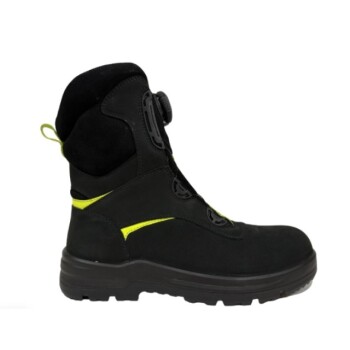
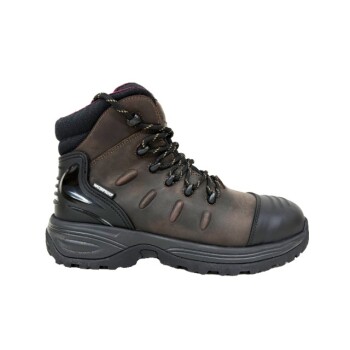
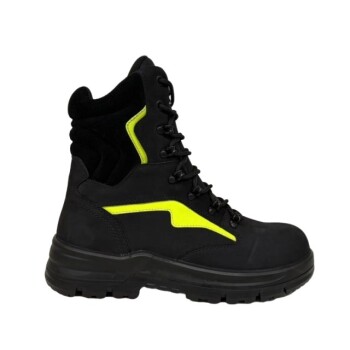
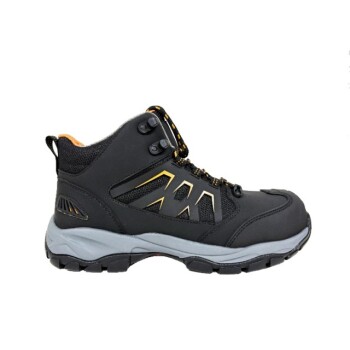
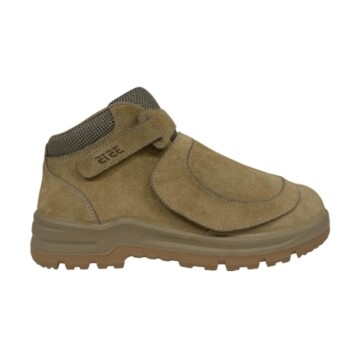
The provision of safety hardware acts only as a potential shield; training is the mechanism that activates it. While equipment like safety boots provides the physical barrier necessary for protection, safety training is significant because it ensures the wearer understands the correct methods for application, fit, and maintenance, guaranteeing the gear functions as intended during critical exposures.
Hardware provides the capacity for protection, but human competence ensures its reality. Without rigorous training on fit checks and maintenance, even the highest-rated safety boots can fail to provide the intended defense, rendering the investment in equipment futile.
The Critical Link Between Gear and Knowledge
Correct Application and Fit
Possessing safety boots is insufficient if they are not worn correctly. Training ensures that workers understand the specific protocols for donning and doffing equipment. This includes performing necessary fit checks to ensure there are no gaps in protection that could leave the worker vulnerable to injury or contamination.
Maintenance and Reliability
Protective equipment is subject to wear and tear that can compromise its integrity. Through training, workers learn proper maintenance procedures to detect early signs of failure. This proactive approach ensures the boots retain their protective properties over time rather than failing unexpectedly in a high-risk zone.
Understanding the "Why" Behind the Gear
Training contextualizes the hardware, transforming it from a mandate into a calculated defense strategy. In biological contexts, for example, footwear serves as a barrier against pathogen migration between clean and contaminated zones. When workers understand that their boots prevent the spread of liquid splashes and contaminants, compliance with safety protocols improves.
Common Pitfalls to Avoid
The Trap of False Security
A major trade-off occurs when organizations over-invest in hardware while under-investing in education. Relying solely on the presence of high-quality boots can create a false sense of security. Workers may take unnecessary risks, assuming the equipment makes them invincible, when improper usage actually leaves them exposed.
Ignoring the Human Factor
Hardware is static, but environments are dynamic. If training does not simulate real-world scenarios, workers may not know how to adjust their equipment usage during an emergency. Equipment without the cognitive toolset to use it effectively becomes a liability rather than an asset.
Making the Right Choice for Your Safety Strategy
To maximize the effectiveness of your safety program, consider the following approach:
- If your primary focus is Equipment Procurement: Ensure every hardware purchase is paired with a specific educational module regarding its limitations and fit.
- If your primary focus is Bio-Safety Control: Prioritize training on how footwear acts as a migration barrier to prevent cross-contamination between zones.
- If your primary focus is Long-Term Compliance: Implement recurring training cycles that focus on inspection and maintenance to extend the lifecycle of your safety assets.
True safety is achieved not just by what workers wear, but by what they know.
Summary Table:
| Aspect | Safety Hardware (Boots) | Safety Training (Knowledge) | Synergistic Result |
|---|---|---|---|
| Function | Physical barrier & impact defense | Activation of protection protocols | Comprehensive risk mitigation |
| Reliability | Susceptible to wear & tear | Ensures proactive maintenance | Extended gear lifecycle |
| Compliance | Mandated requirement | Understanding the "Why" | Higher protocol adherence |
| Safety Gap | False sense of security if used alone | No physical defense if used alone | Elimination of human & mechanical error |
Secure Your Workforce with 3515’s Professional Safety Solutions
At 3515, we understand that high-performance footwear is only effective when backed by proper knowledge. As a premier large-scale manufacturer serving global distributors and brand owners, we provide the comprehensive production capabilities your safety strategy requires.
Our flagship Safety Shoes series is engineered for the most demanding high-risk environments, supported by an extensive portfolio including:
- Tactical & Work Boots for rugged durability.
- Outdoor & Training Shoes for dynamic mobility.
- Sneakers & Dress Shoes for diverse professional needs.
Partner with us to gain more than just hardware; gain a manufacturing partner dedicated to quality and compliance. Contact us today to discuss your bulk requirements and discover how our expertise can add value to your safety brand.
References
- Carmen Rojas. Impact of personal protective equipment in preventing occupational injuries: a systematic review and meta-analysis. DOI: 10.3389/fpubh.2025.1720363
This article is also based on technical information from 3515 Knowledge Base .
Related Products
- Puncture-Resistant Velcro Safety Boots for Wholesale & Custom Manufacturing
- Wholesale Durable Safety Boots | Custom Steel Toe & Puncture-Resistant Manufacturing
- Premium Grain Leather Safety Boots for Bulk Supply
- Heavy-Duty Waterproof Nubuck Safety Boots Safety Shoes for Bulk Supply
- Premium High-Cut Waterproof Safety Boots Manufacturing & Wholesale Solutions
People Also Ask
- Why are industrial safety boots with steel toes necessary for machine operators? Essential Foot Protection for Safety
- What are the characteristics of steel toe safety boots? Maximum Protection, Key Trade-offs
- Is it true that steel toes can cause toes to get cut off? Debunking the Dangerous Myth
- What are the primary safety functions of safety boots with steel-toe designs? Essential Protection for Industry
- What are the different types of safety toe boots available? Choose the Right Protection for Your Job