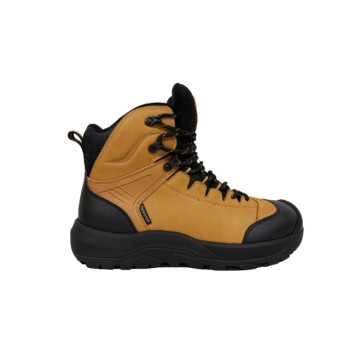
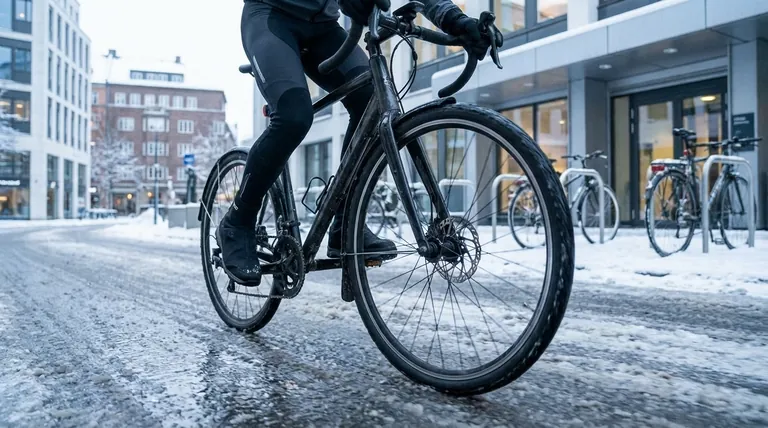
The optimal footwear for cold-weather cycling commutes is a two-part system combining your regular indoor shoes with a pair of insulated, waterproof overshoes. This approach provides critical warmth and protection during your ride while allowing you to remove the outer layer upon arrival, leaving you with comfortable and appropriate footwear for your indoor destination.
The key to successful cold-weather cycle commuting isn't finding one perfect boot, but using a flexible system. Insulated overshoes adapt your everyday footwear for the ride, solving the common problem of being stuck in bulky, wet boots all day indoors.
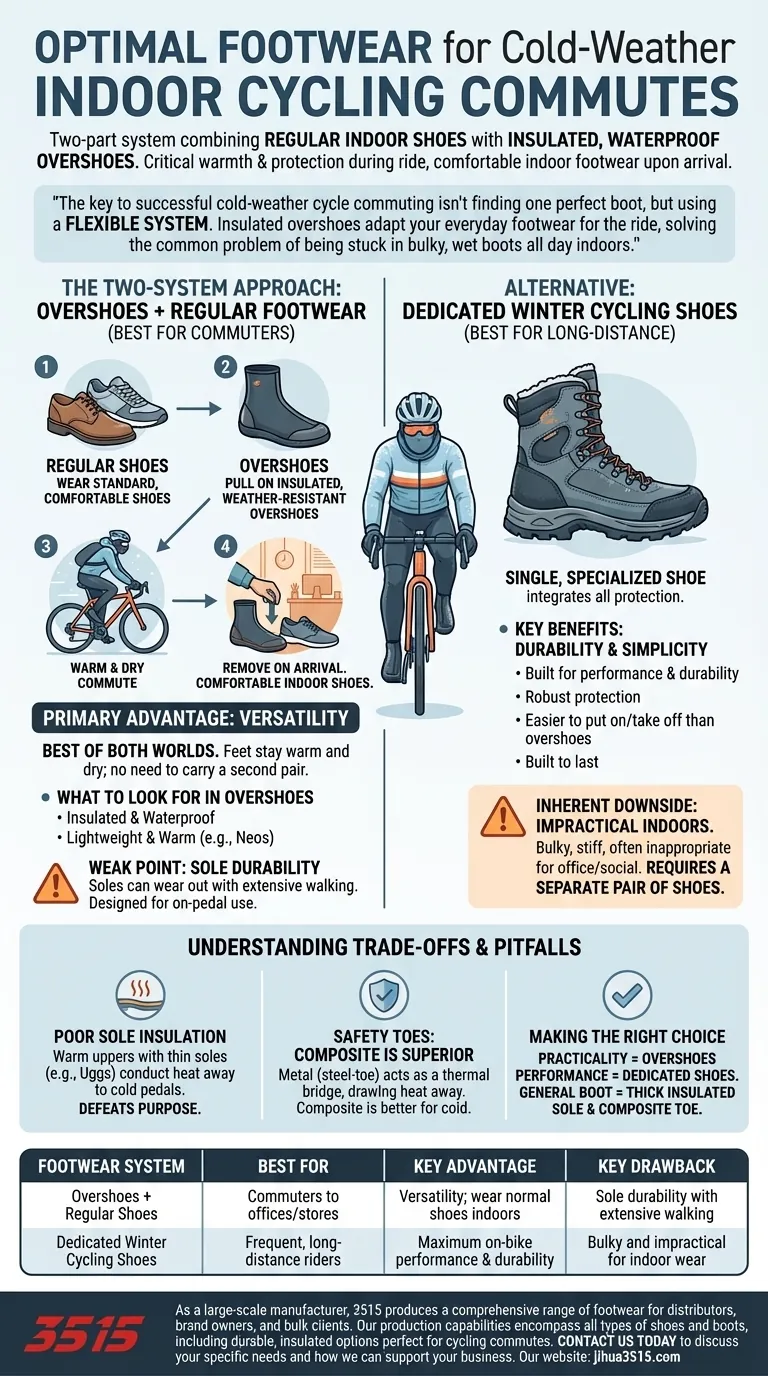
The Two-System Approach: Overshoes + Regular Footwear
This strategy is the most practical solution for anyone riding to a destination like an office, a store, or a friend's house. It separates your on-bike protection from your off-bike comfort.
How It Works
The concept is simple: you wear your standard, comfortable shoes—be it work shoes, boots, or sneakers. Before you leave, you pull a pair of insulated, weather-resistant overshoes on top of them. When you arrive, you simply slip the overshoes off.
The Primary Advantage: Versatility
This method allows you to have the best of both worlds. Your feet stay warm and dry during the commute, protected from wind, rain, or snow. Once indoors, you are in your normal, comfortable shoes without needing to carry a second pair.
What to Look for in Overshoes
Seek out models that are both insulated and waterproof. Brands like Neos are known for being lightweight and warm, making them a practical choice for this purpose.
Alternative: Dedicated Winter Cycling Shoes
For some riders, a single, specialized shoe is a better fit. This option integrates all the necessary protection into one piece of footwear.
Who This Is For
Dedicated winter cycling shoes are the best option for frequent, long-distance riders or those facing consistently harsh conditions. They are built for performance and durability on the bike.
Key Benefits: Durability and Simplicity
These shoes are engineered specifically for winter cycling. They offer robust protection, are easier to put on and take off than an overshoe system, and are built to last for many seasons of hard use.
The Inherent Downside
The main drawback is practicality at your destination. You arrive wearing a pair of cycling-specific boots, which can be bulky, stiff, and often not appropriate for an office or social environment. This usually requires you to bring a separate pair of shoes to change into.
Understanding the Trade-offs and Common Pitfalls
Choosing the right system requires understanding the limitations and avoiding common mistakes that lead to cold feet.
The Weak Point of Overshoes: Sole Durability
While highly practical, the soles of some overshoes can wear out quickly with extensive walking. They are designed primarily for on-pedal use, so be mindful of how much walking you do in them.
The Mistake of Poor Sole Insulation
A common error is choosing footwear with warm uppers but thin, uninsulated soles. Boots like Uggs, for example, have warm sheepskin but their soles readily conduct heat away from your feet and into the cold metal pedals, defeating the purpose.
A Note on Safety Toes
If your regular footwear includes safety toes, the material matters immensely. Composite toe boots are far superior to steel-toe versions for cold weather, as the metal acts as a thermal bridge, drawing heat away from your toes.
Making the Right Choice for Your Commute
Your ideal solution depends entirely on your specific needs and priorities.
- If your primary focus is practicality and office-appropriateness: The overshoe system is your best choice, allowing you to wear your normal shoes indoors.
- If your primary focus is maximum on-bike performance and durability for frequent rides: A dedicated winter cycling shoe offers a more robust and streamlined solution, assuming you can change shoes at your destination.
- If you are choosing a general-purpose boot to wear under overshoes: Prioritize a thick, insulated sole and consider composite-toe options over steel-toe for superior warmth.
By understanding these systems and their trade-offs, you can confidently assemble the right footwear solution that keeps you warm on the bike and comfortable off it.
Summary Table:
| Footwear System | Best For | Key Advantage | Key Drawback |
|---|---|---|---|
| Overshoes + Regular Shoes | Commuters to offices/stores | Versatility; wear normal shoes indoors | Sole durability with extensive walking |
| Dedicated Winter Cycling Shoes | Frequent, long-distance riders | Maximum on-bike performance & durability | Bulky and impractical for indoor wear |
As a large-scale manufacturer, 3515 produces a comprehensive range of footwear for distributors, brand owners, and bulk clients. Our production capabilities encompass all types of shoes and boots, including durable, insulated options perfect for cycling commutes. Whether you need reliable footwear for overshoe systems or robust winter boots, we can deliver high-quality, custom solutions at scale. Contact us today to discuss your specific needs and how we can support your business.
Visual Guide
Related Products
- Premium Insulated Safety Boots and Shoes for Wholesale & Bulk Orders
- Custom Manufactured Air Cushion Leather Business Shoes for Wholesale
- Custom OEM Training Shoes Wholesale Manufacturer Durable & Breathable
- Durable Waterproof Rain Boots | Custom Manufacturer for Wholesale & Brands
- Wholesale Durable & Breathable Training Shoes for Custom Brands
People Also Ask
- What are the recommended insulation ratings for mild winter conditions? A Guide for Active & Stationary Workers
- How does insulation thickness correlate with temperature ranges? A Guide to Choosing the Right Warmth
- What insulation level is needed for severe cold and stationary work? 1200g or Higher is Essential
- What safety advantages do insulated boots offer beyond warmth? Dielectric Protection & Superior Grip
- How does fleece lining contribute to the warmth of insulated boots? Trapping Air for Superior Cold Protection