
At its core, the rocker bottom sole of a walking boot is designed to mimic your natural walking motion. Because your ankle is immobilized, the boot's curved sole allows your foot to roll forward smoothly from heel to toe. This design makes walking feel more natural, reduces pressure on your injury, and makes movement easier during your recovery period.
The rocker bottom doesn't just make walking possible in a rigid boot; it fundamentally alters the biomechanics of your gait. It effectively replaces the natural flex of your foot and ankle, offloading stress from the injury site to promote a safer and more efficient healing environment.
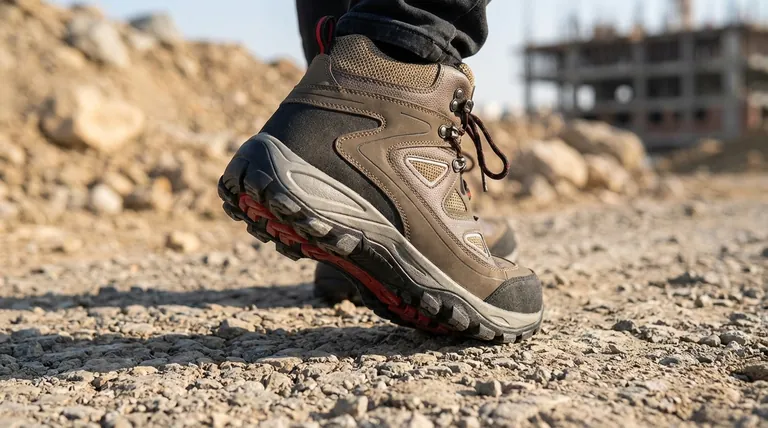
How a Rocker Bottom Changes Your Gait
To understand the purpose of the rocker sole, it's helpful to first consider how a healthy foot works when you walk.
Replicating Natural Foot Movement
A normal walking stride is a fluid motion. Your heel strikes the ground first, your foot rolls forward, and you push off with your toes. This process requires significant flexibility in your ankle and foot joints.
A walking boot, by design, eliminates this flexibility to protect an injury. A flat-bottomed boot would force you to walk with a clunky, unnatural, and jarring gait.
The "Rolling" Effect
The rocker bottom solves this problem with its curved shape, much like the runners on a rocking chair.
This curve allows the boot to roll forward smoothly, simulating the heel-to-toe motion you can no longer perform. It creates a stable, predictable path for your foot to follow with each step.
Reducing Pressure on the Injury
This rolling motion is the key to offloading stress. Instead of your foot absorbing the impact and then flexing to push off, the boot's structure does the work.
By distributing the force of each step along the entire curved sole, it significantly reduces the pressure and strain on the specific bones, ligaments, or tendons that are trying to heal.
The Key Benefits for Recovery
The rocker sole design isn't just about movement; it's a critical component of the healing process itself, offering several distinct advantages.
A More Efficient Stride
While it may feel strange at first, the rocker design promotes a smoother and more energy-efficient stride. This helps prevent the excessive limping that often leads to secondary pain in your hips, knees, or back.
Enhanced Stability While Moving
The predictable rolling motion helps you maintain forward momentum and balance while you are walking. It guides your foot through a stable arc, which can make you feel more confident on your feet during recovery.
Creating an Ideal Healing Environment
Ultimately, the most important benefit is protecting the injury. By offloading pressure and preventing unnatural joint movement, the rocker bottom ensures the injured area remains stable and protected, allowing your body to heal properly.
Common Pitfalls to Avoid
While the design is highly effective, it's important to be aware of the adjustment period and potential challenges.
The Initial Awkwardness
Walking in a boot with a rocker bottom feels unnatural at first. It takes time to trust the boot and learn to roll with your steps rather than trying to walk as you normally would.
Mismatched Leg Length
The sole of a walking boot is thick, creating a height difference between your legs. This can throw off the alignment of your hips and spine, potentially causing discomfort. Many people find it helpful to wear a thick-soled shoe on their uninjured foot to even things out.
Overconfidence
Once you get used to the boot, it can be easy to do too much, too soon. Always follow your doctor's orders regarding weight-bearing and activity levels to avoid re-injury.
Making the Right Choice for Your Goal
Using the boot correctly is essential for a smooth recovery. Your approach should align with your primary goal at each stage of the healing process.
- If your primary focus is safety: Walk slowly and deliberately, concentrating on letting the boot roll smoothly from heel to toe with each step.
- If your primary focus is comfort: Ensure all straps are snug but not cutting off circulation, and consider a shoe with a similar sole height for your other foot to keep your hips level.
- If your primary focus is efficient recovery: Adhere strictly to your doctor's weight-bearing instructions and use the rocker bottom's support to stay mobile as directed.
Ultimately, the rocker bottom is a crucial piece of engineering that transforms a rigid, protective brace into a functional tool for your recovery.
Summary Table:
| Aspect | Purpose of Rocker Bottom Design |
|---|---|
| Core Function | Mimics natural heel-to-toe walking motion when the ankle is immobilized. |
| Key Benefit | Reduces pressure and strain on the injury site to promote healing. |
| User Experience | Creates a smoother, more stable, and energy-efficient stride. |
| Healing Support | Offloads stress from the injury, creating an ideal environment for recovery. |
Need a reliable supplier for high-quality walking boots with effective rocker bottom soles?
As a large-scale manufacturer, 3515 produces a comprehensive range of medical and recovery footwear for distributors, brand owners, and bulk clients. Our production capabilities encompass all types of therapeutic shoes and boots, ensuring durability, comfort, and superior biomechanical support for end-users.
Let us help you provide the best recovery solutions for your customers. Contact our team today to discuss your needs and explore our product catalog!
Visual Guide

Related Products
- Durable Goodyear Welt Leather Work Boots for Wholesale & Private Label
- Durable Rubber Sole Outdoor Shoes Wholesale & Custom Manufacturing
- Wholesale Safety Boots Manufacturer for Custom & Private Label Orders
- Wholesale Durable Camouflage Canvas Shoes with High-Traction Cleated Rubber Sole
- Heavy-Duty Waterproof Nubuck Safety Boots Safety Shoes for Bulk Supply
People Also Ask
- What is the difference between full-grain and top-grain leather? Premium Material Guide for Boot Manufacturers
- What are the advantages of leather as an upper material for work boots? Unmatched Durability & Custom Comfort
- Why is it important to waterproof leather work boots? Protect Your Investment and Performance
- How should new leather work boots be broken in? A Guide to Comfort and Durability
- What are the advantages of leather uppers in work boots? Unmatched Durability & Protection

















