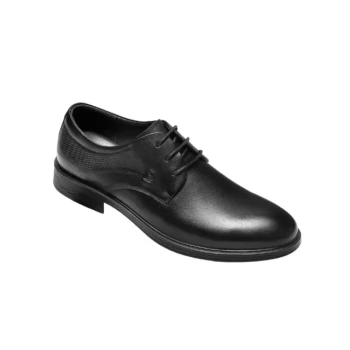
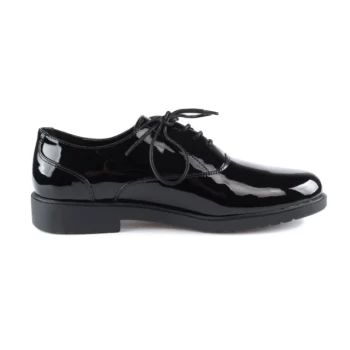
The single most important rule for drying wet leather shoes is to do it slowly and gently. The goal is to remove moisture without stripping the leather of its natural oils, which can cause cracking and permanent damage. The correct method involves stuffing the shoes with an absorbent material and allowing them to air dry naturally at room temperature, far away from any direct heat source.
Rushing the drying process with heat is the primary cause of irreversible damage to leather footwear. The correct technique prioritizes gentle moisture absorption and patient air drying to preserve the leather's integrity and shape.
The Step-by-Step Drying Process
Follow these steps precisely as soon as your shoes get wet to mitigate damage and restore them properly.
Step 1: Remove Laces and Excess Water
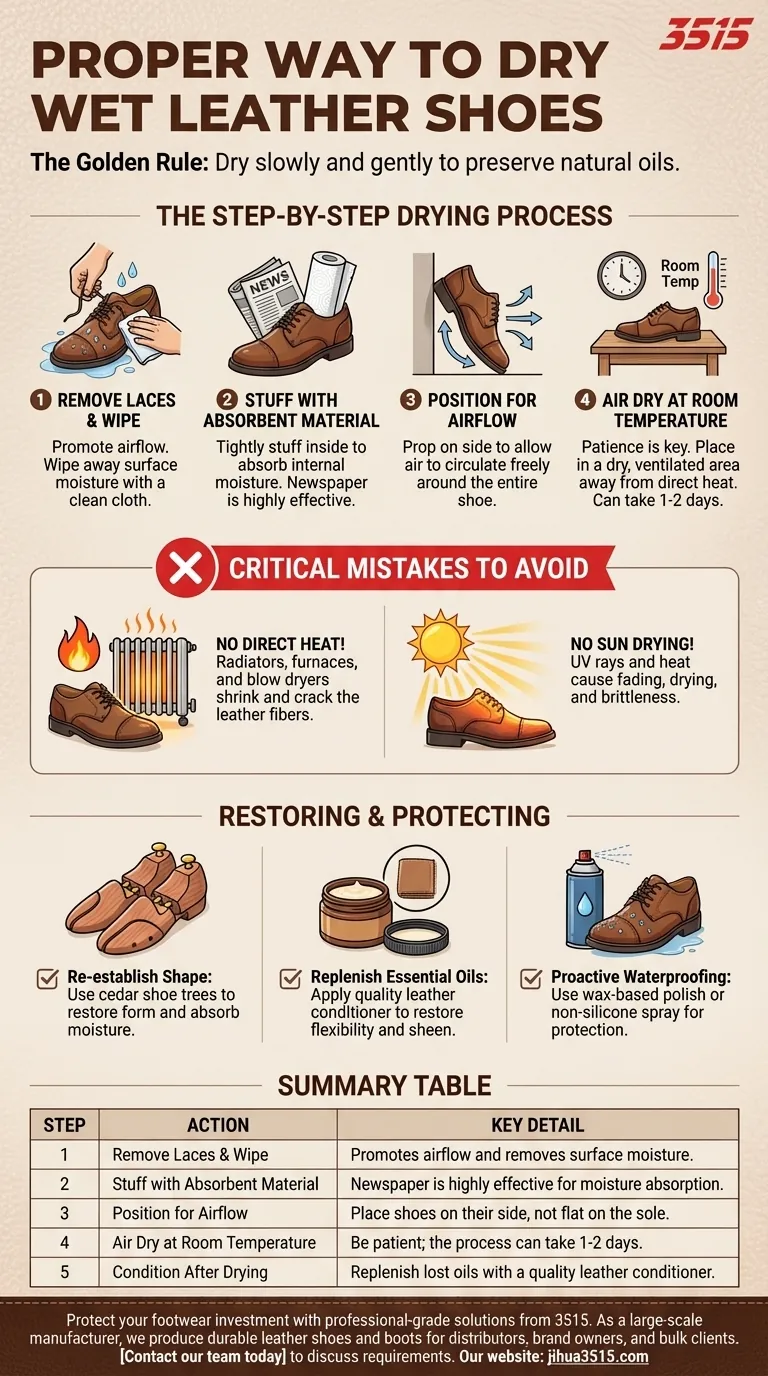
Immediately take out the shoelaces to open up the shoe and promote airflow. Use a clean, dry rag or towel to wipe away all surface moisture from the outside of the shoes.
Step 2: Absorb Internal Moisture
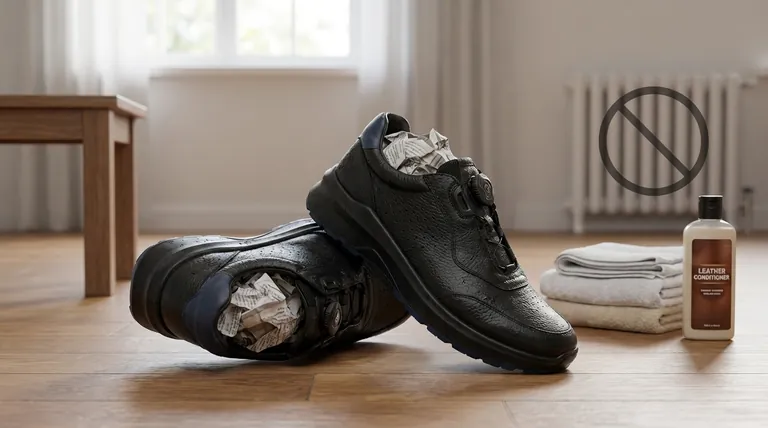
Stuff the inside of the shoes tightly with an absorbent material. Newspaper is a classic and highly effective choice due to its high absorbency.
However, be aware that on very light-colored shoe linings, the ink from newspaper can potentially transfer. A safer, albeit less absorbent, alternative is using a small, dry towel or paper towels.
Step 3: Position for Optimal Airflow
Do not leave the shoes sitting flat on their soles, as this traps moisture underneath.
Instead, place them on their side or prop them up against a wall. This allows air to circulate freely around the entire shoe, ensuring a more even and efficient drying process.
Step 4: Air Dry at Room Temperature
Patience is the most critical tool in this process. Place the shoes in a dry, well-ventilated area at room temperature.
You may need to replace the damp newspaper or towels every few hours for the first day if the shoes were completely saturated. The entire process can take one to two days.
Critical Mistakes to Avoid
Understanding what not to do is just as important as knowing the correct steps. These common mistakes will permanently ruin a good pair of leather shoes.
Why Direct Heat is Catastrophic
Never place your leather shoes near a heat source. This includes radiators, furnaces, heating vents, or campfires.
Using a blow dryer is equally destructive. Intense heat forces the water out too quickly, which causes the leather's protein fibers to shrink, stiffen, and crack. This damage is irreversible.
The Dangers of Sun Drying
While it may seem natural, drying shoes in direct sunlight is also harmful. The sun's UV rays and heat will cause the leather to fade, dry out unevenly, and become brittle.
Restoring and Protecting Your Shoes
Once the shoes are completely dry to the touch, the restoration process begins. This final stage is crucial for returning the leather to its original condition.
Re-establishing Shape
Remove the stuffing material. If you have them, insert a pair of cedar shoe trees. These will help fully restore the shoe's original shape and absorb any final traces of moisture and odor.
Replenishing Essential Oils
Water displaces the natural oils in leather, leaving it vulnerable. You must replenish these oils with a quality leather conditioner.
Apply a small amount of conditioner or mink oil with a clean, soft cloth, working it into the leather in small circles. This step revitalizes the leather, restoring its flexibility and sheen.
Considering Proactive Waterproofing
To prevent future issues, consider applying a waterproofing treatment after the shoes have been conditioned. Wax-based polishes offer excellent water resistance while also nourishing the leather.
For a quicker solution, a non-silicone waterproofing spray can provide a protective barrier. Avoid silicone-based products, which can clog the leather's pores and prevent it from breathing.
Making the Right Choice for Your Leather
Your immediate action and follow-up care will determine the lifespan of your footwear after a soaking.
- If your priority is immediate damage control: Immediately stuff the shoes with newspaper and place them on their side in a dry room, away from any and all heat.
- If your priority is restoring the original feel and shape: Never skip the final conditioning step, as this is what prevents the leather from becoming stiff and brittle.
- If your priority is preventing future water damage: Proactively treat your clean, dry shoes with a quality wax polish or non-silicone spray before wearing them in wet conditions.
Properly caring for wet leather is a simple process that protects your investment and keeps your shoes looking their best for years to come.
Summary Table:
| Step | Action | Key Detail |
|---|---|---|
| 1 | Remove Laces & Wipe | Promotes airflow and removes surface moisture. |
| 2 | Stuff with Absorbent Material | Newspaper is highly effective for moisture absorption. |
| 3 | Position for Airflow | Place shoes on their side, not flat on the sole. |
| 4 | Air Dry at Room Temperature | Be patient; the process can take 1-2 days. |
| 5 | Condition After Drying | Replenish lost oils with a quality leather conditioner. |
Protect your footwear investment with professional-grade solutions from 3515. As a large-scale manufacturer, we produce a comprehensive range of durable leather shoes and boots for distributors, brand owners, and bulk clients. Our expertise ensures your products are built to last. Need reliable footwear for your inventory? Contact our team today to discuss your requirements and discover how we can support your business with quality and scale.
Visual Guide
Related Products
- Factory Direct Wholesale Leather Comfort Shoes with Dial Closure
- Classic Leather Derby Dress Shoes Wholesale & Custom Manufacturing
- Custom Manufactured Air Cushion Leather Business Shoes for Wholesale
- Wholesale Comfort Leather Business Shoes with Dial Lacing System
- Wholesale Leather Apron Toe Derby Shoes Custom Factory Production
People Also Ask
- What are some common materials used to make men's leather shoes? A Guide to Calfskin, Cordovan & Suede
- How can you waterproof leather shoes? Choose the Right Method for Maximum Protection
- What role do auxiliary materials play in leather shoe product mix optimization? Maximize Profit & Stability
- What are the best practices for storing leather shoes? Preserve Your Investment for Years to Come
- What are the maintenance requirements for leather shoes? A Complete Guide to Longevity