
To properly clean wellies, you should first remove loose mud with warm water and a cloth. For tougher dirt, use a soft cloth or brush with a mild, soapy water solution, scrubbing gently in circular motions. Finally, rinse away all soap residue with a clean cloth and allow the boots to air dry naturally, away from any direct heat sources.
The goal of cleaning wellies extends beyond appearance; it's about preserving the rubber's flexibility and structural integrity. Regular, gentle cleaning and proper drying are the most critical factors in extending the life of your boots.
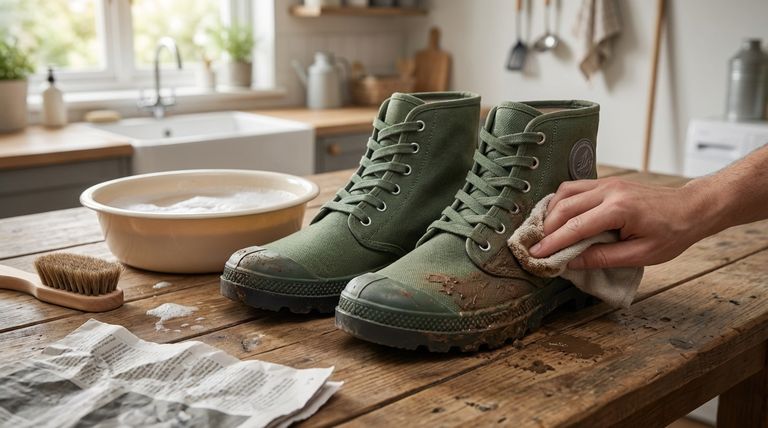
The Essential Cleaning Process: A Step-by-Step Guide
Proper technique ensures you remove dirt without damaging the material. This process is safe for all standard rubber and PVC wellington boots.
Step 1: Remove Surface Mud
Before washing, use a cloth or soft brush with plain warm water to wipe away the top layer of mud and debris. This prevents you from grinding abrasive particles into the boot's surface during the deeper clean.
Step 2: Wash with a Mild Solution
Mix a small amount of mild soap, such as washing-up liquid, into a basin of warm water. A good ratio is about one teaspoon of soap per liter of water.
Dampen a soft cloth in this solution and wipe down the entire exterior of the boot using gentle, circular motions.
Step 3: Detail the Soles
The treads on the sole require more attention to maintain grip. Dip a soft-bristled brush into your soapy water solution and scrub the soles to dislodge any packed-in dirt and stones.
Step 4: Address the Interior
To combat odors and mildew, dampen a clean cloth with your mild soap solution and wipe the inside of the boots. Do not soak the interior; a light cleaning is all that is needed.
Proper Drying is Critical for Longevity
How you dry your boots is just as important as how you wash them. Improper drying is the most common cause of premature cracking and damage.
The Golden Rule: Air Dry Naturally
Never place your wellies near a direct heat source like a radiator, fireplace, or in direct, intense sunlight. This extreme temperature change causes the rubber to become brittle and crack.
Stuff the boots with newspaper to absorb moisture from the inside and place them in a cool, well-ventilated area to air dry completely.
Common Pitfalls to Avoid
Avoiding a few common mistakes will ensure your boots last for many seasons. These errors can quickly degrade the rubber and compromise the boot's waterproof qualities.
Harsh Chemicals and Detergents
Strong detergents and chemical cleaners can strip the natural plasticizers from the rubber. This leads to the material drying out, losing its suppleness, and eventually splitting. Always stick to mild soap.
Abrasive Cleaning Tools
Using a hard-bristled brush or scouring pad on the boot's upper can cause scratches and weaken the surface. A soft cloth or sponge is sufficient for the main body of the boot.
Forgetting to Condition
Rubber benefits from occasional conditioning to maintain its flexibility. Using a specialized silicone spray or a rubber conditioner after cleaning can help prevent cracking, especially if the boots are used frequently or stored for long periods.
Making the Right Choice for Your Goal
Your cleaning routine can be adapted based on your immediate needs and long-term goals.
- If your primary focus is a quick clean after a muddy walk: A simple rinse with warm water and a wipe-down is sufficient to prevent dirt from setting.
- If your primary focus is deep cleaning after heavy use: Follow the full soap-and-water process, paying close attention to the soles and interior to maintain hygiene and performance.
- If your primary focus is long-term preservation and longevity: Incorporate a rubber conditioning spray into your routine every few months and always ensure you are drying and storing the boots correctly.
Consistent and gentle care is the key to ensuring your wellies remain a reliable and long-lasting tool for any adventure.
Summary Table:
| Step | Key Action | Purpose |
|---|---|---|
| 1. Remove Mud | Wipe with warm water & cloth | Prevents abrasive damage during wash |
| 2. Wash Exterior | Use mild soapy water & soft cloth | Gently cleans without harming rubber |
| 3. Clean Soles | Scrub with soft brush | Maintains grip by removing packed dirt |
| 4. Dry Properly | Air dry naturally, stuffed with newspaper | Prevents cracking from heat damage |
Need durable, easy-to-clean wellies for your business? As a large-scale manufacturer, 3515 produces a comprehensive range of high-quality rubber and PVC boots designed for longevity and ease of maintenance. Our footwear is perfect for distributors, brand owners, and bulk clients who value durability and consistent performance. Contact us today to discuss your footwear needs and discover how our production capabilities can benefit your supply chain.
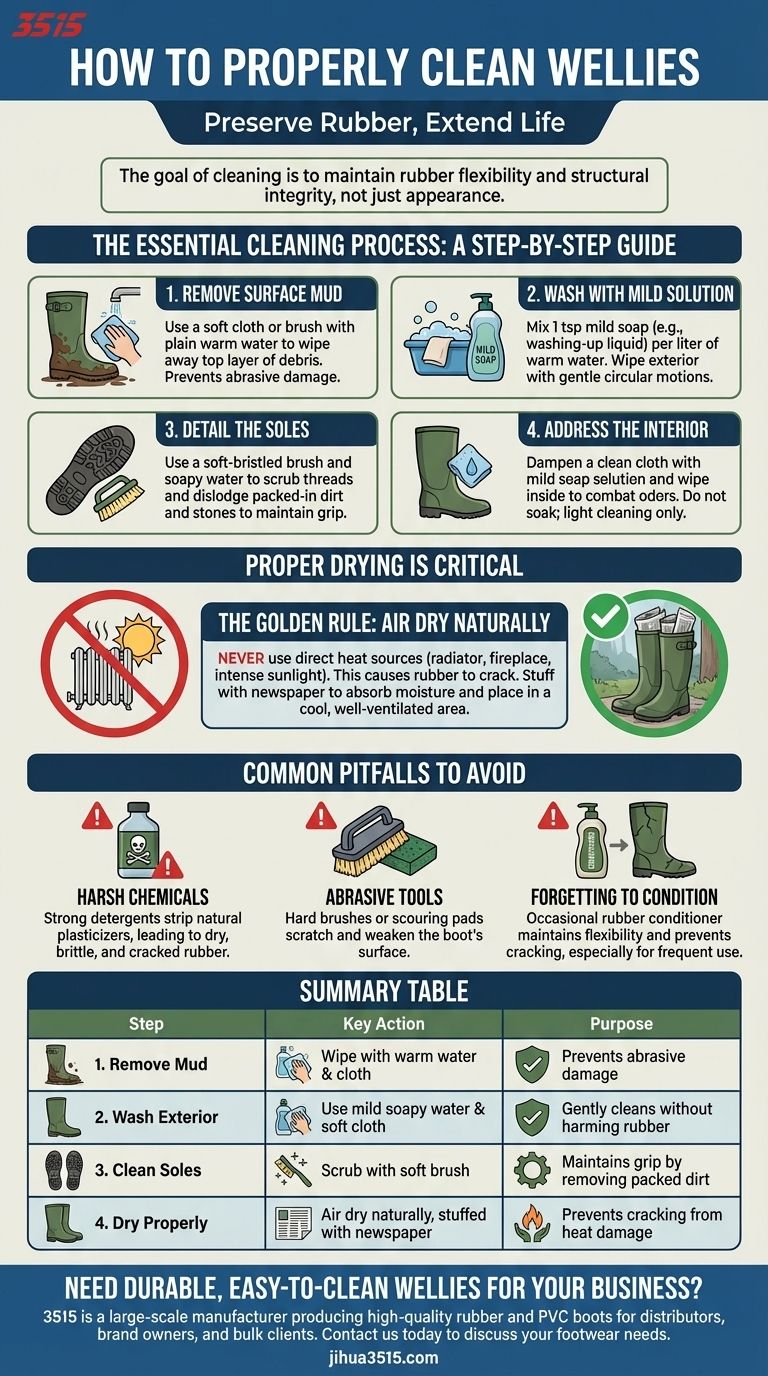
Visual Guide
Related Products
- Factory Direct Wholesale Rain Boots Durable Waterproof & Fully Customizable
- Durable Rubber Sole Outdoor Shoes Wholesale & Custom Manufacturing
- Wholesale Durable Camouflage Canvas Shoes with High-Traction Cleated Rubber Sole
- Durable Leather Work Boots for Wholesale & Custom Manufacturing
- Wholesale Durable Leather Work Boots | 8-Inch Goodyear Welt Manufacturer
People Also Ask
- What are the characteristics of rain boots? A Guide to Waterproof Footwear for Every Need
- What factors should be considered when choosing rain boots? Find the Perfect Boot for Your Needs
- What are the main differences between rain boots and snow boots? Choose the Right Boot for Your Climate
- How should one decide between PVC and rubber for rain boots? A Guide to Choosing the Right Material
- Why are rain boots more flexible and comfortable than snow boots? The Key Differences Explained















