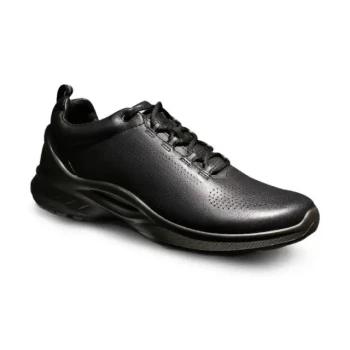
The primary function of shoe-worn three-dimensional motion sensors is to capture high-precision, real-time data on a patient's walking patterns. Specifically, these sensors measure critical spatio-temporal indicators—such as cadence, step length, and gait symmetry—and immediately transmit this information to a control terminal to drive automated decision-making.
The true value of these sensors lies in their ability to enable closed-loop intervention. They do not merely record history; they provide the immediate feedback required for algorithms to automatically adjust music beat frequencies to match the patient's current walking performance.
The Mechanics of Digital Gait Intervention
To understand the role of these sensors, one must look beyond simple data logging. They serve as the inputs for a dynamic, responsive therapeutic system.
Real-Time Data Collection
The sensors operate continuously while the patient walks. They track movement in three dimensions to generate a comprehensive profile of the gait cycle.
This monitoring focuses on specific spatio-temporal metrics. Cadence, step length, and gait symmetry are the priority indicators used to assess the quality of movement.
Fueling the Closed-Loop Algorithm
The data collected is not stored for later review; it is transmitted instantly to a central control terminal. This transmission is the lifeline of the system.
Once received, the control terminal uses this data as the decision-making basis. It processes the raw motion metrics to determine the patient's current stability and rhythm.
Dynamic Acoustic Adjustment
The system's ultimate output is auditory. Based on the sensor data, the system automatically modifies music beat frequencies.
This creates a responsive feedback loop. If the patient's gait changes, the music adapts in real-time to guide them back to a steady rhythm, providing immediate therapeutic support.
Ensuring Accuracy and Reliability
While shoe-worn sensors offer portability, their data must be rigorous enough to direct medical intervention.
Benchmarking Against Gold Standards
To ensure reliability, these portable sensors are validated against three-dimensional motion capture systems. These systems use high-precision infrared cameras to track markers on a subject, serving as the "gold standard" reference.
Validating Algorithms
The data from the shoe sensors is compared with the spatial trajectories recorded by the camera-based systems. This comparison verifies the accuracy of gait phase identification algorithms.
Developers often use methods like FCM (Fuzzy C-Means) clustering during this validation phase. This ensures that the portable system identifies gait phases with a level of precision comparable to stationary lab equipment.
Understanding Technical Trade-offs
When implementing or selecting these sensor systems, it is critical to recognize inherent limitations.
Portability vs. Absolute Precision
Portable shoe sensors provide the freedom to measure gait in real-world scenarios, unlike camera-based lab systems. However, they rely on algorithms to interpret movement, which requires rigorous validation to match the "gold standard" of optical tracking.
Dependence on Connectivity
Because the intervention is "closed-loop," the system relies on immediate transmission to the control terminal. Any latency or connection instability between the shoe sensor and the terminal can disrupt the timing of the music adjustment, potentially confusing the patient.
Making the Right Choice for Your Goal
Whether you are developing a new system or selecting a device for clinical trials, align the technology with your specific objectives.
- If your primary focus is active therapy: Prioritize sensors with low-latency transmission capabilities to ensure the music beat adjustment happens in real-time.
- If your primary focus is system development: Ensure your gait phase identification algorithms (such as FCM) have been validated against optical motion capture benchmarks.
The ultimate goal of this technology is to transform raw motion data into a responsive, adaptive guide that stabilizes patient movement in real-time.
Summary Table:
| Feature | Description | Key Metric / Technology |
|---|---|---|
| Primary Function | Real-time gait data capture for closed-loop intervention | Cadence, step length, gait symmetry |
| Mechanism | Immediate data transmission to control terminal | Low-latency wireless communication |
| Therapeutic Output | Dynamic adjustment of music beat frequencies | Auditory feedback loop |
| Validation Method | Benchmarked against 3D motion capture systems | Infrared cameras & FCM clustering |
| Core Advantage | Portable, real-world therapeutic support | High-precision spatio-temporal tracking |
Optimize Your Medical Footwear Solutions with 3515
As a large-scale manufacturer serving distributors and brand owners, 3515 offers comprehensive production capabilities for all footwear types, anchored by our flagship Safety Shoes series. Our extensive portfolio covers work and tactical boots, outdoor shoes, training shoes, and sneakers, as well as Dress & Formal shoes to meet diverse bulk requirements.
Whether you are developing specialized footwear for medical integration or require high-performance safety shoes for industrial distribution, we provide the manufacturing excellence and scale your brand needs to succeed.
Ready to elevate your product line? Contact us today to discuss your bulk manufacturing requirements and discover how our expertise can add value to your business.
References
- Jenna A. Zajac, Terry D. Ellis. Feasibility and Proof-of-Concept of Delivering an Autonomous Music-Based Digital Walking Intervention to Persons with Parkinson’s Disease in a Naturalistic Setting. DOI: 10.3233/jpd-230169
This article is also based on technical information from 3515 Knowledge Base .
Related Products
- Wholesale Durable & Breathable Training Shoes for Custom Brands
- Lightweight Breathable Sneakers with Wet-Traction Grip for Wholesale & Private Label
- Wholesale Lightweight Cushioned Athletic Sneakers for Custom Bulk Production
- Wholesale Breathable Athletic Sneakers - Custom Lightweight Cushioned Footwear Manufacturer
- Lightweight Breathable Training Shoes for Wholesale & Custom OEM Manufacturing
People Also Ask
- Why is structural stability in footwear required during dual-task walking tests? Ensure Sensor Precision & Data Integrity
- Why is the integration of advanced cushioning in training shoes necessary for athletes? Boost Recovery and Performance
- Why is the use of flat-soled or professional training shoes essential for WBV? Maximize Vibration Energy Transfer
- Why is it necessary for participants to wear professional training shoes? Ensuring Data Accuracy & Patient Safety
- How does the Ground Reaction Force (GRF) constancy hypothesis influence professional training shoes and sneakers?