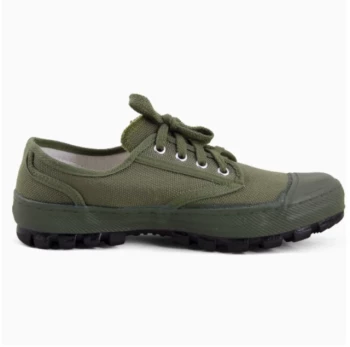
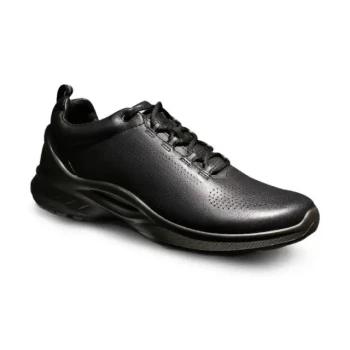
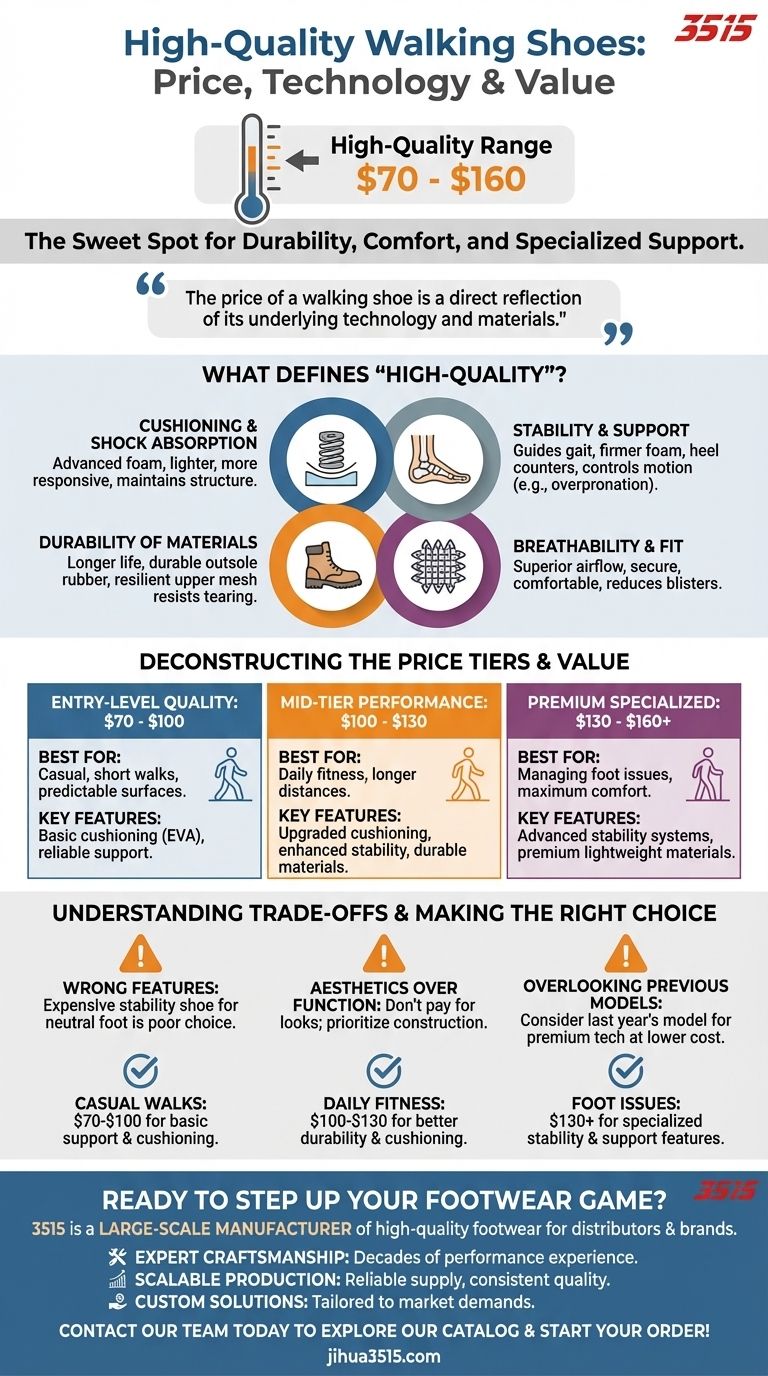
To put it simply, you can expect to pay between $70 and $160 for a pair of high-quality walking shoes. While you can find shoes for less, this price range generally represents the point where you begin to see significant improvements in durability, comfort, and specialized support features designed for specific foot needs.
The price of a walking shoe is a direct reflection of its underlying technology and materials. Your goal isn't to find the cheapest or most expensive shoe, but to find the one whose features offer the best value for your specific walking habits and foot mechanics.
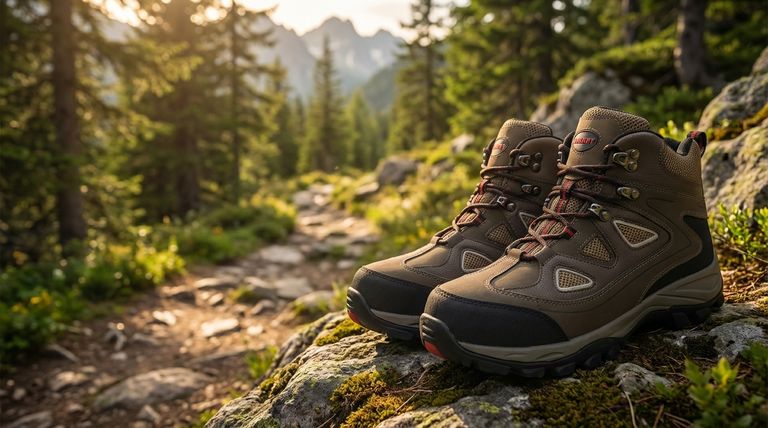
What Defines a "High-Quality" Walking Shoe?
The price tag on a walking shoe is determined by the quality of its core components. Understanding these elements is key to knowing what you're paying for.
Cushioning and Shock Absorption
A shoe's primary job is to absorb the impact of each step. More expensive shoes often use advanced foam compounds that are lighter, more responsive, and maintain their supportive structure for a longer period of time.
Stability and Support
Stability features are designed to guide your foot through a proper gait cycle. Premium shoes may include firmer foam sections, plastic heel counters, or wider bases to control excess motion like overpronation. This is a critical feature for those with specific foot issues.
Durability of Materials
The longevity of a shoe is tied directly to its materials. Higher-priced models use more durable rubber on the outsole for better traction and wear-resistance, as well as more resilient mesh or synthetic materials for the upper that resist tearing.
Breathability and Fit
Advanced upper materials can offer superior breathability without sacrificing strength. You are also paying for more sophisticated construction that provides a more secure and comfortable fit, reducing the risk of blisters and hot spots.
Deconstructing the Price Tiers
Not all walking is the same, and different price points serve different needs.
The Entry-Level Quality Range: $70 - $100
Shoes in this range provide reliable, fundamental features. They offer standard EVA foam cushioning and basic support suitable for casual, moderate-intensity walking on predictable surfaces like sidewalks or treadmills.
The Mid-Tier Performance Range: $100 - $130
This is the sweet spot for many serious walkers. Here, you'll find shoes with upgraded cushioning technology, enhanced stability features, and more durable materials designed to handle daily use and longer distances.
The Premium Specialized Range: $130 - $160+
This tier offers the most advanced technology. These shoes often feature maximum cushioning, highly specific stability systems for unique foot types, and premium, lightweight materials for ultimate comfort and long-term durability.
Understanding the Trade-offs
A higher price does not automatically guarantee a better shoe for you. It's crucial to be aware of common pitfalls.
The Wrong Features for Your Foot
The most expensive stability shoe on the market is a poor choice if you have a neutral foot type. Paying for technology you don't need is not only a waste of money but can also be uncomfortable or even detrimental.
Paying for Aesthetics Over Function
Sometimes, a higher price is linked to a specific brand name or a new colorway rather than a tangible performance upgrade. Always prioritize the shoe's construction over its appearance.
Overlooking Last Year's Models
An excellent way to get premium technology for less is to buy the previous year's version of a popular model. Often, the updates are minor, but the price difference can be significant.
Making the Right Choice for Your Goal
Select your shoe based on your intended use, not just the price.
- If your primary focus is casual comfort for short walks: A shoe in the $70-$100 range will likely provide all the support and cushioning you need.
- If your primary focus is daily fitness walking or long distances: Investing in a $100-$130 shoe with better durability and cushioning technology is a wise choice.
- If your primary focus is managing a specific foot issue like plantar fasciitis or overpronation: Target the $130+ range to access specialized stability and support features recommended for your needs.
Ultimately, the best walking shoe is an investment in your comfort and health.
Summary Table:
| Price Tier | Best For | Key Features |
|---|---|---|
| $70 - $100 | Casual, short walks | Basic cushioning, reliable support |
| $100 - $130 | Daily fitness, long distances | Upgraded cushioning, enhanced durability |
| $130 - $160+ | Managing foot issues, maximum comfort | Advanced stability systems, premium materials |
Ready to Step Up Your Footwear Game?
As a large-scale manufacturer, 3515 produces a comprehensive range of high-quality footwear for distributors, brand owners, and bulk clients. Our production capabilities encompass all types of walking shoes and boots, ensuring durability, advanced support, and superior comfort.
Partner with us to access:
- Expert Craftsmanship: Decades of experience in creating footwear that combines performance with lasting value.
- Scalable Production: Reliable supply and consistent quality for businesses of all sizes.
- Custom Solutions: Tailor shoes to meet your specific market demands and customer needs.
Let's discuss how we can support your business. Contact our team today to explore our catalog and start your order!
Visual Guide
Related Products
- Durable Rubber Sole Outdoor Shoes Wholesale & Custom Manufacturing
- Wholesale Durable Camouflage Canvas Shoes with High-Traction Cleated Rubber Sole
- Premium Suede Sport Safety Shoes for Wholesale & Bulk Orders
- Wholesale Comfortable Business Casual Shoes Custom Manufacturing
- Premium Lightweight Safety Shoes for Wholesale & Bulk Orders
People Also Ask
- What is the function of the sole in outdoor shoes? Find the Perfect Grip and Support
- What role do outdoor shoes and sneakers play in navigating external terrains? Engineered Stability for Every Surface
- How is AI utilized in the design of outdoor and safety footwear? Harnessing Big Data for Market-Driven Shoe Innovation
- Why is durability important when selecting outdoor shoes? A Guide to Safety & Long-Term Value
- What are the key components of outdoor shoes that affect comfort and sturdiness? A Guide to Durable, High-Performance Footwear