
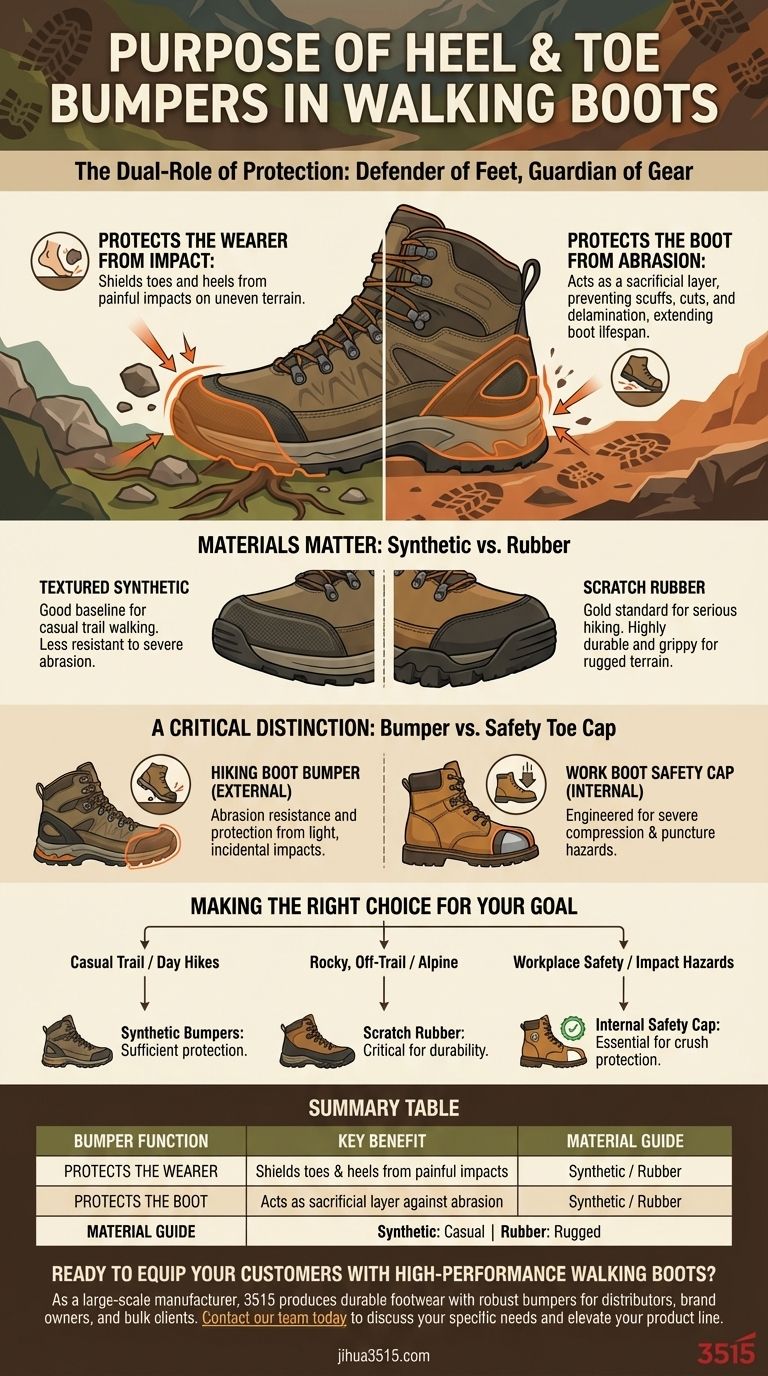
At their core, the heel and toe bumpers on walking boots serve a critical dual purpose. They provide a first line of defense for your feet against painful impacts on the trail, while simultaneously protecting the high-wear areas of the boot itself from abrasion and damage, significantly extending its operational life.
The function of a boot's bumpers is simple but vital: they protect both the wearer from impact and the boot from wear. Understanding the type of bumper you need is key to selecting footwear that matches your intended terrain and activity level.
The Dual-Role of Bumper Protection
Heel and toe bumpers, often called "rands," are not merely an aesthetic addition. They are a functional feature directly linked to a boot's performance and durability, especially in challenging environments.
Protecting the Wearer from Impact
On uneven or rocky ground, your feet are constantly at risk of being struck by obstacles like rocks, roots, and scree.
The toe bumper absorbs the force from frontal impacts, protecting your toes from being stubbed or bruised. The heel bumper provides similar protection for the back of your foot, which is crucial during descents or when navigating loose terrain.
Protecting the Boot from Abrasion
The front and back of a boot are the areas that suffer the most abuse. They are constantly scraped against abrasive surfaces.
These bumpers act as a sacrificial, durable layer over the boot's primary upper material (like leather or fabric). This prevents scuffs, cuts, and delamination of the sole, which are common points of failure that can shorten a boot's lifespan.
Materials Matter: Synthetic vs. Rubber
The material used for the bumper directly correlates with its effectiveness and the boot's overall price point.
Textured Synthetic Materials
This is a common material found on many entry-level to mid-range hiking boots. It offers a good baseline of protection for casual trail walking and moderate use. While effective, it is less resistant to severe abrasion than rubber.
Scratch Rubber
Considered the gold standard for serious hiking and mountaineering boots, scratch rubber is a highly durable and grippy compound. Boots featuring a full rubber rand that wraps around the lower portion of the boot offer superior protection and longevity, but this feature comes at a higher cost.
A Critical Distinction: Bumper vs. Safety Toe Cap
It is essential to distinguish between the external bumper on a walking boot and the internal safety toe cap found in a work boot. They serve entirely different purposes.
The Hiking Boot Bumper
A bumper is an external layer designed for abrasion resistance and protection from light, incidental impacts encountered while hiking. It is not rated to protect against heavy, crushing forces.
The Work Boot Safety Cap
A safety toe cap is an internal, structural component, typically made of steel or composite materials. It is specifically engineered and certified to protect the toes from severe compression and puncture hazards, as required in many industrial and construction environments.
Making the Right Choice for Your Goal
The level of bumper protection you need is dictated entirely by your activity.
- If your primary focus is casual trail walking or day hikes: Boots with standard synthetic bumpers provide more than enough protection.
- If your primary focus is rocky, off-trail, or alpine hiking: Investing in boots with a full and robust scratch rubber rand is critical for long-term durability.
- If your primary focus is workplace safety with impact hazards: You must seek out certified safety boots with an internal steel or composite toe cap, as an external bumper offers no protection against crushing forces.
Ultimately, viewing heel and toe bumpers as an investment in both your comfort and your gear's longevity will guide you to the right choice.
Summary Table:
| Bumper Function | Key Benefit |
|---|---|
| Protects the Wearer | Shields toes and heels from painful impacts with rocks and roots. |
| Protects the Boot | Acts as a sacrificial layer against abrasion, extending the boot's lifespan. |
| Material Guide | Synthetic for casual trails; durable scratch rubber for rugged terrain. |
Ready to equip your customers with high-performance walking boots? As a large-scale manufacturer, 3515 produces a comprehensive range of durable footwear with robust heel and toe bumpers, designed for the demands of distributors, brand owners, and bulk clients. Our production capabilities ensure your customers get the right protection for any trail. Contact our team today to discuss your specific needs and elevate your product line.
Visual Guide
Related Products
- Durable Goodyear Welt Leather Work Boots for Wholesale & Private Label
- Durable Rubber Sole Outdoor Shoes Wholesale & Custom Manufacturing
- Wholesale Durable Camouflage Canvas Shoes with High-Traction Cleated Rubber Sole
- Wholesale Safety Boots Manufacturer for Custom & Private Label Orders
- Heavy-Duty Waterproof Nubuck Safety Boots Safety Shoes for Bulk Supply
People Also Ask
- What is the difference between full-grain and top-grain leather? Premium Material Guide for Boot Manufacturers
- What are the advantages of leather as an upper material for work boots? Unmatched Durability & Custom Comfort
- Why is it important to waterproof leather work boots? Protect Your Investment and Performance
- How should new leather work boots be broken in? A Guide to Comfort and Durability
- What are the advantages of leather uppers in work boots? Unmatched Durability & Protection

















