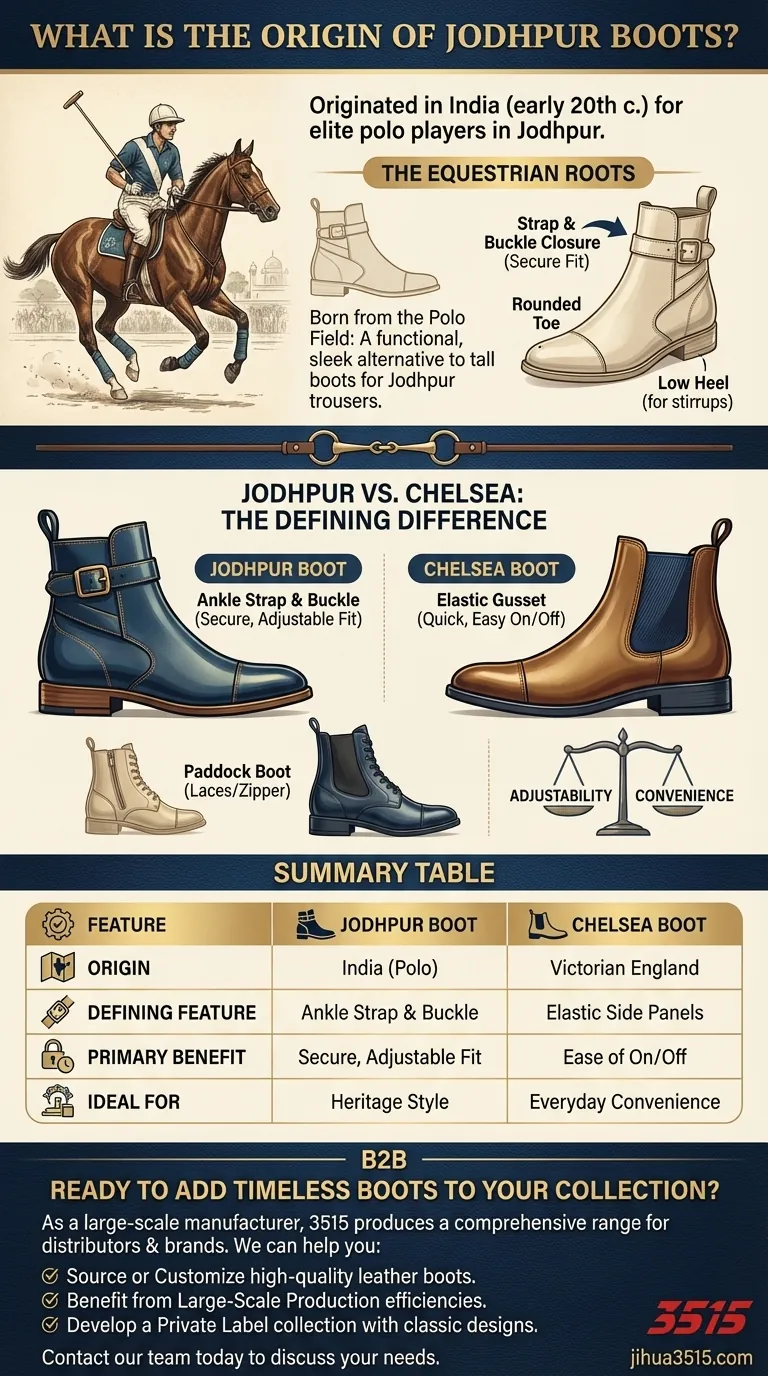
The Jodhpur boot originated in India during the early 20th century. It was specifically developed for and popularized by elite polo players in the city of Jodhpur, who needed a short, secure boot to wear with the riding trousers that also bear the city's name.
The Jodhpur boot's design is not an accident of style, but a direct result of its equestrian purpose. Its defining feature—the strap and buckle—was engineered to provide a secure fit for polo players, distinguishing it from its close cousin, the Chelsea boot.
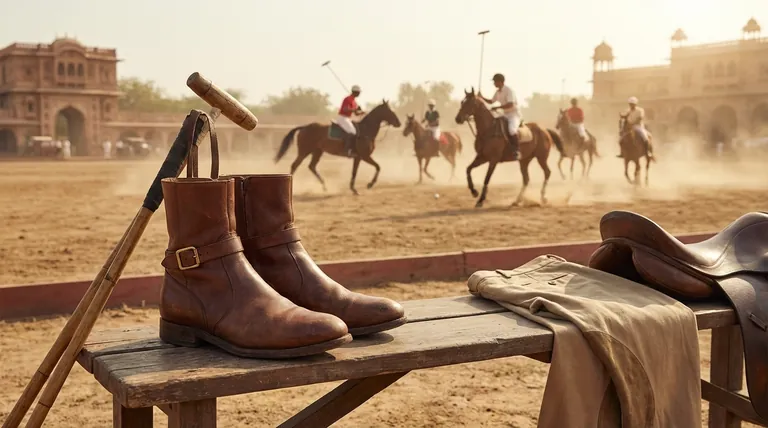
The Equestrian Roots of the Jodhpur
The Jodhpur boot is fundamentally a piece of functional sportswear that evolved into a style icon. Its design choices are all rooted in the practical needs of horseback riding, specifically the fast-paced game of polo.
Born from the Polo Field
In the early 1900s, polo players in Jodhpur, India, sought an alternative to the traditional tall riding boots. They needed something less cumbersome but equally secure for use with their namesake trousers, the "jodhpurs."
This need led to the creation of a sleek, ankle-high boot that offered protection and support without the bulk of a full-length boot.
A Purpose-Driven Design
The key features of the Jodhpur boot are a direct reflection of its intended use. It has a rounded toe and a low heel, which helps a rider's foot sit comfortably and securely in the stirrups.
Most importantly, its unique closure system—a strap that wraps around the ankle and fastens with a buckle—was designed to keep the boot firmly in place during the rigorous movements of a polo match.
Jodhpur vs. Chelsea: The Defining Difference
While often grouped together, the Jodhpur and Chelsea boot are two distinct designs with different origins and functional characteristics. Understanding the difference comes down to a single element: the closure system.
The Jodhpur's Ankle Strap
The defining feature of a true Jodhpur boot is its strap and buckle. This system provides a snug, adjustable fit around the ankle, which was its original functional advantage for riders.
The Chelsea's Elastic Gusset
In contrast, the Chelsea boot is defined by its elastic side panels, or "gussets." This design allows the boot to be easily slipped on and off without any laces, straps, or zippers.
A Note on Paddock Boots
Both styles are sometimes confused with paddock boots, another type of short riding boot. Paddock boots are distinguished by having a front closure, typically either laces or a zipper.
Understanding the Trade-offs
The core difference between the Jodhpur and Chelsea boot creates a clear trade-off between a secure, customized fit and everyday convenience.
The Advantage of Adjustability
The Jodhpur's strap offers a more precise and secure fit around the ankle. This detail, born from sport, provides superior ankle support and a more tailored feel compared to the passive fit of an elastic panel.
The Convenience of the Chelsea
The primary benefit of the Chelsea boot is its ease of use. The elastic side panels make it exceptionally quick to put on and take off, making it a highly practical choice for daily wear.
Material and Legacy
Both boots are traditionally crafted from high-quality leather that is designed to last. As noted by makers, quality leather on a Jodhpur boot will develop a rich patina over time, reflecting its heritage as durable, functional footwear.
Making the Right Choice for Your Goal
When deciding between these classic styles, your choice should be guided by your priorities for fit, function, and convenience.
- If your primary focus is authentic heritage and a secure fit: The Jodhpur boot's strap system offers a clear nod to its equestrian past and provides a more customized fit.
- If your primary focus is modern convenience and ease of use: The Chelsea boot, with its iconic elastic side panels, is the more practical choice for quick, everyday wear.
By understanding the Jodhpur's origin on the polo fields of India, you can fully appreciate the purpose behind its timeless and distinctive design.
Summary Table:
| Feature | Jodhpur Boot | Chelsea Boot |
|---|---|---|
| Origin | Jodhpur, India (Polo) | Victorian England |
| Defining Feature | Ankle Strap & Buckle | Elastic Side Panels |
| Primary Benefit | Secure, Adjustable Fit | Ease of On/Off |
| Ideal For | Heritage Style, Ankle Support | Everyday Convenience |
Ready to Add Timeless Boots to Your Collection?
As a large-scale manufacturer, 3515 produces a comprehensive range of footwear for distributors, brand owners, and bulk clients. Our production capabilities encompass all types of shoes and boots, including heritage styles like the Jodhpur boot.
We can help you:
- Source or Customize high-quality leather boots with authentic details.
- Benefit from Large-Scale Production efficiencies and reliable supply.
- Develop a Private Label collection that stands out with classic, durable designs.
Contact our team today to discuss your footwear needs and how we can bring quality and heritage to your brand.
Visual Guide
Related Products
- High-Traction Suede Tactical Boots Wholesale & Custom Manufacturing
- Wholesale Lightweight Tactical Boots Custom Manufacturer for Desert & Combat Use
- Durable Leather Work Boots Wholesale Manufacturer & Custom Factory
- Durable Leather Tactical Boots Wholesale & Custom Manufacturing for Brands
- Durable Spiked Camouflage Boots Wholesale & Factory Production
People Also Ask
- Why is sequential analysis utilized to evaluate tactical boots? Master Dynamic Boot Development and Ergonomic Performance
- How does the material of tactical boots affect their performance? Choose the Right Material for Your Mission
- How do tactical boots differ from regular boots? Performance, Durability & Design Explained
- How do military uniforms and tactical boots impact the prediction of thermal risk? Essential Safety Insights
- What are the benefits of integrating FES and sEMG into tactical boots? Safety, Reliability & Field-Ready Performance