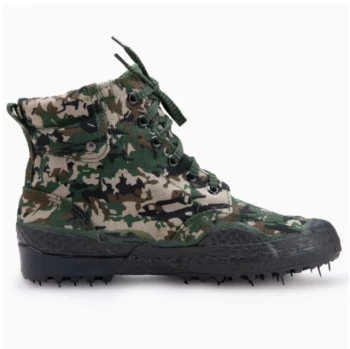
The fundamental difference lies in mobility versus protection: hiking boots are engineered for flexibility and breathability to support continuous walking on defined trails, while hunting boots are built with rigid, heavy-duty materials to withstand harsh, off-trail environments and unpredictable elements.
While a hiking boot is designed to help you cover distance efficiently, a hunting boot is designed to protect you while you survive static periods and navigate heavy brush, making them largely non-interchangeable tools.

The Core Design Philosophy
Optimized for Motion vs. Resilience
Hiking boots generally prioritize the mechanics of walking. They utilize lighter materials and flexible soles to reduce fatigue during high-mileage days.
Hunting boots (often sharing DNA with tactical and army boots) prioritize environmental defense. They are constructed to endure unpredictable wilderness conditions where the wearer may be crawling through brush or carrying heavy equipment.
The Role of Weight and Rigidity
Because hiking boots focus on comfort, they often blend leather with synthetics to keep the weight down. This reduces the energy required for every step.
Conversely, hunting and tactical boots are significantly heavier and more rigid. This added mass provides superior abrasion resistance against rocks and thorns but requires more effort to move.
Structural Differences
Sole Construction and Traction
Hiking boots typically feature soles with treads designed for variable terrain. They aim to balance grip with the flexibility needed for the foot to roll naturally.
Heavy-duty boots designed for hunting or army use often feature harder, more durable soles. These are built to support heavy loads (such as a pack or game) without compressing, providing a stable platform on loose or uneven ground.
Ankle Support and Height
Hiking footwear usually rises just above the ankle. This provides necessary support for rugged trails while maintaining enough range of motion for steep ascents.
Hunting and winter-style boots often feature a higher upper design. This taller shaft offers maximum ankle stabilization and prevents debris, snow, or water from entering the boot during off-trail excursions.
Understanding the Trade-offs
The "Oven Effect"
Hunting boots are frequently insulated and constructed with thick, waterproof membranes to keep you warm while sitting still in a blind or stand.
The trade-off is breathability. If you wear these heavy boots for a high-output hike, your feet will likely overheat and sweat, leading to blisters.
Fatigue vs. Protection
Hiking boots are "forgiving." They allow you to walk further with less muscle strain.
Hunting boots offer superior protection, but at the cost of agility. Their stiffness and weight can make a standard 10-mile trail hike feel grueling and clumsy compared to dedicated hiking footwear.
Making the Right Choice for Your Goal
Selecting the correct boot depends entirely on your primary activity and the environment you will face.
- If your primary focus is covering long distances on trails: Choose hiking boots for their lightweight flexibility, breathability, and energy-saving design.
- If your primary focus is off-trail durability and sitting still in the cold: Choose hunting boots for their insulation, rigid ankle support, and rugged exterior protection.
- If your primary focus is carrying extremely heavy loads: Choose army or tactical-style boots, which are specifically engineered to support weight without structural collapse.
The right boot acts as an extension of your body, while the wrong one becomes an anchor that limits your performance.
Summary Table:
| Feature | Hiking Boots | Hunting Boots |
|---|---|---|
| Primary Goal | Cover distance efficiently | Survive harsh, static environments |
| Weight & Flexibility | Lighter, more flexible | Heavier, more rigid |
| Ankle Support & Height | Medium cut for motion | High cut for stability and debris protection |
| Breathability | High | Low (due to insulation/waterproofing) |
| Ideal For | Long-distance trail walking | Off-trail navigation, sitting still in blinds |
Need Durable Footwear for Your Business?
As a large-scale manufacturer, 3515 produces a comprehensive range of high-performance footwear for distributors, brand owners, and bulk clients. Whether you need durable hunting boots with superior protection or lightweight hiking boots for optimal mobility, our production capabilities cover all types of shoes and boots.
Let us help you equip your customers with the right gear. Contact our team today to discuss your manufacturing needs!
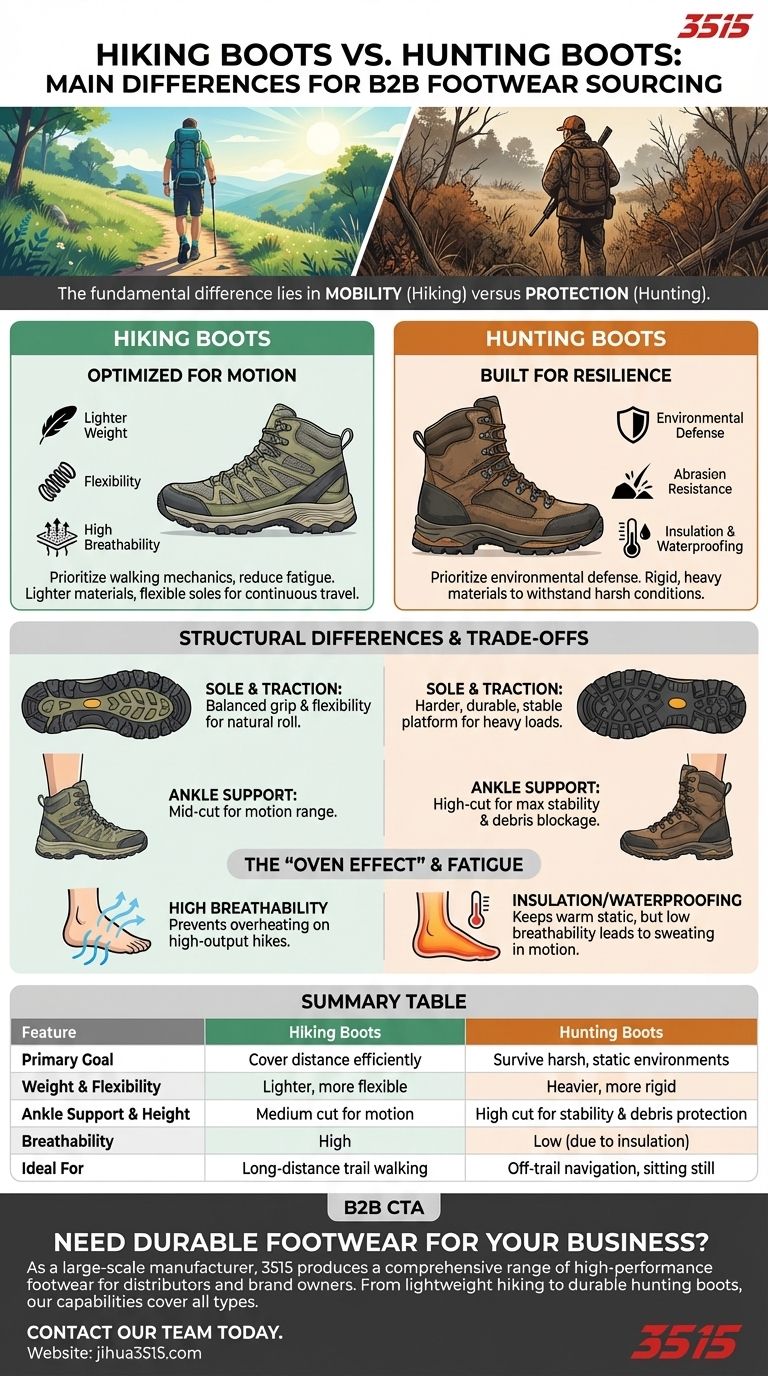
Visual Guide
Related Products
- Wholesale High-Traction Camo Boots - Custom Manufacturer for Brands
- Durable Rubber Sole Outdoor Shoes Wholesale & Custom Manufacturing
- Durable Spiked Camouflage Boots Wholesale & Factory Production
- Wholesale Lightweight Tactical Boots Custom Manufacturer for Desert & Combat Use
- Wholesale Waterproof Tactical Boots Custom Suede & High-Traction Soles
People Also Ask
- What are the key features of the new line of camo boots? Built for Extreme Cold & Rugged Terrain
- Are camo boots necessary for hunting success? Prioritize Performance Over Pattern
- How does the Rank Score Test identify the primary causes of premature failure in tactical and work boots? Key Insights
- What is the technical logic behind using closed-eye testing for tactical boots? Unlocking Peak Footwear Stability
- What shoes to wear for a security job? Durable, Protective Footwear for Long Shifts