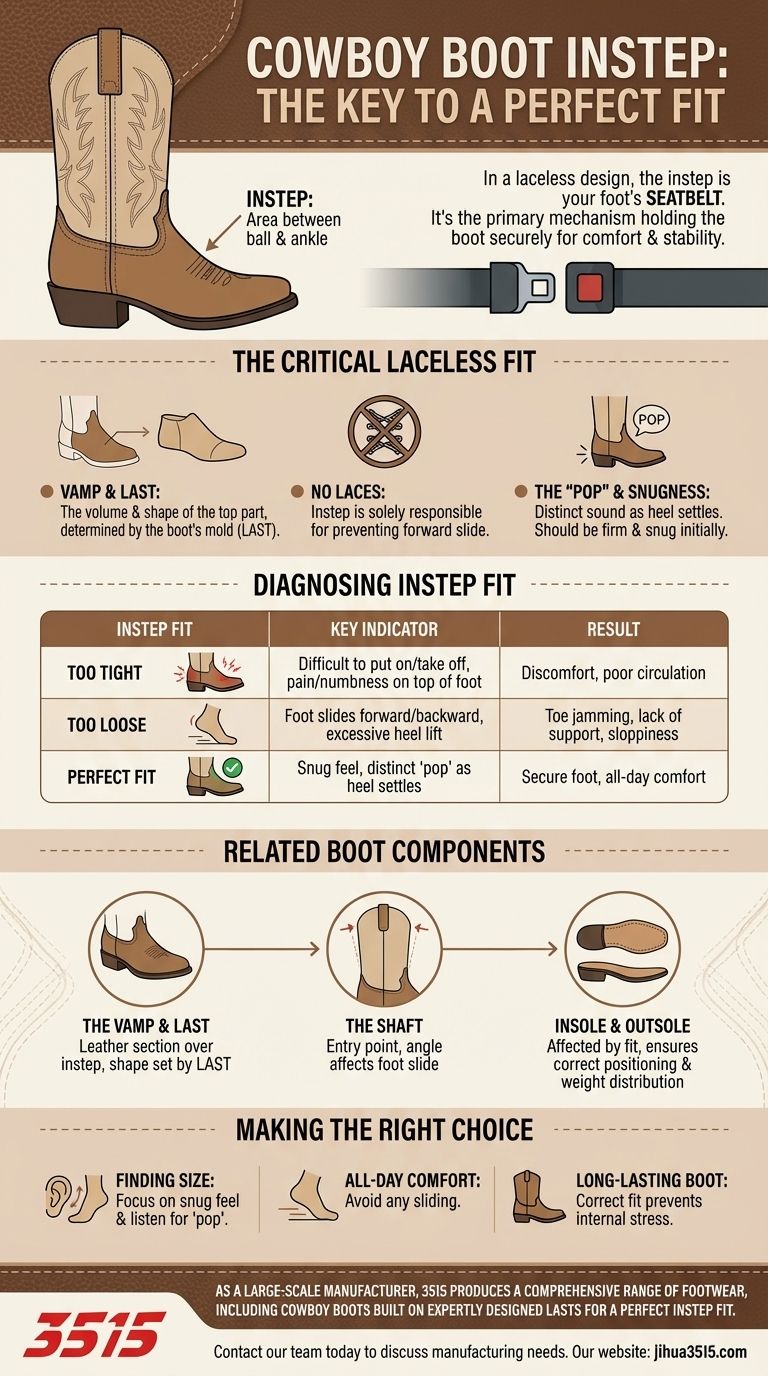
In a cowboy boot, the instep is the area over the top of your foot, between the ball and the ankle. Its importance cannot be overstated: because boots have no laces, the instep is the primary mechanism that holds the boot securely onto your foot, dictating both comfort and stability.
Think of the instep as the "seatbelt" for your foot inside a cowboy boot. In a laceless design, a perfectly fitted instep is the only thing that locks your foot in place, preventing painful sliding and ensuring proper support.
The Role of the Instep in a Laceless Design
Unlike a sneaker or dress shoe, you cannot tighten or loosen a cowboy boot to adjust the fit. This elevates the instep from a simple point of contact to the most critical dimension for a secure and comfortable experience.
What Defines the Instep Fit?
The instep fit is determined by the volume and shape of the top part of the boot, known as the vamp. This shape is set during manufacturing by the last, a foot-shaped mold the boot is built around. A proper fit here means the boot hugs the top and sides of your foot snugly.
Why It's the Most Critical Part of the Fit
Without laces, the instep is solely responsible for preventing your foot from sliding forward. If the instep is too loose, your toes will jam into the toe box with every step. If it's too tight, it will cause painful pressure on the top of your foot.
The "Pop" and Initial Snugness
A key indicator of a good instep fit is a distinct "pop" as your heel settles into the counter at the back of the boot. Getting the boot on should require a firm pull, and the instep should feel snug, almost tight, at first. This initial snugness is what secures your foot.
Diagnosing an Improper Instep Fit
Recognizing the signs of a poor instep fit is crucial to avoid discomfort and potential foot problems. The issues are almost always related to the instep being either too tight or too loose.
Signs of an Instep That's Too Tight
A tight instep makes the boot extremely difficult to put on or take off. Once on, it can create intense pressure or pain across the top of your foot, sometimes leading to numbness or poor circulation.
Signs of an Instep That's Too Loose
A loose instep is just as problematic. Your foot will slide forward and backward with each step, causing your toes to hit the front of the boot. It also leads to excessive heel lift and a general feeling of sloppiness, robbing you of proper support.
How the Instep Relates to Other Boot Components
The instep doesn't exist in isolation. Its fit is a direct result of how several key parts of the boot are constructed and work together.
The Vamp and the Last
The vamp is the leather section covering your instep. The specific shape and volume of the vamp are dictated by the manufacturer's last. Different brands use different lasts, which is why an instep might feel perfect in one brand's boot and too tight in another's, even in the same size.
The Shaft
The boot's shaft, the tall tube that covers your leg, is the entry point for your foot. The angle and circumference at the base of the shaft—where it meets the vamp—can affect how easily you can slide your foot down into the crucial instep area.
The Insole and Outsole
While the insole and outsole don't set the instep fit, they are affected by it. A proper instep fit ensures your foot is positioned correctly over the insole to mold properly over time. It also ensures your weight is distributed correctly onto the outsole for balanced wear.
Making the Right Choice for Your Goal
When trying on boots, focus less on the toe and more on the feeling across the top of your foot.
- If your primary focus is finding the right size: Pay attention to a snug feeling across the top of your foot and listen for a "thump" or "pop" as your heel slides into place.
- If your primary focus is all-day comfort: Avoid any boot where your foot slides forward as you walk, as this indicates a loose instep that will cause fatigue and pain.
- If your primary focus is a boot that will last: A correct instep fit prevents the excessive internal movement that puts stress on the boot's stitching and leather.
Mastering the feel of a proper instep fit is the single most important skill for achieving lasting comfort in a pair of cowboy boots.
Summary Table:
| Instep Fit | Key Indicator | Result |
|---|---|---|
| Too Tight | Difficult to put on, pain/numbness on top of foot | Discomfort, poor circulation |
| Too Loose | Foot slides forward, excessive heel lift | Toe jamming, lack of support |
| Perfect Fit | Snug feel, distinct 'pop' as heel settles | Secure foot, all-day comfort |
As a large-scale manufacturer, 3515 produces a comprehensive range of footwear for distributors, brand owners, and bulk clients. Our production capabilities encompass all types of shoes and boots, including cowboy boots built on expertly designed lasts for a perfect instep fit.
Are you looking for reliable, comfortable cowboy boots that provide superior fit and durability for your customers? Contact our team today to discuss your manufacturing needs and learn how we can deliver quality and value.
Visual Guide
Related Products
- Wholesale High-Traction Camo Boots - Custom Manufacturer for Brands
- Durable Leather Tactical Boots Wholesale & Custom Manufacturing for Brands
- High-Traction Suede Tactical Boots Wholesale & Custom Manufacturing
- Wholesale Lightweight Tactical Boots Custom Manufacturer for Desert & Combat Use
- Wholesale Waterproof Tactical Boots Custom Suede & High-Traction Soles
People Also Ask
- What are the key features of the new line of camo boots? Built for Extreme Cold & Rugged Terrain
- Are camo boots necessary for hunting success? Prioritize Performance Over Pattern
- What is the technical logic behind using closed-eye testing for tactical boots? Unlocking Peak Footwear Stability
- How does the Rank Score Test identify the primary causes of premature failure in tactical and work boots? Key Insights
- What shoes to wear for a security job? Durable, Protective Footwear for Long Shifts