
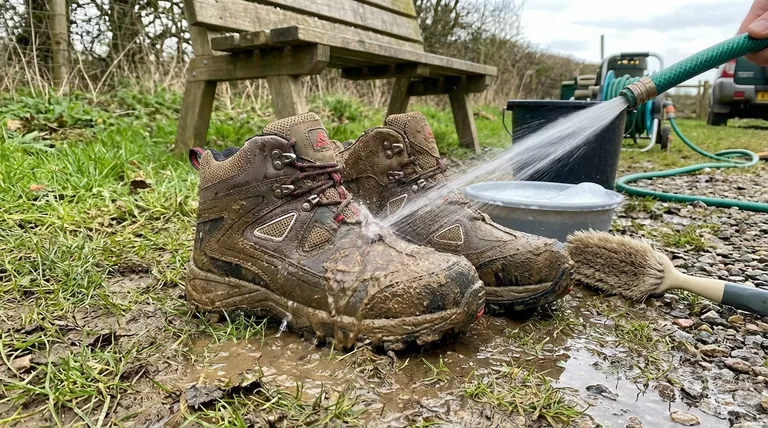
The very first step in cleaning rubber boots is to remove all loose, caked-on mud and surface debris. If the boots are covered in dry mud, use a soft or medium-bristle brush to scrub it off. If the mud is still wet, it's best to rinse the boots outside with a garden hose to prevent a mess indoors.
The goal of cleaning rubber boots isn't just to make them look new; it's to preserve the material and extend their lifespan. A proper cleaning process addresses the exterior, interior, and soles in distinct stages to prevent cracking and odor.
The Essential Cleaning Process, Step-by-Step
A thorough cleaning goes beyond a simple rinse. Following a methodical process ensures every part of the boot is cared for, preventing long-term damage and preserving its function.
Step 1: Preparation is Key
Before you start scrubbing, remove the laces and any insoles. This allows you to clean them separately and ensures you can reach every part of the boot's exterior and interior without obstruction.
Step 2: Remove Surface Debris
This is the critical first cleaning action. Use a brush to dislodge any dried dirt, paying special attention to the treads on the soles where mud often gets trapped. As mentioned, a quick spray with a hose is the most effective method for wet mud.
Step 3: Deep Clean the Exterior
Mix a simple cleaning solution of mild soap (like dish soap) or a teaspoon of laundry detergent in a bucket with a couple of cups of warm water. Use a soft cloth or sponge dipped in this solution to wipe down the entire exterior surface of the boots.
Step 4: Address the Interior
To clean the inside, wipe it down with a cloth soaked in warm water and a small amount of mild soap. Rinse with a second cloth dampened with only water. To combat and prevent odors, you can spray the inside with a 50/50 solution of white vinegar and water, or sprinkle in baking soda and let it sit overnight to absorb moisture and smells.
Step 5: Proper Drying is Crucial
After a final rinse of the exterior, let the boots air dry completely. Place them in a well-ventilated area away from direct sunlight or any direct heat sources like radiators or vents.
Common Pitfalls to Avoid
How you clean your boots is as important as the cleaning itself. Certain common mistakes can actively damage the rubber, shortening the life of your footwear.
Avoid Harsh Chemicals
Never use strong solvents, oils, or harsh chemical cleaners on your boots. These substances can degrade natural rubber, causing it to become brittle and prone to cracking. Stick to mild soap and water.
Never Use Direct Heat to Dry
Forcing your boots to dry quickly with a hairdryer, a fire, or a radiator is one of the worst things you can do. The intense, direct heat can warp the rubber, weaken adhesives, and lead to premature cracking. Patience and air-drying are essential.
Don't Forget the Soles
A quick wipe-down of the boot's upper is not enough. Caked-on debris in the treads can hold moisture and abrasive materials against the sole. A thorough brushing of the outsole is a non-negotiable step.
Making the Right Choice for Your Goal
Your cleaning routine can be adapted based on your immediate needs.
- If your primary focus is a quick clean after use: Immediately brush or hose off all visible mud before it has a chance to dry and harden.
- If your primary focus is a deep seasonal cleaning: Follow the full five-step process, from removing laces to properly air-drying the boots.
- If your primary focus is eliminating odor: Concentrate on the interior cleaning steps, using a vinegar solution and letting baking soda sit overnight.
Proper, consistent care is the key to ensuring your rubber boots remain reliable for years to come.
Summary Table:
| Step | Key Action | Purpose |
|---|---|---|
| 1. Preparation | Remove laces and insoles. | Allows for unobstructed cleaning. |
| 2. First Step | Brush off dry mud or hose wet mud. | Remove surface debris to prevent damage. |
| 3. Exterior Clean | Wipe with mild soap and water. | Clean and preserve the rubber material. |
| 4. Interior Care | Wipe interior; use vinegar/baking soda for odor. | Eliminate smells and absorb moisture. |
| 5. Drying | Air dry away from direct heat. | Prevent warping and cracking. |
Need durable, easy-to-clean rubber boots in bulk? As a large-scale manufacturer, 3515 produces a comprehensive range of high-quality footwear for distributors, brand owners, and bulk clients. Our expertise ensures your boots are built to last and simple to maintain. Contact us today to discuss your footwear needs and discover how we can support your business with reliable production capabilities.
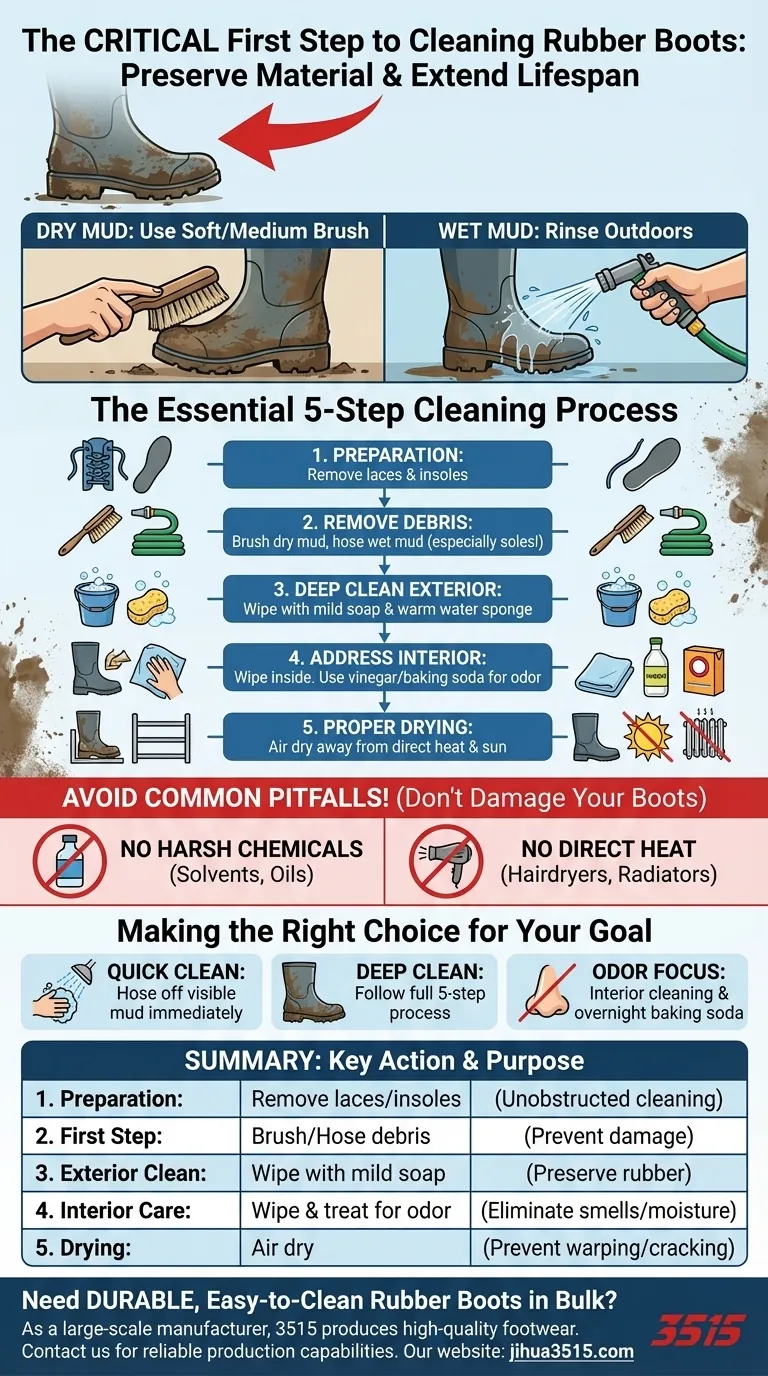
Visual Guide
Related Products
- Factory Direct Wholesale Rain Boots Durable Waterproof & Fully Customizable
- Durable Rubber Sole Outdoor Shoes Wholesale & Custom Manufacturing
- Wholesale Durable Camouflage Canvas Shoes with High-Traction Cleated Rubber Sole
- Wholesale Durable Leather Work Boots | 8-Inch Goodyear Welt Manufacturer
- Durable Goodyear Welt Leather Work Boots for Wholesale & Private Label
People Also Ask
- What are the characteristics of rain boots? A Guide to Waterproof Footwear for Every Need
- What factors should be considered when choosing rain boots? Find the Perfect Boot for Your Needs
- What are the main differences between rain boots and snow boots? Choose the Right Boot for Your Climate
- How should one decide between PVC and rubber for rain boots? A Guide to Choosing the Right Material
- Why are rain boots more flexible and comfortable than snow boots? The Key Differences Explained















