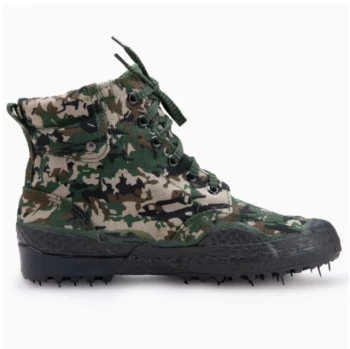
At a glance, hiking and hunting boots may seem similar, but they are purpose-built tools designed for fundamentally different environments. Hunting boots prioritize rugged durability, robust waterproofing, and significant insulation for harsh, off-trail conditions and long periods of stillness. Hiking boots, in contrast, are optimized for lightweight comfort, flexibility, and breathability to cover miles efficiently on established trails.
Choosing the right boot is not about which is "better," but which is designed for your specific mission. Hiking boots are built for movement and mileage, while hunting boots are built for endurance and environment.

The Core Design Philosophy: Movement vs. Endurance
The fundamental differences between these two boot types stem from the demands of their respective activities. One is about constant motion, while the other is about withstanding the elements.
Hiking Boots: Engineered for the Trail
A hiker's primary goal is to cover ground comfortably. Every ounce of weight on your feet is magnified over thousands of steps, so hiking boots are engineered to be as light and efficient as possible.
Their construction prioritizes flexibility to allow a natural stride and breathability to manage sweat and prevent blisters during sustained aerobic activity.
Hunting Boots: Built for the Backcountry
A hunter often navigates challenging, pathless terrain and may spend hours stationary in cold, wet, or snowy conditions. The boot's primary job is to function as a survival tool.
This requires a focus on extreme durability to resist abrasion, robust waterproofing to keep feet dry, and insulation to keep them warm during long periods of inactivity.
Key Feature Breakdown
The differing philosophies are most apparent when you compare the boots feature by feature.
Insulation and Waterproofing
Hunting boots almost always feature advanced waterproof membranes and significant insulation (measured in grams) to protect against prolonged exposure to cold and moisture.
Most hiking boots offer a waterproof option, but they typically feature less insulation, favoring breathability to manage heat generated while on the move.
Durability and Protection
Hunting boots are built like armor for your feet. They often use thicker full-grain leather, rigid shanks for support under heavy loads, and reinforced toe caps to withstand rough, off-trail use.
Hiking boots are certainly durable for on-trail use but trade some of this rigidity and heavy material for lighter weight and a more forgiving flex.
Weight and Flexibility
This is the hiking boot's main advantage. By using lighter materials and a more flexible design, they reduce the energy required for each step, which adds up to significantly less fatigue over a long day.
The protective and insulating features of hunting boots make them inherently heavier and stiffer, which is a necessary trade-off for their intended environment.
Outsoles and Stealth
Hunting boot outsoles are often highly specialized for specific terrains like mud, rock, or snow. The rubber compounds may be softer to provide quieter footing for stalking game.
Hiking boot outsoles are typically designed as all-rounders, providing reliable traction across a wide variety of common trail surfaces.
Understanding the Trade-offs
Using the wrong boot for the job doesn't just reduce performance; it can lead to discomfort and even risk.
The Cost of Comfort
Wearing a heavy, insulated hunting boot on a warm, dry day hike is a recipe for failure. Your feet will overheat and sweat excessively, and the unnecessary weight will cause premature fatigue.
The Risk of Protection
Using a lightweight, breathable hiking boot for a late-season hunt can be dangerous. It offers inadequate insulation against the cold, insufficient protection from rugged terrain, and may not support the ankle under the load of a heavy pack.
The Specialization Trap
While a hunting boot can be used for a hike, it will feel clunky and heavy. Likewise, a hiking boot can be used for a fair-weather hunt, but it lacks the specialized features for stealth and endurance. Each performs best in its intended arena.
Making the Right Choice for Your Activity
Your decision should be dictated entirely by your primary activity and the conditions you expect to face.
- If your primary focus is on-trail hiking and backpacking: Choose a dedicated hiking boot for its lightweight design, breathability, and comfort over long distances.
- If your primary focus is hunting in varied or harsh conditions: Select a hunting boot for its superior insulation, waterproofing, and rugged protection against the elements.
- If you need a single, versatile boot for multiple activities: Consider a non-insulated, fully waterproof leather hiking or trekking boot, but understand its limitations in extreme cold or truly rugged off-trail use.
Matching your footwear to your mission is the first step toward safety, comfort, and success in the outdoors.
Summary Table:
| Feature | Hiking Boots | Hunting Boots |
|---|---|---|
| Primary Use | On-trail hiking, covering miles | Off-trail hunting, withstanding elements |
| Key Focus | Lightweight comfort, breathability | Rugged durability, insulation, waterproofing |
| Weight & Flexibility | Lighter, more flexible | Heavier, stiffer for protection |
| Best For | Movement and mileage | Endurance and environment |
Ready to equip yourself with the perfect footwear?
As a large-scale manufacturer, 3515 produces a comprehensive range of footwear for distributors, brand owners, and bulk clients. Our production capabilities encompass all types of shoes and boots, including purpose-built hiking and hunting models designed for performance and durability.
Let us help you find or create the ideal boot for your needs and your customers. Contact our team today to discuss your requirements and explore our extensive catalog.
Visual Guide

Related Products
- Wholesale High-Traction Camo Boots - Custom Manufacturer for Brands
- Durable Rubber Sole Outdoor Shoes Wholesale & Custom Manufacturing
- Durable Spiked Camouflage Boots Wholesale & Factory Production
- Wholesale Lightweight Tactical Boots Custom Manufacturer for Desert & Combat Use
- Durable Goodyear Welt Leather Work Boots for Wholesale & Private Label
People Also Ask
- What are the key features of the new line of camo boots? Built for Extreme Cold & Rugged Terrain
- Are camo boots necessary for hunting success? Prioritize Performance Over Pattern
- How does the Rank Score Test identify the primary causes of premature failure in tactical and work boots? Key Insights
- What is the technical logic behind using closed-eye testing for tactical boots? Unlocking Peak Footwear Stability
- What shoes to wear for a security job? Durable, Protective Footwear for Long Shifts