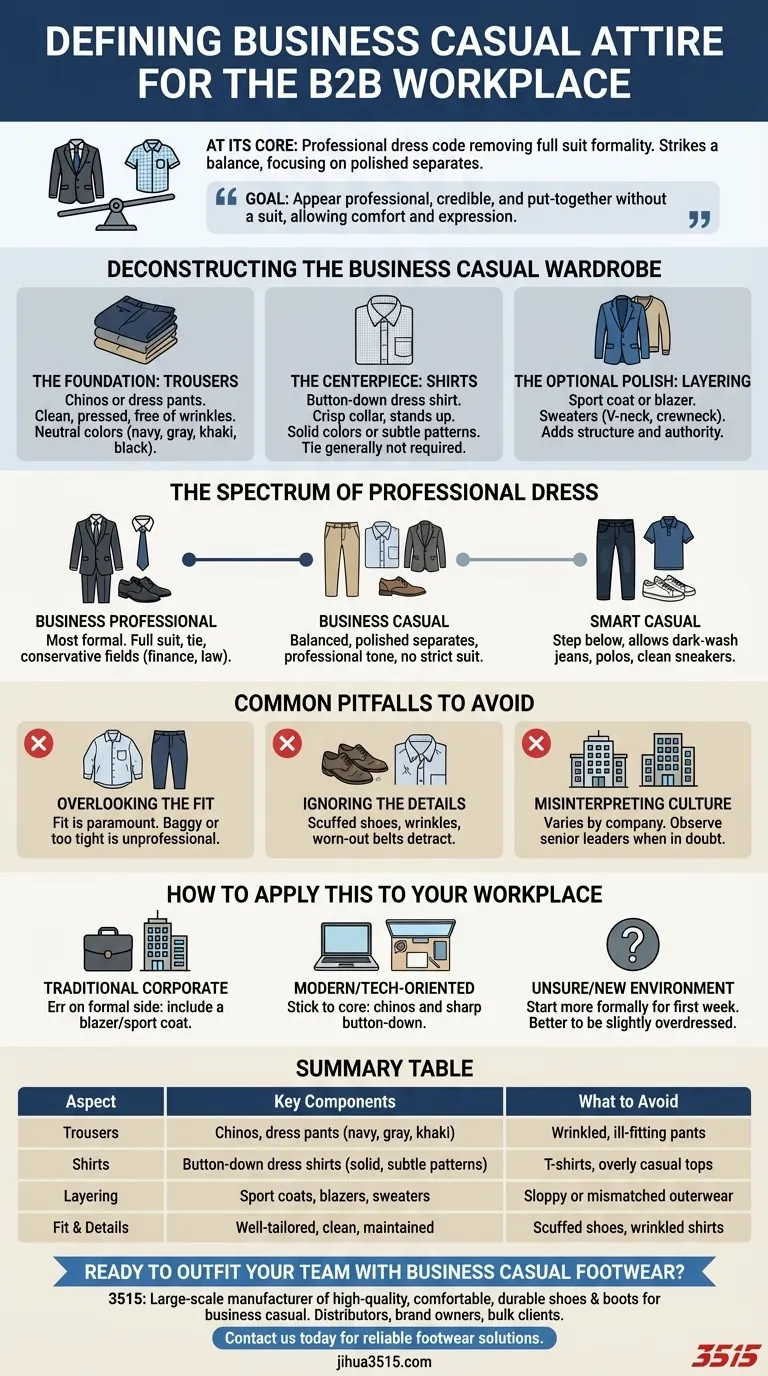
At its core, business casual is a professional dress code that removes the formality of a full suit. It strikes a balance between traditional business professional attire and everyday casual wear, focusing on polished separates like dress pants or chinos paired with a collared shirt.
The central goal of business casual is to appear professional, credible, and put-together without the strict requirement of a suit and tie, allowing for more comfort and individual expression within a professional framework.

Deconstructing the Business Casual Wardrobe
To properly execute this dress code, it's essential to understand its core components. Each element works together to create a look that is both relaxed and professional.
The Foundation: Trousers
The base of any business casual outfit is a pair of well-fitting trousers.
Chinos or dress pants are the standard. These should be clean, pressed, and free of wrinkles. Neutral colors like navy, gray, khaki, and black are the most versatile and professional choices.
The Centerpiece: Shirts
The shirt is the most visible element and sets the professional tone.
A button-down dress shirt is the classic choice. While a tie is generally not required, the shirt collar should be crisp and stand up on its own. Solid colors or subtle patterns like pinstripes or checks work best.
The Optional Polish: Layering
Adding a third piece can elevate the entire outfit, signaling a greater degree of professionalism.
A sport coat or blazer is the most effective way to dress up a business casual look. It adds structure and authority without requiring a matching pair of suit trousers. Sweaters, such as a V-neck or crewneck worn over a collared shirt, are also excellent options.
The Spectrum of Professional Dress
Understanding business casual means knowing where it sits in relation to other dress codes. Its definition is often found in what it is not.
Compared to Business Professional
Business professional is the most formal corporate standard. It almost always requires a full suit, a dress shirt, and a tie. This is the expected attire in conservative fields like finance, law, and corporate leadership.
Compared to Smart Casual
Smart casual is a step below business casual and can be ambiguous. It often allows for dark-wash, well-fitting jeans, polo shirts, and even clean, minimalist sneakers, depending on the workplace. Business casual typically excludes these items.
Common Pitfalls to Avoid
Navigating the ambiguities of business casual can be challenging. Certain common mistakes can quickly undermine a professional appearance.
Overlooking the Fit
The single most important factor is fit. Clothes that are too baggy or too tight will look unprofessional, regardless of their quality. A well-tailored appearance is paramount.
Ignoring the Details
Professionalism is conveyed through details. Scuffed shoes, wrinkled shirts, or worn-out belts detract from an otherwise appropriate outfit. Ensure every element is clean and well-maintained.
Misinterpreting Your Office Culture
The definition of business casual can vary significantly from one company to another. What is appropriate in a creative agency may be too relaxed for a corporate headquarters. When in doubt, observe what senior leaders wear.
How to Apply This to Your Workplace
Use your company's culture as the ultimate guide to tailor your approach.
- If your primary focus is a traditional corporate environment: Always err on the side of formality by including a blazer or sport coat.
- If your primary focus is a modern or tech-oriented office: You can confidently stick to the core of chinos and a button-down shirt, ensuring the fit is sharp.
- If you are unsure or new to the environment: Start more formally for the first week—it is always better to be slightly overdressed than underdressed.
Mastering business casual is about projecting confidence and competence through well-chosen, classic pieces.
Summary Table:
| Aspect | Key Components | What to Avoid |
|---|---|---|
| Trousers | Chinos, dress pants (navy, gray, khaki) | Wrinkled, ill-fitting pants |
| Shirts | Button-down dress shirts (solid colors, subtle patterns) | T-shirts, overly casual tops |
| Layering | Sport coats, blazers, sweaters | Sloppy or mismatched outerwear |
| Fit & Details | Well-tailored, clean, and maintained items | Scuffed shoes, wrinkled shirts |
Ready to outfit your team with professional business casual footwear? As a large-scale manufacturer, 3515 produces a comprehensive range of high-quality, comfortable, and durable shoes and boots perfect for business casual environments. Whether you are a distributor, brand owner, or bulk client, we can meet your needs with our extensive production capabilities. Contact us today to discuss how we can support your business with reliable footwear solutions.
Visual Guide
Related Products
- Wholesale Leather Business Casual Shoes with Dial Closure - Manufacturer of Comfort Dress Sneakers
- Dial Closure Leather Business Casual Shoes for Wholesale & Private Label
- Wholesale Comfortable Business Casual Shoes Custom Manufacturing
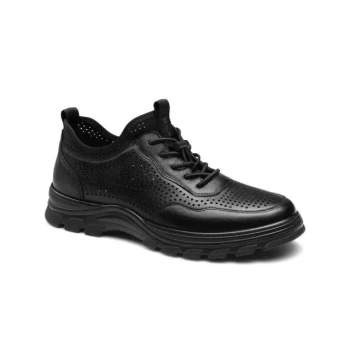
- Wholesale Modern Perforated Leather Derby Shoes with Chunky Sole for Custom Branding
- Wholesale Comfort Dress Shoes with Dial Closure for Custom Manufacturing
People Also Ask
- What factors should be considered to ensure the right business casual shoe choice? A Guide to Professional Footwear
- What are the key characteristics of the best business casual shoes? Find Versatile, Professional Footwear
- How important is comfort in business casual shoes? The Key to All-Day Professional Performance
- What are some ways to style business casual shoes with skirts? Elevate Your Professional Wardrobe
- What materials are recommended for business casual shoes? Choose the Right Material for a Polished Look