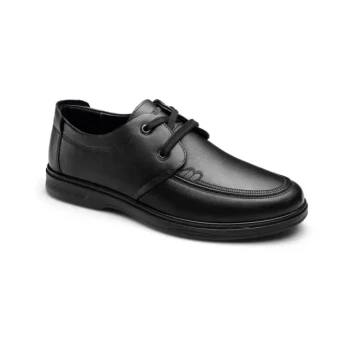
The core technical value of high-precision 3D laser line scanners lies in their ability to transform complex physical geometries into actionable data for industrial automation. By capturing high-density point cloud data from shoe outsoles, these scanners create accurate digital reconstructions that serve as the foundation for automated robotic processes. This technology bridges the gap between irregular physical surfaces and the precision required for tasks such as robotic path planning and adhesive application.
The ultimate value of this technology is not just visualization, but process enablement. It provides the geometric certainty required for industrial robots to autonomously calculate motion paths, ensuring adhesives are applied with uniform precision across complex edges.
From Physical Surface to Digital Precision
Capturing High-Density Point Cloud Data
The fundamental operation involves scanning the surface of the shoe outsole to generate a point cloud. This is a massive collection of data points that map the physical object in three-dimensional space. High-precision laser line scanners are specifically utilized to ensure this data is dense enough to capture minute details.
Accurate Geometric Reconstruction
Raw data is converted into a coherent digital model. This process, known as reconstruction, creates a virtual twin of the physical outsole. It ensures that every curve, edge, and texture deviation is accurately represented in the digital environment.
Enabling Industrial Automation
Automated Path Planning for Robots
This is the most critical application of the technology. Once the outsole is digitally reconstructed, the system can automatically calculate motion paths for industrial robots. Instead of manual teaching or static programming, the robot adapts to the specific geometry of the scanned item.
Precision in Adhesive Application
The derived motion paths control gluing robots. Because the path is based on high-precision data, the robot can apply adhesives uniformly across complex outsole edges. This ensures that glue is placed exactly where designated, eliminating waste and ensuring structural integrity.
Beyond Manufacturing: Design and Engineering
Bridging Physical and Digital Worlds
As noted in broader applications, these scanners create a seamless connection between the physical world and digital design environments. This capability is essential for modern digital manufacturing workflows.
Reverse Engineering and Archiving
Beyond immediate production, the data supports reverse engineering. Design teams can modify existing objects or create digital archives of physical prototypes. This allows for precise adaptation and iteration of outsole designs without starting from scratch.
Understanding the Trade-offs
The Dependency on Data Density
The effectiveness of the downstream automation is entirely dependent on the quality of the input data. If the point cloud density is insufficient, the geometric reconstruction will lack fidelity.
Computational Requirements
Processing high-density point clouds requires robust computational power. The system must process millions of data points in near real-time to facilitate efficient robotic path planning. This requires a balance between scan resolution and processing speed to maintain manufacturing throughput.
Making the Right Choice for Your Goal
- If your primary focus is Automated Manufacturing: Prioritize scanners that integrate directly with robot control software to automate motion path calculations for adhesive application.
- If your primary focus is Product Development: Focus on the scanner's ability to support reverse engineering and digital archiving to accelerate design iterations.
High-precision scanning is the critical link that turns a static physical object into a dynamic, automation-ready digital asset.
Summary Table:
| Technical Phase | Key Output | Industrial Value |
|---|---|---|
| Data Acquisition | High-Density Point Clouds | Accurate 3D mapping of complex outsole textures. |
| Digital Reconstruction | Virtual Twin / CAD Model | Geometric certainty for irregular physical surfaces. |
| Robotic Integration | Automated Path Planning | Eliminates manual teaching for gluing and trimming. |
| Application | Uniform Adhesive Placement | Reduced waste and enhanced structural integrity. |
| Lifecycle Support | Reverse Engineering | Rapid design iteration and digital archiving. |
Elevate Your Production with 3515 Footwear Solutions
As a premier large-scale manufacturer serving global distributors and brand owners, 3515 leverages cutting-edge technology to deliver superior footwear across all categories. Whether you need our flagship Safety Shoes, tactical boots, outdoor gear, or formal dress shoes, our comprehensive production capabilities ensure precision and quality at scale.
Why partner with 3515?
- Advanced Manufacturing: We integrate digital workflows and 3D precision to optimize bulk production.
- Diverse Portfolio: From high-performance sneakers to specialized work boots, we meet diverse market requirements.
- Scalable Quality: Our industrial expertise ensures every unit meets rigorous structural and aesthetic standards.
Contact 3515 today to discuss your bulk manufacturing needs!
References
- José-Francisco Gómez-Hernández, María-Dolores Fabregat-Periago. Development of an Integrated Robotic Workcell for Automated Bonding in Footwear Manufacturing. DOI: 10.1109/access.2024.3350441
This article is also based on technical information from 3515 Knowledge Base .
Related Products
- Wholesale Durable Camouflage Canvas Shoes with High-Traction Cleated Rubber Sole
- Lightweight Breathable Sneakers with Wet-Traction Grip for Wholesale & Private Label
- Wholesale Training Shoes with Dial Lacing System Custom OEM Manufacturing
- Durable Rubber Sole Outdoor Shoes Wholesale & Custom Manufacturing
- Wholesale Modern Business Shoes with Dial Closure System for Bulk Orders
People Also Ask
- Why is the selection of high-strength fabric materials necessary in the production of canvas shoes and training shoes?
- What are the properties of canvas as a shoe material? A Guide to Lightweight Comfort & Style
- Can canvas shoes be worn in rainy conditions? The Truth About Water Resistance
- What are some examples of vulcanized shoes? Discover the Flexibility and Board Feel of Classic Sneakers
- What are the characteristics of canvas as a shoe material? A Guide to Lightweight, Breathable Footwear