
In conclusion, maintaining rubber boots is a simple but critical process of cleaning them after use with mild soap, conditioning them periodically to keep the rubber flexible, and storing them away from direct heat and sunlight. This routine prevents the material from drying out, cracking, and ultimately failing.
While rubber seems indestructibly waterproof, it is vulnerable to environmental factors like UV light and ozone that cause it to become brittle over time. The key to longevity isn't just cleaning, but actively conditioning the rubber to preserve its natural flexibility.
The Principles of Effective Rubber Care
Rubber is a durable material, but it's not invincible. Unlike leather, it doesn't "breathe," but it is susceptible to degradation from environmental exposure. Understanding this is the key to making your boots last for years.
Clean After Every Use
The most important habit is to rinse your boots after each wear, especially after exposure to mud, salt, or chemicals.
Dirt and other contaminants can contain substances that slowly degrade rubber. A simple rinse with lukewarm water is often enough.
For more stubborn dirt, use a soft sponge and a mild, glycerine-based soap solution. Harsh detergents can strip the natural plasticizers from the rubber.
Condition to Prevent Cracking
The primary enemy of rubber is dryness, which leads to inflexibility and cracking. Conditioning is the most overlooked step in rubber boot care.
Think of it like moisturizing your skin. A specialized silicone-based spray or rubber conditioner restores suppleness and creates a protective barrier.
This barrier helps shield the rubber from UV radiation and ozone, two of the main causes of cracking and discoloration, a phenomenon known as "blooming" where a white powdery film appears.
Dry and Store Correctly
How you dry and store your boots is just as important as how you clean them. Improper drying is a fast way to ruin a pair.
If the boots are wet inside, stuff them with crumbled newspaper to absorb moisture. Never place them near a direct heat source like a radiator or fireplace, as this will cook the rubber and make it brittle.
Store your boots in a cool, dry, and dark place. Direct sunlight will rapidly degrade the material, causing it to crack and fade.
Common Mistakes That Ruin Rubber Boots
Many well-intentioned boot care habits are designed for leather and can be destructive to rubber. Avoiding these common pitfalls is essential.
Using Oil-Based Conditioners
Never use products designed for leather, such as mink oil, wax polishes, or other oil-based conditioners, on your rubber boots.
These substances can react with the chemical compounds in the rubber, causing it to swell, soften, and break down prematurely.
Applying High Heat
Resist the temptation to speed up the drying process with a hairdryer or by leaving boots in the sun.
Intense, direct heat is the primary cause of cracking around flex points, such as the ankle and forefoot. Slow, gentle air-drying is the only safe method.
Neglecting Long-Term Storage
Putting boots away for the season without proper care is a common mistake.
Always ensure they are clean, completely dry, and have been treated with a rubber conditioner before storing them. This prevents the material from stiffening and cracking while not in use.
A Simple Routine for Longevity
Your maintenance routine should match how you use your boots. The goal is to make good care a simple, ingrained habit.
- If your primary focus is daily use (e.g., for gardening or work): Make it a habit to rinse them with cool water and let them air dry away from the sun after every single use.
- If your primary focus is occasional use (e.g., for rain or seasonal wear): The most critical step is to clean and apply a rubber conditioner before you put them into storage for an extended period.
Proper care is a small investment of time that protects the function and lifespan of your boots for many seasons to come.
Summary Table:
| Maintenance Step | Key Action | Purpose |
|---|---|---|
| Clean | Rinse with water; use mild soap for dirt | Remove degrading contaminants |
| Condition | Apply a silicone-based spray/conditioner | Restore flexibility, protect from UV/ozone |
| Store | Air dry away from heat; keep in cool, dark place | Prevent brittleness and cracking |
Need a reliable source for durable rubber boots? As a large-scale manufacturer, 3515 produces a comprehensive range of high-quality footwear for distributors, brand owners, and bulk clients. Our expertise ensures your boots are built to last, reducing the need for frequent replacement. Let's discuss your specific needs — contact our team today to explore our production capabilities for all types of shoes and boots.
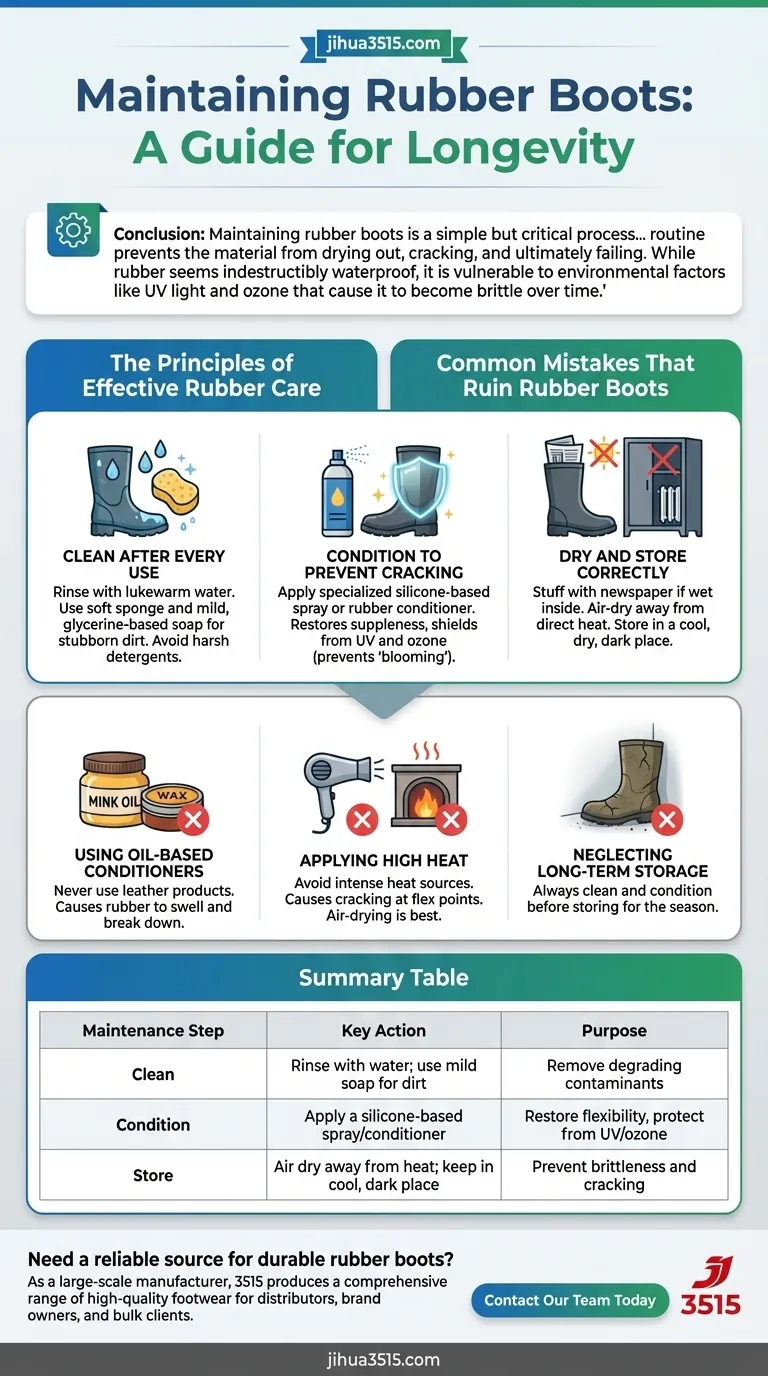
Visual Guide
Related Products
- Factory Direct Wholesale Rain Boots Durable Waterproof & Fully Customizable
- Durable Rubber Sole Outdoor Shoes Wholesale & Custom Manufacturing
- Wholesale Durable Camouflage Canvas Shoes with High-Traction Cleated Rubber Sole
- Wholesale Durable Leather Work Boots | 8-Inch Goodyear Welt Manufacturer
- Durable Goodyear Welt Leather Work Boots for Wholesale & Private Label
People Also Ask
- What are the characteristics of rain boots? A Guide to Waterproof Footwear for Every Need
- What factors should be considered when choosing rain boots? Find the Perfect Boot for Your Needs
- What are the main differences between rain boots and snow boots? Choose the Right Boot for Your Climate
- How should one decide between PVC and rubber for rain boots? A Guide to Choosing the Right Material
- Why are rain boots more flexible and comfortable than snow boots? The Key Differences Explained















