
Ultimately, the suitability of cowboy boots for farm work is conditional. They are a durable and protective option for certain tasks, particularly those involving riding or work in dry, rugged terrain. However, their significant drawbacks in breathability and lack of waterproofing mean they are often outperformed by specialized boots for many common farm activities.
While cowboy boots offer historical and stylistic appeal, their practical use on a modern farm is limited. The best choice of footwear depends entirely on the specific demands of your work, with specialized alternatives often providing superior comfort, safety, and performance.
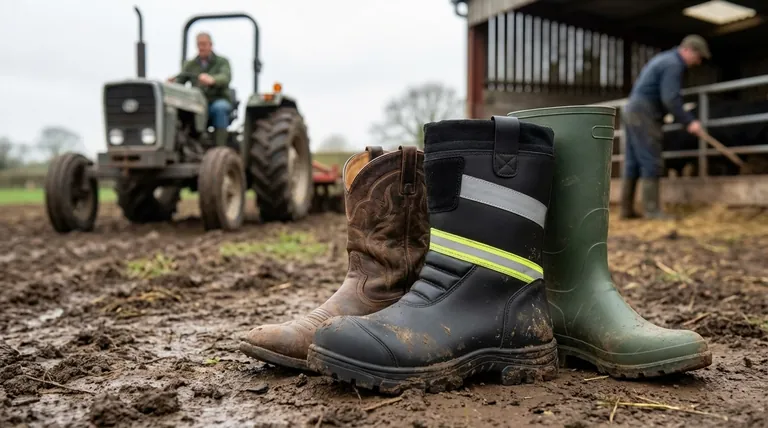
The Case for Cowboy Boots on the Farm
Cowboy boots became an icon of the American West for a reason. Their design incorporates features well-suited to rugged environments, which can translate effectively to some aspects of farm life.
Unmatched Durability and Construction
The primary advantage of a quality cowboy boot is its thick leather construction. Typically made from full-grain leather, these boots are built to withstand abrasion, scuffs, and the general wear and tear of a demanding environment.
Essential Ankle and Leg Protection
The high shaft is a defining feature that serves a critical purpose. It guards the lower leg against brush, debris, and snake bites while also providing crucial ankle support, reducing the risk of sprains on uneven ground.
Stability and Grip
The sturdy, often angled heel provides excellent stability in stirrups and helps maintain proper posture. Modern cowboy boots designed for work often feature slip-resistant outsoles, which enhance safety and traction in dry or muddy conditions.
Understanding the Trade-offs and Disadvantages
Despite their strengths, cowboy boots come with significant limitations that can impact comfort and safety during long workdays on the farm.
The Breathability Problem
One of the most common complaints is a lack of breathability. The thick leather and tall shaft trap heat and moisture, which can lead to hot, sweaty feet. Over time, this increases the risk of discomfort, foot odor, and fungal infections.
The Mandatory Break-in Period
New cowboy boots are notoriously stiff and require a significant break-in period. During this time, they can be uncomfortable and may cause blisters or hot spots until the leather conforms to the shape of your foot.
Limited Use in Wet Conditions
While they can handle some moisture, traditional cowboy boots are not waterproof. In consistently wet, muddy, or mucky conditions, they will become saturated, heavy, and can be damaged over time, making them a poor choice for such environments.
When to Choose an Alternative
For many farm tasks, a specialized boot is simply the better tool for the job. Understanding the alternatives is key to ensuring you have the right footwear for every condition.
For Wet and Muddy Work: Rubber Boots
Also known as Wellington boots, rubber boots are completely waterproof. They are the undeniable best choice for working in mud, mucky stalls, or any environment where keeping your feet dry is the top priority.
For Heavy-Duty Labor: Leather Work Boots
Traditional leather work boots often provide superior ankle support, better cushioning for long hours on your feet, and critical safety features like steel or composite toe caps. They are built for all-day comfort and protection during demanding physical labor.
For Chemical Exposure: PVC Boots
If your work involves exposure to harsh chemicals or animal waste, PVC boots are ideal. They offer excellent chemical resistance and are often equipped with reinforced toe caps for an added layer of safety in hazardous environments.
Making the Right Choice for Your Work
Choosing the right boot isn't about which style is best, but which design best serves your specific needs.
- If your primary focus is horseback riding or general work in dry fields: A well-made cowboy boot provides excellent durability and leg protection.
- If your primary focus is working in wet, muddy, or mucky conditions: A waterproof rubber boot is the only practical and safe choice.
- If your primary focus is long hours of walking, construction, or heavy labor: A dedicated leather work boot will deliver superior comfort and safety.
Ultimately, selecting the right boot means matching its specific strengths to the demands of your daily tasks.
Summary Table:
| Scenario | Recommended Boot Type | Key Reason |
|---|---|---|
| Horseback Riding / Dry Terrain | Cowboy Boots | Durability, ankle/leg protection, stability. |
| Wet & Muddy Conditions | Rubber Boots | 100% waterproof, easy to clean. |
| Heavy Labor / Long Hours | Leather Work Boots | Superior comfort, cushioning, safety toes. |
| Chemical Exposure | PVC Boots | Excellent chemical resistance, durable. |
Need the Perfect Boot for Your Specific Farm Work?
As a large-scale manufacturer, 3515 produces a comprehensive range of durable and purpose-built footwear for distributors, brand owners, and bulk clients. Our production capabilities encompass all types of shoes and boots, from classic cowboy boots to specialized waterproof and safety footwear.
We can help you provide the right footwear for any agricultural application, ensuring:
- Durability & Protection: Built to withstand the toughest farm conditions.
- Optimal Comfort: Designed for long hours of wear.
- Task-Specific Performance: The right boot for the right job.
Let's discuss your needs. Contact our team today to find the ideal boot solution for your customers!
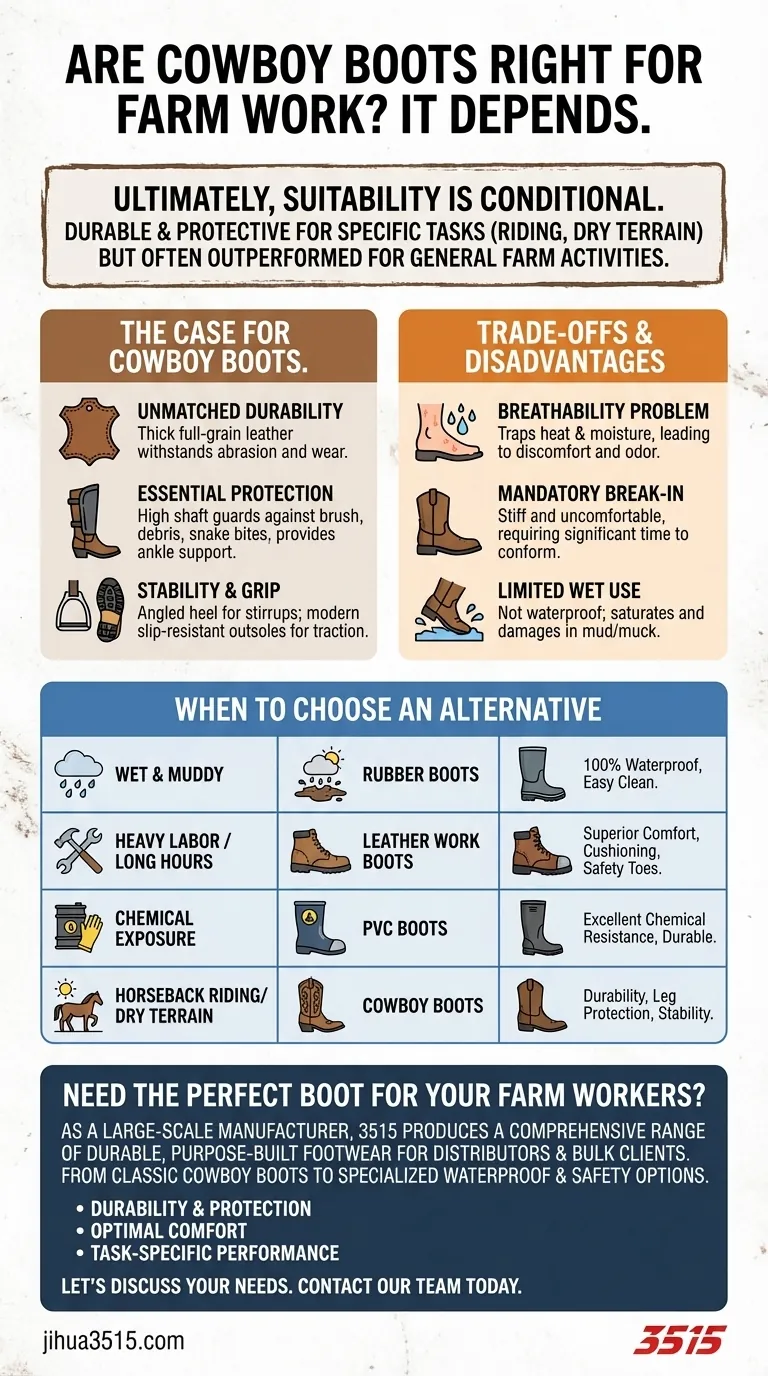
Visual Guide
Related Products
- High-Traction Suede Tactical Boots Wholesale & Custom Manufacturing
- Wholesale High-Traction Camo Boots - Custom Manufacturer for Brands
- Wholesale Lightweight Tactical Boots Custom Manufacturer for Desert & Combat Use
- Durable Leather Tactical Boots Wholesale & Custom Manufacturing for Brands
- Wholesale Durable Mid-Cut Tactical Boots for Custom & Private Label Brands
People Also Ask
- Why is sequential analysis utilized to evaluate tactical boots? Master Dynamic Boot Development and Ergonomic Performance
- How does the material of tactical boots affect their performance? Choose the Right Material for Your Mission
- How do tactical boots differ from regular boots? Performance, Durability & Design Explained
- How do military uniforms and tactical boots impact the prediction of thermal risk? Essential Safety Insights
- What are the benefits of integrating FES and sEMG into tactical boots? Safety, Reliability & Field-Ready Performance


















