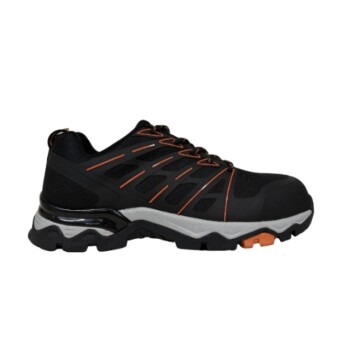
The core application value of modified footwear materials is the ability to mechanically simulate biological aging. By integrating compliant materials like foam or specific polymers into the outsole or footbed, researchers can intentionally disrupt the proprioceptive feedback loops typically relied upon for stability. This forces healthy test subjects to adopt movement compensation strategies that mirror those of high-fall-risk populations, enabling safer and more controlled data collection.
By effectively "blinding" the feet to standard sensory inputs, modified footwear forces the central nervous system to re-weight its balance strategies. This allows designers to test safety solutions against simulated age-related instability without exposing vulnerable populations to physical risk.
The Mechanism of Simulated Instability
Disrupting Proprioceptive Input
The primary function of modified outsole and footbed materials is sensory interference. In a standard shoe, the foot receives immediate, rigid feedback from the ground.
By introducing compliant polymers or foam, the connection between the foot and the ground becomes unstable. This dampens the sensory signals (proprioception) sent from the lower limbs to the brain, mimicking the sensory degradation often associated with aging.
Forcing Central Nervous System Re-weighting
When the brain receives unreliable data from the feet, it cannot rely on standard automatic reflexes for walking.
This forces the central nervous system (CNS) to "re-weight" its balance control mechanisms. The subject must consciously or unconsciously shift reliance to other sensory systems (like vision or vestibular inputs) to maintain stability. This neurological shift is the key to accurately simulating how an elderly person navigates the world.
Practical Applications in Design
Modeling High-Risk Behaviors in Safety
Testing fall dynamics on actual elderly or mobility-impaired individuals is ethically and physically risky.
Modified footwear allows researchers to induce movement compensation behaviors—such as shorter strides or wider stances—in healthy, robust subjects. This provides a safe, repeatable proxy for studying how high-fall-risk populations react to slips, trips, or uneven terrain.
Data-Driven Product Optimization
The ultimate goal of this simulation is the optimization of assistive products.
Data derived from these simulations directly informs the design of safety shoes and assistive footwear. By understanding how the body compensates for poor sensory input, engineers can design outsoles that mechanically counteract that instability.
Understanding the Trade-offs
Mechanical vs. Biological Simulation
It is critical to understand that while these materials simulate the effect of aging (instability), they do not replicate the cause.
Modified footwear creates a mechanical barrier to sensation, whereas age-related decline is often neurological or physiological. Therefore, the data reflects how the body compensates for signal loss, not necessarily the exact pathology of aging.
Material Consistency
The degree of "compliance" or softness in the polymers must be carefully calibrated.
If the material is too soft, it may cause immediate falls rather than compensation; if it is too rigid, it fails to trigger CNS re-weighting. Precise material selection is required to ensure the simulation is valid.
Leveraging Simulation for Product Development
Making the Right Choice for Your Goal
- If your primary focus is Academic Research: Prioritize materials that isolate and dampen specific proprioceptive channels to study distinct CNS adaptation strategies.
- If your primary focus is Product Design: Use the simulation data to identify the specific gait deviations that occur during instability, and engineer outsole geometries that correct these deviations.
The value of modified footwear lies not in the shoe itself, but in its ability to turn a healthy subject into a high-fidelity model of an aging user.
Summary Table:
| Simulation Element | Material Used | Biological Impact Simulated | Design Value |
|---|---|---|---|
| Proprioception | Compliant Polymers/Foam | Sensory signal degradation | Tests CNS re-weighting strategies |
| Gait Dynamics | Low-Density Inserts | Shorter strides & wider stance | Models high-fall-risk behaviors |
| Stability Control | Unstable Outsoles | Balance compensation | Informs corrective sole geometries |
| Risk Management | Modified Footwear | Controlled instability | Enables safe data collection on healthy subjects |
Partner with 3515 for Advanced Footwear Engineering
As a large-scale manufacturer serving distributors and brand owners, 3515 offers comprehensive production capabilities for all footwear types, anchored by our flagship Safety Shoes series. Our extensive portfolio covers work and tactical boots, outdoor shoes, training shoes, and sneakers, as well as Dress & Formal shoes to meet diverse bulk requirements.
Whether you are developing specialized footwear for medical research or high-performance safety gear, we provide the technical expertise and manufacturing scale to bring your designs to life. Contact us today to discuss your production needs and leverage our industry-leading capabilities.
References
- Michael Herzog, Thorsten Stein. Rollator usage lets young individuals switch movement strategies in sit-to-stand and stand-to-sit tasks. DOI: 10.1038/s41598-023-43401-6
This article is also based on technical information from 3515 Knowledge Base .
Related Products
- Premium Suede Sport Safety Shoes for Wholesale & Bulk Orders
- Premium Lightweight Safety Shoes for Wholesale & Bulk Orders
- Wholesale Anti-Smash & Puncture-Proof Safety Shoes Custom Manufacturing for Brands
- Premium KPU Injection Athletic Style Safety Shoes
- Premium Safety Shoes with Rotating Buckle Safety Sneakers
People Also Ask
- What are the primary functions of professional safety shoes? Maximize Safety in Water Supply Confined Spaces
- What industries have specific OSHA footwear requirements? Ensure Compliance & Protect Your Workforce
- What role do specialized safety shoes play in preventing falls? Engineering Stability in Industrial Environments
- What core functions do professional safety shoes serve? Enhance Construction & Industrial Safety Standards
- Why are customized foot sensors or professional safety shoes incorporated into biomechanical testing? Precision Insights