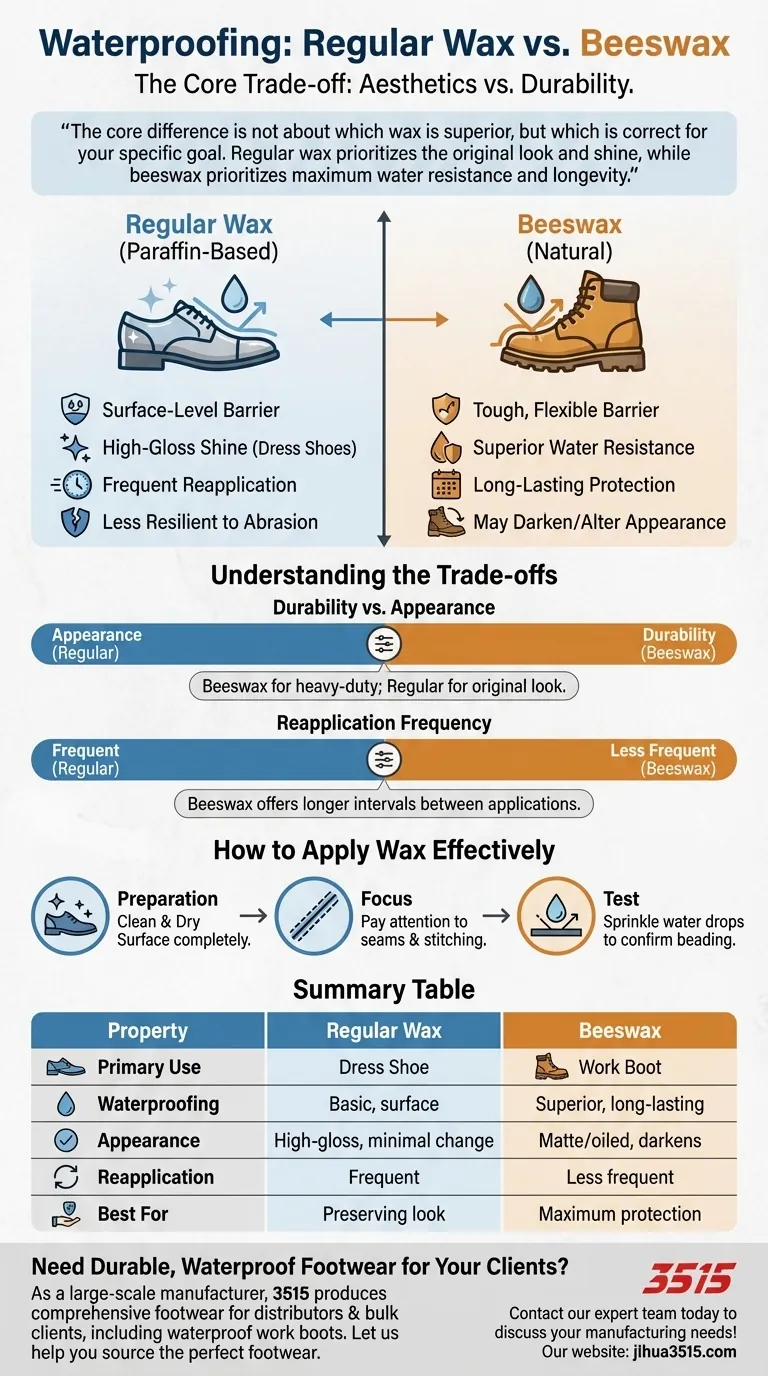
When choosing a waterproofing wax, the decision between a standard product and natural beeswax comes down to a fundamental trade-off between aesthetics and durability. Regular wax excels at providing shine and basic weather protection but requires frequent reapplication. Beeswax forms a significantly more robust and lasting waterproof barrier but may alter the material's appearance over time and does not provide a high-gloss finish.
The core difference is not about which wax is superior, but which is correct for your specific goal. Regular wax prioritizes the original look and shine of an item, while beeswax prioritizes maximum water resistance and longevity.
Deconstructing the Core Properties
To make an informed choice, you must first understand how each type of wax functions at a material level. Their distinct properties lead to very different outcomes in performance and appearance.
Regular Wax (Paraffin-Based)
Most standard shoe and fabric waxes are derived from paraffin, a petroleum by-product. This type of wax creates a simple, surface-level barrier against moisture.
Its primary advantage is its ability to produce a high-gloss shine, making it ideal for dress shoes and items where appearance is paramount. The protective layer, however, is less resilient to abrasion and flexing.
Beeswax
Beeswax is a natural substance that forms a tougher, more flexible, and more durable protective layer. It doesn't just sit on the surface; it can subtly penetrate and condition materials like leather.
This results in superior and longer-lasting water resistance. It is the preferred choice for gear that will face harsh conditions, such as work boots or outdoor equipment.
Understanding the Trade-offs
Neither wax is a perfect solution for every scenario. The right choice depends entirely on balancing the need for protection against the desired aesthetic outcome.
The Durability vs. Appearance Conflict
Beeswax provides a far more resilient barrier against water. This makes it the clear winner for heavy-duty applications where function is the top priority.
Regular wax, conversely, is better suited for maintaining the original look of an item. Its ability to be buffed to a shine is a key feature that beeswax cannot match.
Impact on Material Appearance
A significant consideration with beeswax is its tendency to alter the appearance of materials after multiple applications. It often darkens leather and can give fabrics a slightly heavier, oiled look.
Regular wax is formulated to have a minimal impact on the original color and texture, preserving the "out-of-the-box" look of your items more effectively.
Reapplication Frequency
The less robust nature of a regular wax barrier means it wears away more quickly. For items worn daily, you should expect to reapply it frequently to maintain protection.
The tough, flexible barrier created by beeswax lasts considerably longer, reducing the maintenance required to keep your gear waterproof.
How to Apply Wax Effectively
Regardless of your choice, proper application is critical for success. The principles are the same for both types of wax.
Preparation is Non-Negotiable
Always begin with a completely clean and dry surface. Any dirt or moisture trapped under the wax will compromise the waterproof seal and can damage the material underneath.
Focus on Vulnerable Areas
Pay special attention to seams, stitching, and any areas where different materials join. These are the most common points of failure where water is likely to penetrate.
Test Your Work
After applying the wax, allow the item to air dry completely, away from any direct heat source like a radiator or hairdryer. You can confirm the effectiveness by sprinkling a few drops of water on the surface; if they bead up and roll off, the waterproofing is successful.
Making the Right Choice for Your Gear
Your goal determines the right tool for the job. Use these guidelines to make a clear decision.
- If your primary focus is aesthetics and shine (e.g., dress shoes): A regular, paraffin-based wax is the correct choice, but be prepared for more frequent applications.
- If your primary focus is maximum durability and water resistance (e.g., work boots, outdoor gear): Beeswax is the superior choice, accepting that it may slightly alter the material's appearance over time.
- If you are treating an item worn daily: Beeswax will offer a longer interval between applications, making it a more practical choice for consistent protection.
Ultimately, understanding these material properties empowers you to select the precise tool for your specific waterproofing task.
Summary Table:
| Property | Regular Wax | Beeswax |
|---|---|---|
| Primary Use | Aesthetics & Shine (Dress Shoes) | Durability & Water Resistance (Work Boots) |
| Waterproofing | Basic, surface-level barrier | Superior, flexible, and long-lasting barrier |
| Appearance | High-gloss shine, minimal color change | Can darken leather, matte/oiled finish |
| Reapplication | Frequent, wears quickly | Less frequent, highly durable |
| Best For | Preserving 'out-of-the-box' look | Maximum protection in harsh conditions |
Need Durable, Waterproof Footwear for Your Clients?
As a large-scale manufacturer, 3515 produces a comprehensive range of footwear for distributors, brand owners, and bulk clients. Our production capabilities encompass all types of shoes and boots, including work boots with superior waterproofing properties.
Let us help you source or create the perfect footwear for your market. Contact our expert team today to discuss your manufacturing needs!
Visual Guide