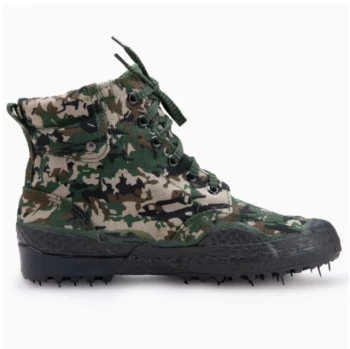
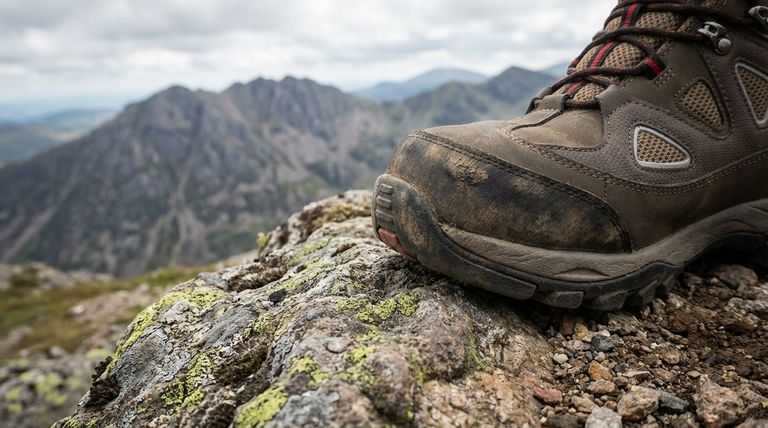
A toe rand is a protective layer, typically made of rubber or a similar abrasion-resistant material, that wraps over the front of a boot. It acts as armor for the toe box, shielding the boot's upper from scrapes, impacts, and moisture. Its presence is optional because it represents a direct trade-off between maximum durability and other factors like weight, flexibility, and cost.
A toe rand is not a mere feature; it's a statement of intent. Its inclusion signals a boot designed for rugged, off-trail terrain, while its absence prioritizes lightweight agility for well-maintained paths.
When a Toe Rand is Essential
A toe rand is a purpose-built feature designed to solve specific environmental challenges. Its value becomes clear in demanding conditions where footwear is pushed to its limits.
Shielding Against Abrasion
The primary purpose of a toe rand is to protect the boot's upper from damage.
When navigating scree fields, rocky trails, or dense underbrush, the rand takes the brunt of the wear and tear, preserving the more delicate leather or synthetic fabric underneath.
Enhancing Water Resistance
The seam where the boot's upper connects to the sole is a common failure point for water ingress.
A well-designed toe rand effectively seals this vulnerable junction, providing a critical extra barrier against moisture from wet grass, mud, and snow.
Extending the Boot's Lifespan
By absorbing impacts and resisting scrapes day after day, the rand significantly increases the overall durability of the boot.
This simple addition can mean the difference between a boot lasting for a single season versus many years of hard use, making it a sound long-term investment.
Understanding the Trade-offs
A toe rand is not a universally superior feature. Including it introduces compromises that make it unsuitable for certain activities and users.
The Cost of Added Weight
Adding a thick layer of durable rubber to the front of a boot inevitably increases its total weight.
While this may seem minor, every ounce matters over thousands of steps, and this extra weight can contribute to greater fatigue on long-mileage days.
A Reduction in Forefoot Flexibility
The rubber used in a rand is inherently stiffer than the leather or fabric it covers.
This can result in a less flexible feel in the forefoot. For casual walking on flat terrain, this can feel unnecessarily rigid and less comfortable than a boot without a rand.
The Potential for Delamination
Because the rand is typically glued to the upper, there is a small risk it can begin to peel or separate from the boot over time.
This is more common in lower-quality boots or with improper care, and it requires maintenance with a specialized adhesive to repair.
Making the Right Choice for Your Goal
The decision to choose a boot with or without a toe rand comes down to the terrain you plan to tackle.
- If your primary focus is mountaineering, scrambling, or extensive off-trail hiking: A toe rand is virtually non-negotiable for the required protection and durability.
- If your primary focus is lightweight backpacking on well-maintained trails: You can safely opt for a boot without a rand to save weight and improve comfort.
- If your primary focus is casual day hiking or trail walking: A toe rand is unnecessary and would be considered overkill for your typical needs.
Ultimately, choosing a boot with a toe rand is about honestly assessing your environment, not just buying the most robust feature available.
Summary Table:
| Feature | With Toe Rand | Without Toe Rand |
|---|---|---|
| Primary Use | Rugged, off-trail hiking, scrambling | Lightweight backpacking, well-maintained trails |
| Durability | High; protects against abrasion and impacts | Standard; sufficient for less demanding terrain |
| Weight | Heavier due to extra material | Lighter, promoting agility and reduced fatigue |
| Flexibility | Less flexible in the forefoot | More flexible for comfortable walking |
| Water Resistance | Enhanced; seals critical seam | Standard; may be sufficient for dry conditions |
Need durable, purpose-built boots for your specific terrain?
As a large-scale manufacturer, 3515 produces a comprehensive range of footwear for distributors, brand owners, and bulk clients. Our production capabilities encompass all types of shoes and boots, including models with reinforced toe rands for maximum protection or lightweight designs for agility.
Let us help you select or manufacture the perfect boot for your market's needs. Contact our expert team today to discuss your requirements!
Visual Guide

Related Products
- Wholesale High-Traction Camo Boots - Custom Manufacturer for Brands
- Durable Rubber Sole Outdoor Shoes Wholesale & Custom Manufacturing
- Durable Spiked Camouflage Boots Wholesale & Factory Production
- Wholesale Lightweight Tactical Boots Custom Manufacturer for Desert & Combat Use
- Durable Goodyear Welt Leather Work Boots for Wholesale & Private Label
People Also Ask
- What are the key features of the new line of camo boots? Built for Extreme Cold & Rugged Terrain
- Are camo boots necessary for hunting success? Prioritize Performance Over Pattern
- What is the technical logic behind using closed-eye testing for tactical boots? Unlocking Peak Footwear Stability
- How does the Rank Score Test identify the primary causes of premature failure in tactical and work boots? Key Insights
- What shoes to wear for a security job? Durable, Protective Footwear for Long Shifts