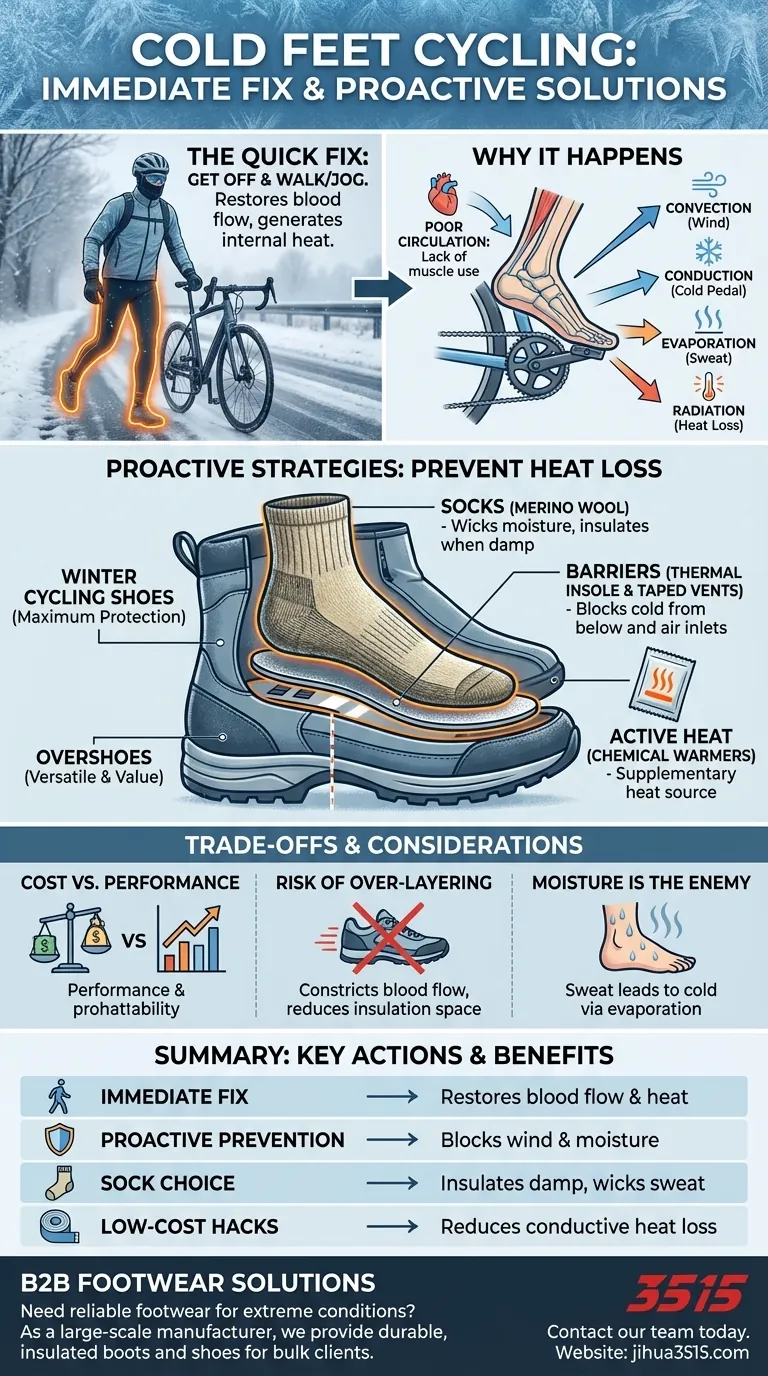
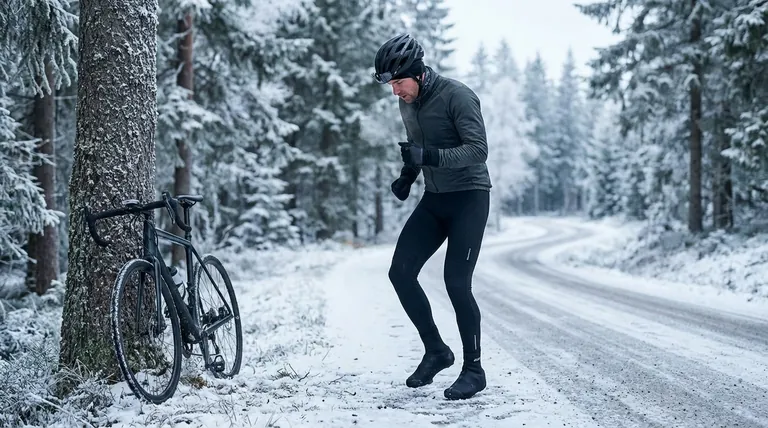
The quickest fix for cold feet mid-ride is to get off your bike and walk or jog briskly for a few minutes. This simple action forces your foot and lower leg muscles to work, generating internal heat and dramatically increasing blood circulation to your extremities, restoring warmth far more effectively than continuing to pedal.
The immediate solution for cold feet is to restore blood flow, but the permanent solution is to prevent heat loss in the first place. Understanding why your feet get cold is the key to keeping them warm on every winter ride.
Why Your Feet Get Cold When Cycling
Before you can solve the problem, you need to understand the cause. Cold feet aren't just a matter of temperature; they are a result of poor heat generation and excessive heat loss.
The Circulation Problem
Unlike running or walking, cycling is a non-weight-bearing activity that uses very few muscles in the feet. Since muscle contraction is a primary source of body heat, your feet simply don't generate their own warmth. They rely entirely on warm blood circulated from your core.
The Environmental Attack
Your feet are on the front line, battling the elements. They lose heat through four primary mechanisms:
- Convection: Wind constantly strips heat away.
- Conduction: Contact with cold pedals and cleats pulls heat out.
- Evaporation: Any moisture from sweat or precipitation chills your skin as it evaporates.
- Radiation: Your feet radiate heat into the colder surrounding air.
Proactive Strategies: Preventing Cold Feet from the Start
The most effective approach is a defensive one. By setting up your footwear correctly before you leave, you can trap heat and block the elements.
The Foundation: Footwear Choices
Your shoes are your primary shield. You have two main options: dedicated winter cycling shoes, which are heavily insulated and weatherproof, or overshoes (booties) that fit over your regular cycling shoes to provide a protective layer.
The Power of Layering: Socks
The right sock is critical. Always choose a moisture-wicking material like merino wool, which insulates even when damp. Avoid cotton at all costs, as it holds moisture against your skin, accelerating heat loss.
Creating a Barrier: Insoles and Vents
A simple thermal insole, especially one with a reflective bottom layer, can significantly reduce heat loss through the bottom of your shoe. For a quick, low-cost fix, use duct tape or electrical tape to cover the ventilation holes on your shoes, blocking cold air from entering.
Adding Active Heat: Warmers
For the coldest days, single-use chemical toe warmers can be placed on top of or below your socks. These provide a reliable source of external heat for several hours, but they work best when combined with good insulation to trap that heat.
Understanding the Trade-offs
Every solution comes with its own set of considerations. Being aware of them will help you build the right system for your needs.
Cost vs. Performance
Dedicated winter cycling shoes offer the best all-in-one protection but are a significant investment. Overshoes are a more budget-friendly and versatile option that works with your existing gear, though they can be less durable and more cumbersome.
The Risk of Over-layering
It can be tempting to wear multiple pairs of thick socks, but this often backfires. If your shoes become too tight, you will constrict blood flow, making your feet even colder. It also reduces air space, which is crucial for insulation.
Moisture is the Enemy
If your setup is too warm, your feet will sweat. If that moisture can't escape, it will eventually make you colder through evaporation. This is why moisture-wicking socks and breathable (but weatherproof) outer layers are so important.
Making the Right Choice for Your Goal
Your ideal setup depends on your local climate, budget, and how much you ride in the cold.
- If your primary focus is maximum protection for harsh conditions: Invest in a quality pair of insulated, waterproof winter cycling shoes.
- If your primary focus is versatility and value: Combine your standard cycling shoes with merino wool socks and a good pair of neoprene overshoes.
- If your primary focus is a quick, low-cost improvement: Start by taping your shoe vents, adding thermal insoles, and using chemical warmers on the coldest days.
Ultimately, a proactive strategy that keeps heat in and weather out is the only way to guarantee comfortable feet on every winter ride.
Summary Table:
| Strategy | Key Action | Primary Benefit |
|---|---|---|
| Immediate Fix | Walk/Jog off the bike | Restores blood flow & generates heat |
| Proactive Prevention | Use winter shoes or overshoes | Blocks wind & moisture from the start |
| Sock Choice | Wear merino wool socks | Insulates even when damp, wicks moisture |
| Low-Cost Hacks | Tape shoe vents, add thermal insoles | Reduces heat loss through conduction |
Need reliable footwear for extreme conditions?
As a large-scale manufacturer, 3515 produces a comprehensive range of high-performance footwear built to handle the toughest environments. Whether you are a distributor, brand owner, or bulk client, we can provide the durable, insulated boots and shoes you need.
Contact our team today to discuss your specific requirements and discover how our production capabilities can deliver the right solution for your customers.
Visual Guide