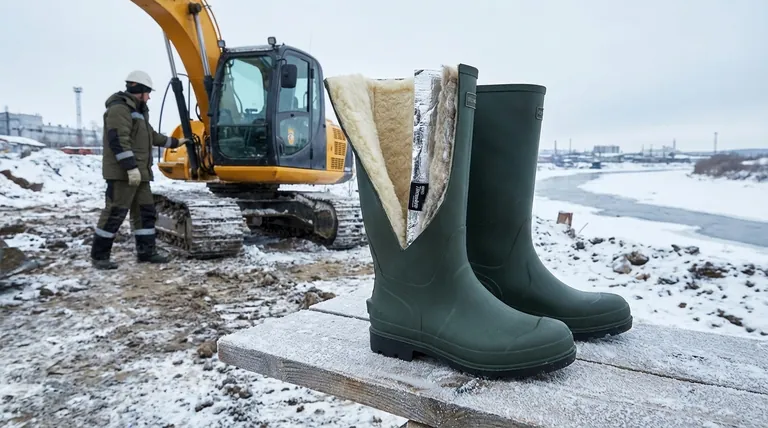
The primary insulation options for Wellington work boots are categorized by the weight of the material, most commonly 400G and 800G. These ratings, typically referring to synthetic materials like Thinsulate or Primaloft, indicate the level of warmth provided. Many boots also use natural materials like wool or sheepskin as liners for effective insulation.
Choosing the right insulation isn't about selecting the highest number; it's about matching the insulation level to your physical activity and the ambient temperature to ensure your feet stay warm and dry, not cold and clammy.
Understanding Insulation Ratings: Grams Explained
The "G" rating on a boot's insulation specification is the most common way manufacturers communicate its thermal performance. Understanding this number is the first step to making an informed choice.
What "Grams" Really Means
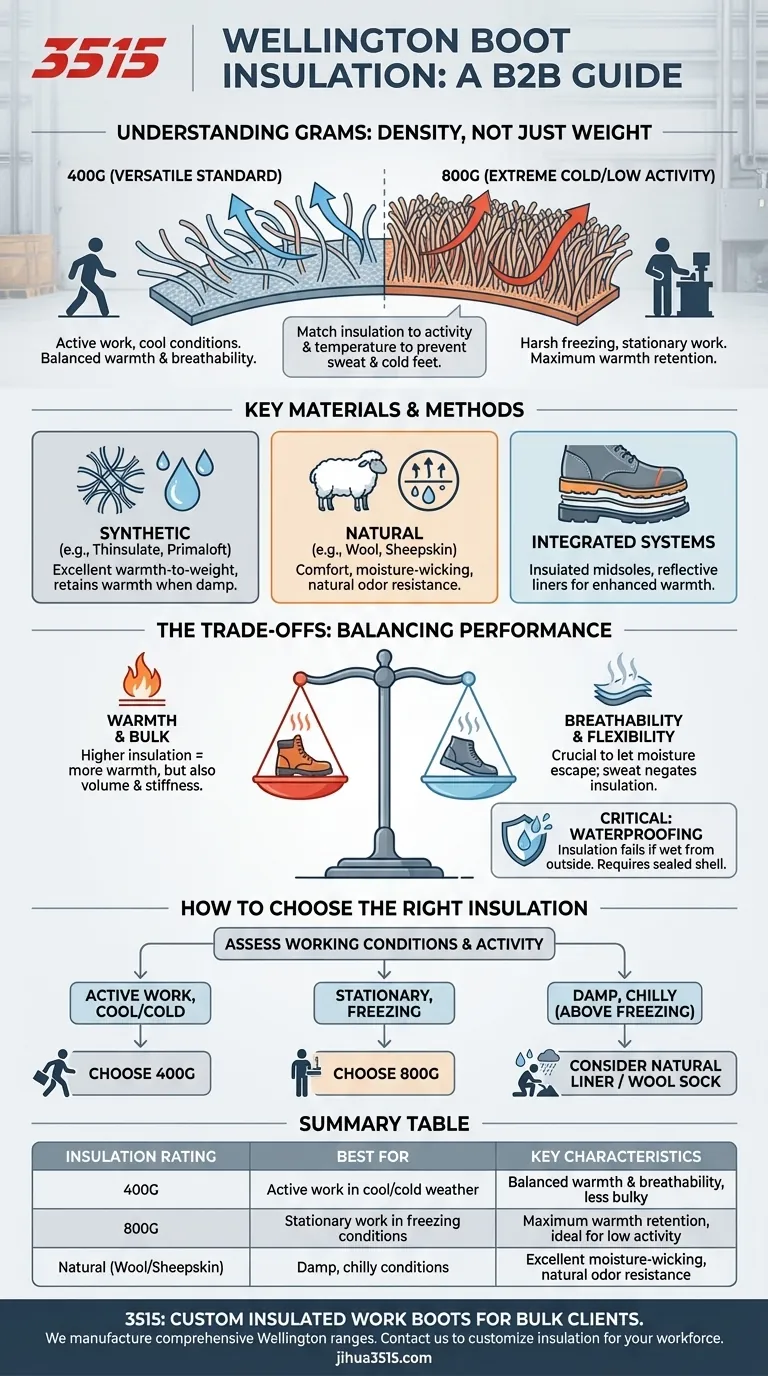
The number, such as 400G or 800G, refers to the weight of the insulation material in grams per square meter. It is a measure of density, not the total weight it adds to the boot. A higher gram rating means more fibers are packed into the space, trapping more air and providing greater warmth.
400G: The Versatile Standard
400G insulation is an excellent all-around choice for active work in cool or cold conditions. It provides significant warmth without being excessively bulky, making it suitable for jobs where you are constantly moving and generating your own body heat.
800G: For Extreme Cold and Low Activity
800G insulation is designed for harsh, freezing temperatures or for work that involves long periods of standing still. If you are stationary in the cold, such as when operating machinery or monitoring a site, this heavier insulation is necessary to retain heat.
Key Insulation Materials and Methods
While the gram rating is important, the type of material and its placement within the boot also play a critical role in its overall performance.
Synthetic Insulators
Materials like Thinsulate and Primaloft are the industry standard for work boots. These synthetic microfibers are popular because they provide excellent warmth for their weight and, crucially, retain much of their insulating ability even when damp.
Natural Insulators
Wool and sheepskin (Sherling) are classic, highly effective natural insulators. They are renowned for their comfort, moisture-wicking properties, and natural odor resistance. You will often find these used as a plush lining or in specialized footbeds.
Integrated Insulation Systems
Modern boots treat insulation as a system. This can include an insulated midsole to block cold from penetrating through the sole, or reflective liners that bounce your body heat back toward your foot for enhanced warmth.
Understanding the Trade-offs
Selecting the most heavily insulated boot is a common mistake. The goal is thermal regulation, and that requires balancing competing factors.
Warmth vs. Breathability
The most critical trade-off is between retaining heat and allowing moisture to escape. An 800G boot worn during strenuous activity will likely cause your feet to sweat. This moisture negates the insulation, leaving your feet wet and prone to getting dangerously cold once you stop moving.
Bulk and Flexibility
Heavier insulation adds volume. This can make the boot feel bulkier and slightly stiffer, potentially impacting comfort and agility over a long workday.
The Critical Role of Waterproofing
Insulation is ineffective if your feet get wet from the outside. A Wellington boot's primary defense is its waterproof shell, often made of natural or synthetic rubber. Without a fully waterproof and sealed construction, even the best insulation will fail.
How to Choose the Right Insulation for Your Work
Your decision should be based entirely on your specific working conditions and physical output.
- If your primary focus is active work in cool to cold weather: Choose a 400G insulated boot. It provides the ideal balance of warmth and breathability for when you are generating body heat.
- If your primary focus is stationary work in freezing conditions: An 800G boot is the correct choice to keep your feet warm when you are not moving enough to generate significant heat.
- If your primary focus is working in damp, chilly conditions (above freezing): A non-insulated waterproof Wellington with a quality wool sock may be sufficient and offer the best moisture management.
Ultimately, choosing the right boot is a critical investment in your safety and comfort on the job.
Summary Table:
| Insulation Rating | Best For | Key Characteristics |
|---|---|---|
| 400G | Active work in cool/cold weather | Balanced warmth & breathability, less bulky |
| 800G | Stationary work in freezing conditions | Maximum warmth retention, ideal for low activity |
| Natural (Wool/Sheepskin) | Damp, chilly conditions | Excellent moisture-wicking, natural odor resistance |
Need the Perfect Insulated Work Boot for Your Team?
As a large-scale manufacturer, 3515 produces a comprehensive range of Wellington work boots for distributors, brand owners, and bulk clients. We can help you select or customize the ideal insulation—from 400G and 800G synthetics to natural wool liners—ensuring your workforce stays safe, warm, and productive in any condition.
Let's discuss your specific needs: Contact our experts today to get a quote or request samples.
Visual Guide
Related Products
- Durable Waterproof Rain Boots | Custom Manufacturer for Wholesale & Brands
- Durable Leather Work Boots for Wholesale & Custom Manufacturing
- Durable Goodyear Welt Leather Work Boots for Wholesale & Private Label
- Durable Leather Work Boots for Wholesale & Custom OEM Manufacturing
- Durable Leather Work Boots Wholesale Manufacturer & Custom Factory
People Also Ask
- What are the main materials for waterproof rain boots? Choose the Right Material for Durability & Comfort
- What is the overall recommendation for choosing rain boot materials? A Guide to Rubber vs. PVC
- How does boot height affect waterproofing? Choose the Right Height for Ultimate Protection
- Why are rain boots more flexible and comfortable than snow boots? The Key Differences Explained
- What are the best types of shoes for different gardening conditions? Find Your Perfect Match.