
The inspiration for the desert boot came directly from Nathan Clark’s military service in Burma. During his time with the British Eighth Army, he observed officers wearing simple, lightweight suede boots that were perfectly suited for the harsh climate. He recognized the genius in their practical design and set out to refine it for a wider audience.
The desert boot is not a story of pure invention, but of insightful adaptation. Clark saw the brilliance of a functional, regional shoe—the South African veldskoen—and understood how its core principles of comfort and simplicity could create a globally iconic piece of footwear.
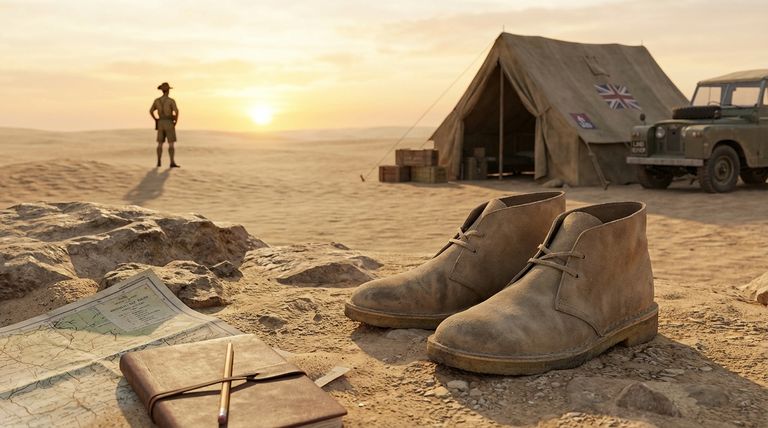
The Wartime Origin Story
The boot's creation is rooted in solving a real-world problem observed on the front lines of World War II. It was a design born from necessity, not from fashion.
An Observation in Burma
While stationed in Burma, Nathan Clark of the Clark's shoe company family took note of the footwear worn by his fellow officers. They favored comfortable, ankle-high suede boots sourced from the bazaars of Cairo.
These boots stood in stark contrast to the standard-issue, rigid military boots of the time.
The South African Connection
The design that inspired Clark was not original to the Cairo bazaars. Its lineage traces back to the veldskoen (meaning "field shoe" in Afrikaans), a type of footwear popular in South Africa.
This humble shoe was known for its durability and comfort, making it ideal for navigating the arid landscapes of the region. The British officers had effectively adopted this proven design for their own needs.
Built for Harsh Conditions
The original boots were engineered to perform in the desert. The soft, unlined suede upper was breathable, while the lightweight construction reduced fatigue.
This focus on pure function is what captured Nathan Clark's attention and became the guiding principle for his own design.
A Revolutionary Combination of Materials
Clark’s genius was in seeing the potential of these materials, which were highly unconventional for men's dress-casual footwear in the mid-20th century.
The Unconventional Suede Upper
At the time, most respectable men's shoes were crafted from stiff, polished leather. Suede was considered too casual and was not widely used.
Clark’s decision to use a suede upper was a radical departure, prioritizing a soft, pliable feel over the rigid formality of his competitors.
The Signature Crepe Sole
The other defining feature was the crepe rubber sole. This natural, gummy material provided exceptional comfort and a cushioned feel underfoot.
It was lightweight, flexible, and perfectly complemented the relaxed nature of the suede upper, creating a shoe that was comfortable from the very first wear.
Key Principles of an Enduring Design
The desert boot's longevity isn't an accident. It is a direct result of the core principles Nathan Clark baked into its creation.
Simplicity Over Ornamentation
The boot features a clean, uncluttered design, typically made from just two pieces of leather. This minimalist construction is the source of its timeless appeal and versatility.
Comfort as a Guiding Force
Unlike the restrictive footwear of the era, the desert boot was designed around the foot's natural shape. It was made to be worn all day in difficult conditions without causing discomfort.
This commitment to comfort over rigid tradition is arguably its most important and lasting legacy.
Applying These Lessons to Modern Design
The origin of the desert boot provides a clear blueprint for creating products with lasting value.
- If your primary focus is innovation: Remember that the most powerful ideas are often simple, elegant refinements of an existing solution to a real-world problem.
- If your primary focus is timeless style: Prioritize function, simplicity, and high-quality materials over fleeting trends or unnecessary ornamentation.
Ultimately, the desert boot endures as a masterclass in observing a genuine need and answering it with an honest, purposeful design.
Summary Table:
| Key Aspect | Description |
|---|---|
| Inspiration | WWII officers' boots in Burma, adapted from South African veldskoen |
| Core Materials | Soft suede upper and lightweight crepe rubber sole |
| Design Principles | Simplicity, comfort, and functionality over ornamentation |
| Legacy | A timeless, versatile design born from solving a real-world problem |
Inspired by timeless design and quality craftsmanship?
As a large-scale manufacturer, 3515 produces a comprehensive range of footwear for distributors, brand owners, and bulk clients. Our production capabilities encompass all types of shoes and boots, from classic designs like the desert boot to modern styles, all built with a focus on durability, comfort, and value.
Contact us today to discuss your footwear manufacturing needs and bring your vision to life.
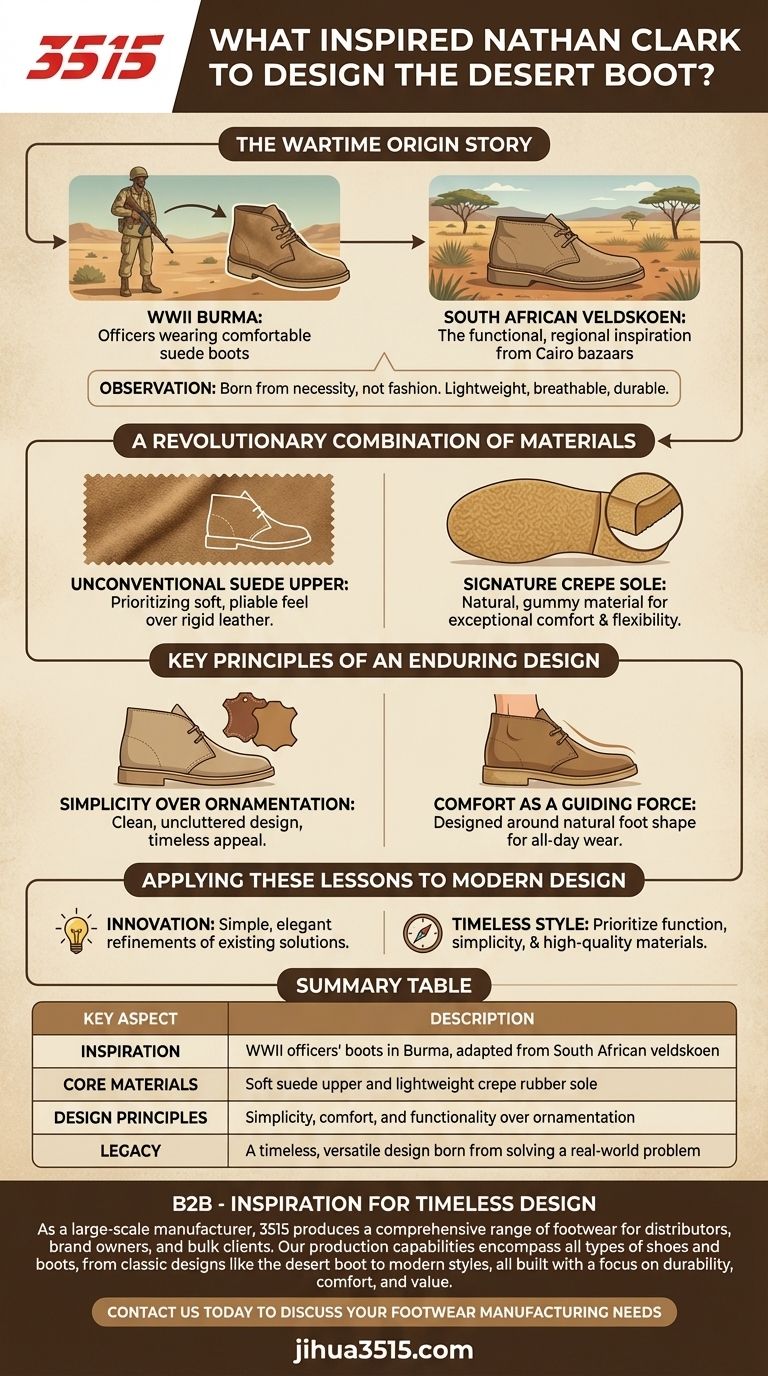
Visual Guide
Related Products
- Wholesale Lightweight Tactical Boots Custom Manufacturer for Desert & Combat Use
- Wholesale High-Traction Camo Boots - Custom Manufacturer for Brands
- Durable Waterproof Rain Boots | Custom Manufacturer for Wholesale & Brands
- High Performance Fire-Retardant Waterproof Safety Boots
- Durable Military Combat Boots with Water Drainage for Wholesale & OEM
People Also Ask
- What are the common types of combat boots? Find the Right Boot for Your Mission
- What specialized protections do tactical boots offer? Maximize Endurance with High-Performance Footwear
- How does additive manufacturing equipment reduce environmental risks? Sustainable Tactics for Modern Footwear Production
- What is the role of high-frequency acquisition hardware in technical skill analysis for outdoor and tactical boots?
- What are the main construction similarities between tactical boots and tactical sneakers? Built for Performance & Durability
















