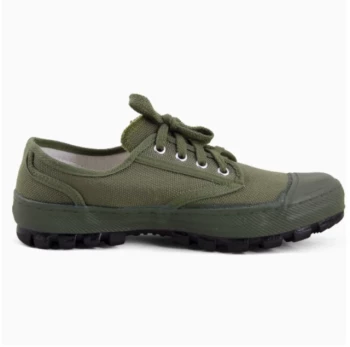
The efficiency of decontamination processes is directly governed by the surface energy, hardness, and tread design of the material in question. Research indicates that rubber and Polyamide (PA) generally accumulate higher viral loads due to their complex microscopic structures, making them inherently more difficult to sanitize than smoother Polyurethane (PU) surfaces.
Core Takeaway The physical properties of footwear and tire materials dictate pathogen adherence and removal difficulty. While smoother materials like Polyurethane (PU) are easier to clean, textured materials like rubber and Polyamide (PA) trap contaminants and require specific mechanical interventions—such as extended cleaning distances—to be effectively decontaminated.
The Influence of Material Properties
Surface Microstructure and Viral Load
The complexity of a material's microscopic structure is a primary factor in contamination retention. Rubber and Polyamide (PA) feature intricate surface textures that provide more surface area for pathogens to adhere to.
Consequently, these materials tend to accumulate significantly higher viral loads compared to others. In contrast, Polyurethane (PU) possesses a smoother surface profile, which naturally resists deep pathogen adherence and facilitates easier removal.
The Role of Hardness and Surface Energy
Beyond texture, the surface energy and hardness of the material play critical roles in the decontamination equation. These physical characteristics influence the bond strength between the pathogen and the surface.
High surface energy or specific hardness levels can increase the "stickiness" of the material regarding biological contaminants. This makes the mechanical removal of viruses more challenging for rubber and PA compared to smoother alternatives.
Operational Requirements for Effective Cleaning
Necessity of Mechanical Contact
Because pathogens adhere stubbornly to the complex treads of rubber and PA, chemical application alone is often insufficient. Mechanical agitation is required to dislodge contaminants trapped within the tread patterns.
The cleaning system must ensure that brushes or cleaning mechanisms can physically reach every crevice of the sole or tire profile.
The 5-Meter Cleaning Standard
To decontaminate complex materials like rubber and PA effectively, the cleaning zone must be substantial. Research suggests a cleaning distance exceeding 5 meters is often necessary.
This distance allows the vehicle tires or footwear soles to rotate fully multiple times. This ensures that the brushes have sufficient time and contact area to scrub all sections of the tread pattern thoroughly.
Understanding the Trade-offs
Material Performance vs. Hygiene Efficiency
Choosing a material often involves a trade-off between mechanical performance and ease of decontamination. Rubber and PA are frequently selected for their durability and grip, but these same qualities create complex microscopic structures that trap viruses.
Infrastructure Implications
If your operation relies on rubber or PA tires and footwear, you cannot rely on compact cleaning stations. You must commit to a larger infrastructure footprint—specifically, cleaning lines longer than 5 meters—to compensate for the material's tendency to hold contaminants.
Making the Right Choice for Your Goal
To optimize your decontamination protocols, consider the following based on your material constraints:
- If your primary focus is Ease of Decontamination: Prioritize Polyurethane (PU) products, as their smoother surface structure accumulates lower viral loads and is easier to sanitize.
- If your primary focus is Decontaminating Rubber or PA: You must implement a cleaning protocol with a distance exceeding 5 meters to ensure brushes can mechanically scrub the entire tread circumference.
Effective decontamination is not just about the disinfectant used, but about matching the mechanical cleaning process to the microscopic realities of the surface material.
Summary Table:
| Material Type | Surface Texture | Viral Load Retention | Decontamination Difficulty | Recommended Cleaning Distance |
|---|---|---|---|---|
| Polyurethane (PU) | Smooth | Low | Low | Standard |
| Rubber | Complex/Textured | High | High | > 5 Meters |
| Polyamide (PA) | Intricate | High | High | > 5 Meters |
Secure Your Supply Chain with 3515 High-Performance Footwear
Choosing the right sole material is critical for both durability and biosafety. As a leading large-scale manufacturer serving global distributors and brand owners, 3515 provides expert guidance on material selection to meet your specific operational needs. Our flagship Safety Shoes series and extensive portfolio—including tactical boots, outdoor shoes, training sneakers, and formal footwear—are engineered for peak performance and hygiene efficiency.
Partner with 3515 to access comprehensive production capabilities and bulk solutions tailored to your requirements. Contact us today to discuss your footwear specifications and volume needs!
References
- Martina Bandte, Carmen Büttner. A Combined Cleaning and Disinfection Measure to Decontaminate Tire Treads from Tomato Brown Rugose Fruit Virus. DOI: 10.3390/hygiene4030022
This article is also based on technical information from 3515 Knowledge Base .
Related Products
- Durable Rubber Sole Outdoor Shoes Wholesale & Custom Manufacturing
- Wholesale Leather Work Boots with Customizable Wedge Sole for Brands
- Wholesale Waterproof Tactical Boots Custom Suede & High-Traction Soles
- Wholesale Durable Camo Canvas Shoes with High-Traction Rubber Soles
- Wholesale Leather Ankle Boots with Lug Soles for Custom Brand Manufacturing
People Also Ask
- What is the function of the sole in outdoor shoes? Find the Perfect Grip and Support
- What role do outdoor shoes and sneakers play in navigating external terrains? Engineered Stability for Every Surface
- How is AI utilized in the design of outdoor and safety footwear? Harnessing Big Data for Market-Driven Shoe Innovation
- Why is durability important when selecting outdoor shoes? A Guide to Safety & Long-Term Value
- What are the key components of outdoor shoes that affect comfort and sturdiness? A Guide to Durable, High-Performance Footwear