
Beyond their iconic style, cowboy boots offer distinct health and ergonomic benefits directly tied to their unique construction. Primarily, they can improve posture, provide significant ankle support, and promote better foot alignment due to their rigid structure and built-in heel.
The core principle to understand is that a well-made cowboy boot functions as a structural tool for your foot and lower leg. It prioritizes posture and stability over the soft cushioning of modern athletic shoes, making it beneficial for certain contexts but less suitable for others.
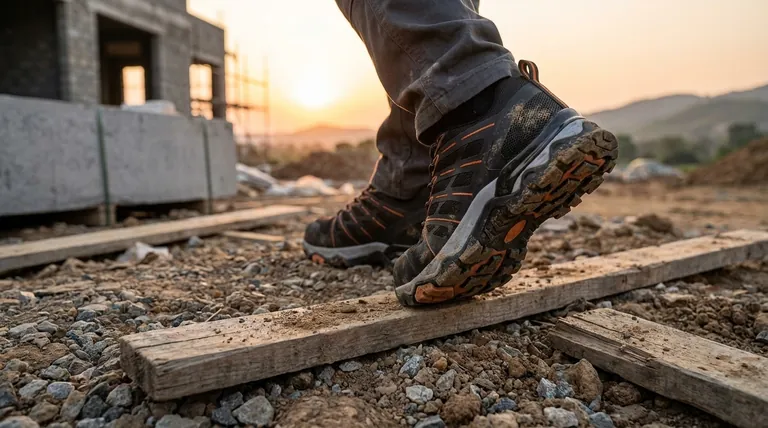
The Ergonomic Design of a Cowboy Boot
The health benefits of a cowboy boot are not accidental; they are the result of a design perfected for demanding functional use. Each element contributes to a specific ergonomic outcome.
Encouraging Proper Posture
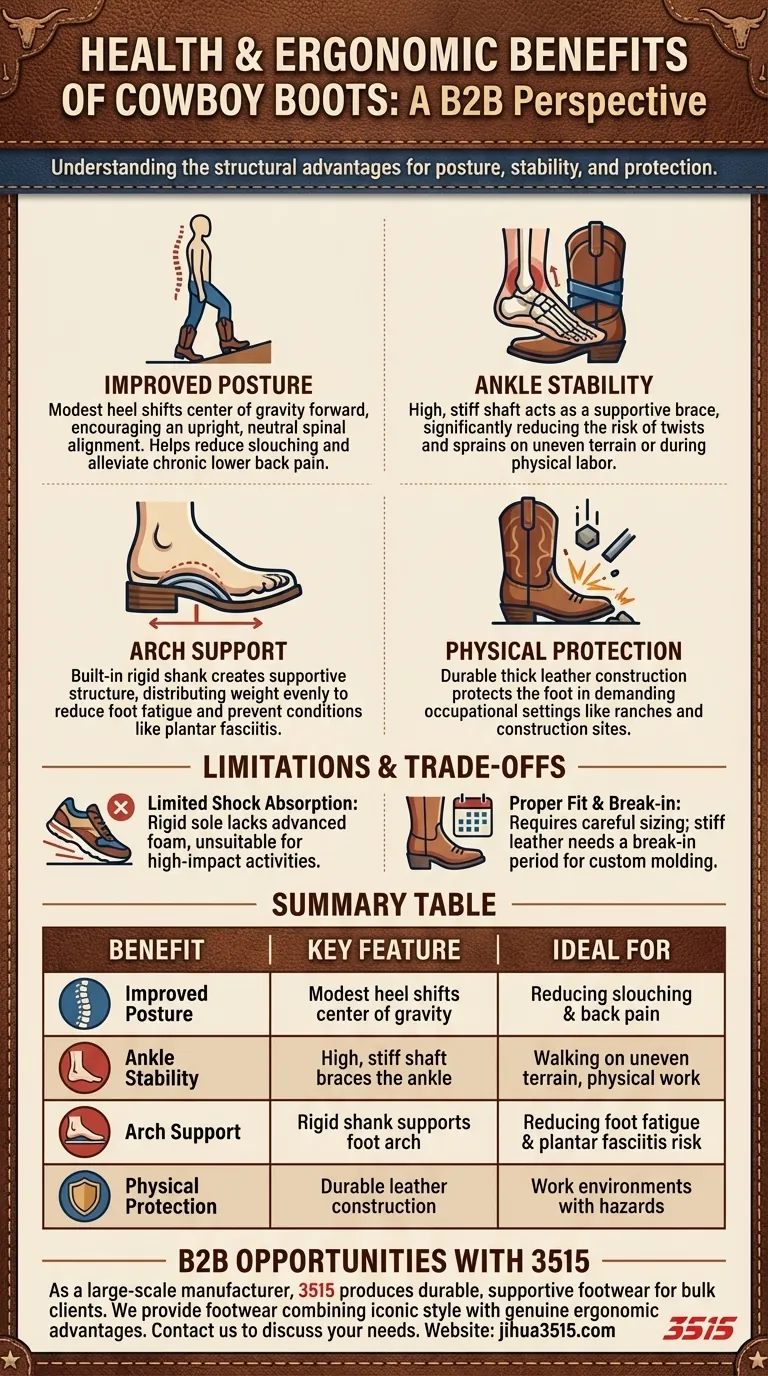
The modest heel on a traditional cowboy boot shifts your center of gravity slightly forward. This encourages your spine to adopt a more upright, neutral alignment.
For some individuals, this subtle adjustment can help alleviate chronic lower back pain by reducing slouching and promoting a healthier stance throughout the day.
Enhancing Ankle Stability
The high, stiff shaft of a cowboy boot is one of its most important features. It acts as a supportive brace for the ankle.
This built-in stability can significantly reduce the risk of twists and sprains, particularly when walking on uneven terrain or performing physical labor.
Supporting the Foot's Arch
Quality cowboy boots are constructed with a steel or dense wooden shank in the sole. This creates a rigid, supportive structure under the arch of your foot.
This built-in arch support helps distribute weight evenly, reducing foot fatigue and preventing conditions associated with a lack of support, like plantar fasciitis.
Providing Physical Protection
Beyond ergonomics, the boot's durable materials, such as thick leather, provide a direct health benefit by protecting the foot. This is crucial in occupational settings like ranches, farms, or construction sites where falling objects or environmental hazards are a concern.
Understanding the Trade-offs and Limitations
To make an informed decision, you must weigh the benefits against the inherent limitations of the boot's design. Cowboy boots are not a universal solution for all foot health needs.
Limited Shock Absorption
Cowboy boots traditionally feature a rigid sole made of leather or hard rubber. They lack the advanced foam and cushioning found in athletic shoes.
This design offers poor shock absorption, making them unsuitable for high-impact activities like running or even long-distance walking on hard surfaces like concrete.
The Importance of Proper Fit
The classic pointed-toe design can cause discomfort, cramping, or blisters for individuals with wider feet if the boot is not sized correctly.
It is critical to choose a brand and width that properly accommodates your foot shape to avoid these negative health impacts.
The Necessary Break-in Period
A new pair of quality leather boots is often very stiff. This break-in period can be uncomfortable and may take days or weeks of wear before the leather molds to your foot's specific shape.
Making the Right Choice for Your Foot Health
Selecting the right footwear always depends on your primary goal and daily activities. Consider the following scenarios to determine if cowboy boots align with your needs.
- If your primary focus is posture and ankle support: A well-fitted cowboy boot can be an excellent choice for daily wear, providing a structural integrity that many other casual shoes lack.
- If your primary focus is all-day walking on hard surfaces: The lack of cushioning and shock absorption makes dedicated walking or athletic shoes a healthier option for your joints.
- If your primary focus is a work environment with hazards: The boot's durable construction and protective shaft offer significant safety and health advantages over standard footwear.
Ultimately, choosing the right footwear is about aligning the tool with the task, and a cowboy boot is a specialized tool with distinct ergonomic strengths.
Summary Table:
| Benefit | Key Feature | Ideal For |
|---|---|---|
| Improved Posture | Modest heel shifts center of gravity | Reducing slouching and back pain |
| Ankle Stability | High, stiff shaft braces the ankle | Walking on uneven terrain, physical work |
| Arch Support | Rigid shank supports the foot's arch | Reducing foot fatigue and plantar fasciitis risk |
| Physical Protection | Durable leather construction | Work environments with hazards |
Ready to Experience the Ergonomic Benefits of Quality Cowboy Boots?
As a large-scale manufacturer, 3515 produces a comprehensive range of durable, supportive footwear for distributors, brand owners, and bulk clients. Our production capabilities encompass all types of boots designed with health and functionality in mind.
We can help you provide footwear that combines iconic style with genuine ergonomic advantages.
Contact us today to discuss your needs and discover how our boots can support your customers' well-being.
Visual Guide
Related Products
- High-Traction Suede Tactical Boots Wholesale & Custom Manufacturing
- Wholesale High-Traction Camo Boots - Custom Manufacturer for Brands
- Wholesale Lightweight Tactical Boots Custom Manufacturer for Desert & Combat Use
- Durable Leather Tactical Boots Wholesale & Custom Manufacturing for Brands
- Wholesale Durable Mid-Cut Tactical Boots for Custom & Private Label Brands
People Also Ask
- Why is sequential analysis utilized to evaluate tactical boots? Master Dynamic Boot Development and Ergonomic Performance
- How does the material of tactical boots affect their performance? Choose the Right Material for Your Mission
- How do tactical boots differ from regular boots? Performance, Durability & Design Explained
- How do military uniforms and tactical boots impact the prediction of thermal risk? Essential Safety Insights
- What are the benefits of integrating FES and sEMG into tactical boots? Safety, Reliability & Field-Ready Performance


















