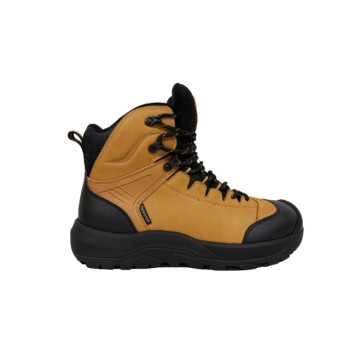
Industrial heating ovens and cooling tunnels operate as a synchronized thermal system to permanently define a shoe’s structure. The heating phase relaxes leather fibers and accelerates adhesive curing, while the subsequent cooling phase utilizes thermal contraction to "freeze" the shoe’s shape, locking it to the precise dimensions of the shoe last.
This controlled cycle of expansion and contraction is the defining factor in footwear quality. It ensures that a shoe maintains its intended silhouette and structural stability long after it leaves the factory floor.
The Role of Heat Treatment
Relaxing the Material Structure
The primary function of the industrial oven is to apply precise heat treatment to the upper materials. This heat causes the leather fibers to relax, making the material more pliable and allowing it to conform perfectly to the shape of the shoe last.
Accelerating Adhesive Curing
Beyond shaping the leather, the heating process serves a chemical function. The elevated temperatures accelerate the curing of adhesives, ensuring that the various layers of the shoe bond together securely during the shaping process.
The Role of Cooling Tunnels
Utilizing Thermal Contraction
Once the materials are relaxed and bonded, the footwear enters the cooling tunnel. This machine rapidly lowers the temperature of the shoe.
"Freezing" the Shape
This rapid cooling triggers a thermal contraction effect. By shrinking the materials tightly around the last, the process effectively "freezes" the footwear's shape, imparting the structural rigidity required for the final product.
Critical Considerations and Trade-offs
The Necessity of Precision
This process relies entirely on a controlled thermal process. If the heat is too intense, it can damage delicate leather fibers; if it is insufficient, the fibers will not relax enough to mold correctly.
Impact on Shape Memory
The cooling phase must be equally precise to ensure long-lasting shape memory. If the cooling is not rapid or deep enough, the material may relax back to its original state after being removed from the last, resulting in a deformed or unstable shoe.
Making the Right Choice for Your Production
To optimize your footwear setting process, consider your specific manufacturing priorities:
- If your primary focus is Product Longevity: Prioritize systems with precise cooling capabilities to maximize the thermal contraction effect, ensuring the best possible shape memory.
- If your primary focus is Material Integrity: Ensure your heating ovens offer granular temperature controls to relax leather fibers without scorching or degrading high-quality hides.
- If your primary focus is Structural Stability: Focus on the synergy between heat and adhesive curing times to guarantee that the shoe's layers are permanently bonded before the cooling phase begins.
The ultimate goal is to balance thermal expansion and contraction to create a shoe that is both durable and true to its design.
Summary Table:
| Process Phase | Primary Equipment | Core Function | Impact on Footwear |
|---|---|---|---|
| Heat Treatment | Industrial Oven | Fiber relaxation & adhesive curing | Ensures material pliability and secure bonding. |
| Cooling Phase | Cooling Tunnel | Thermal contraction | "Freezes" the shape to the last for permanent silhouette. |
| Synergy | Synchronized System | Shape memory setting | Guarantees product longevity and structural integrity. |
Partner with 3515 for Professional Footwear Manufacturing
As a large-scale manufacturer serving distributors and brand owners, 3515 leverages advanced thermal setting technology to ensure every pair meets the highest standards of durability and design. Our comprehensive production capabilities cover all footwear types—anchored by our flagship Safety Shoes series and extending to tactical boots, outdoor shoes, sneakers, and formal dress shoes.
Ready to elevate your product line with superior structural stability and craftsmanship? Contact us today to discuss your bulk requirements and discover how our expertise can add value to your brand.
References
- Judy Angel D., Prakash Muthuperumal. Prevalence and factors associated with occupational health problems among leather footwear manufacturing workers in Ambur town, Thirupathur district, Tamil Nadu, India. DOI: 10.18203/2394-6040.ijcmph20221762
This article is also based on technical information from 3515 Knowledge Base .
Related Products
- Lightweight Breathable Training Shoes for Wholesale & Custom OEM Manufacturing
- Wholesale Durable & Breathable Training Shoes for Custom Brands
- Premium Insulated Safety Boots and Shoes for Wholesale & Bulk Orders
- Wholesale Breathable Training Shoes Custom Athletic Footwear Manufacturer
- Wholesale Breathable Athletic Sneakers - Custom Lightweight Cushioned Footwear Manufacturer
People Also Ask
- Why are lightweight training shoes often preferred over professional hiking boots in urban walking? Maximize City Comfort
- What is the primary role of specialized training or orthopedic shoes? Enhance Safety in Elderly Balance Training
- Why are professional-grade training shoes essential for physical therapy? Ensure Patient Safety and Gait Stability
- Why are the slip-resistance and stability performance of training shoes critical in gait analysis? Ensure Data Accuracy
- Why is the use of flat-soled or professional training shoes essential for WBV? Maximize Vibration Energy Transfer