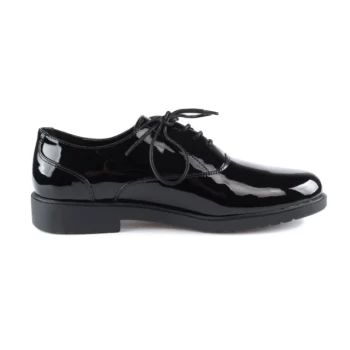
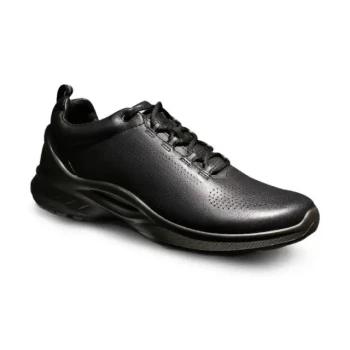
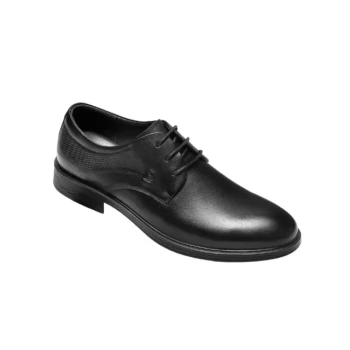
For public safety professionals, the right uniform dress shoe is a critical piece of equipment that must blend a professional appearance with tactical-grade performance. The essential features are a high-shine, polishable exterior made from leather or poromeric materials, a supportive and comfortable internal structure for long hours, a non-slip outsole, and specific safety protections like waterproofing or a safety toe based on your specific role.
The modern uniform dress shoe is no longer just for show. It is a foundational tool where professional standards meet personal protective equipment, directly impacting your comfort, safety, and effectiveness throughout a demanding shift.

The Foundation: Blending Appearance and All-Day Wearability
For roles that demand both a sharp appearance and constant readiness, the shoe's fundamental construction is paramount. This involves balancing traditional aesthetics with modern ergonomic design.
Professional Aesthetics
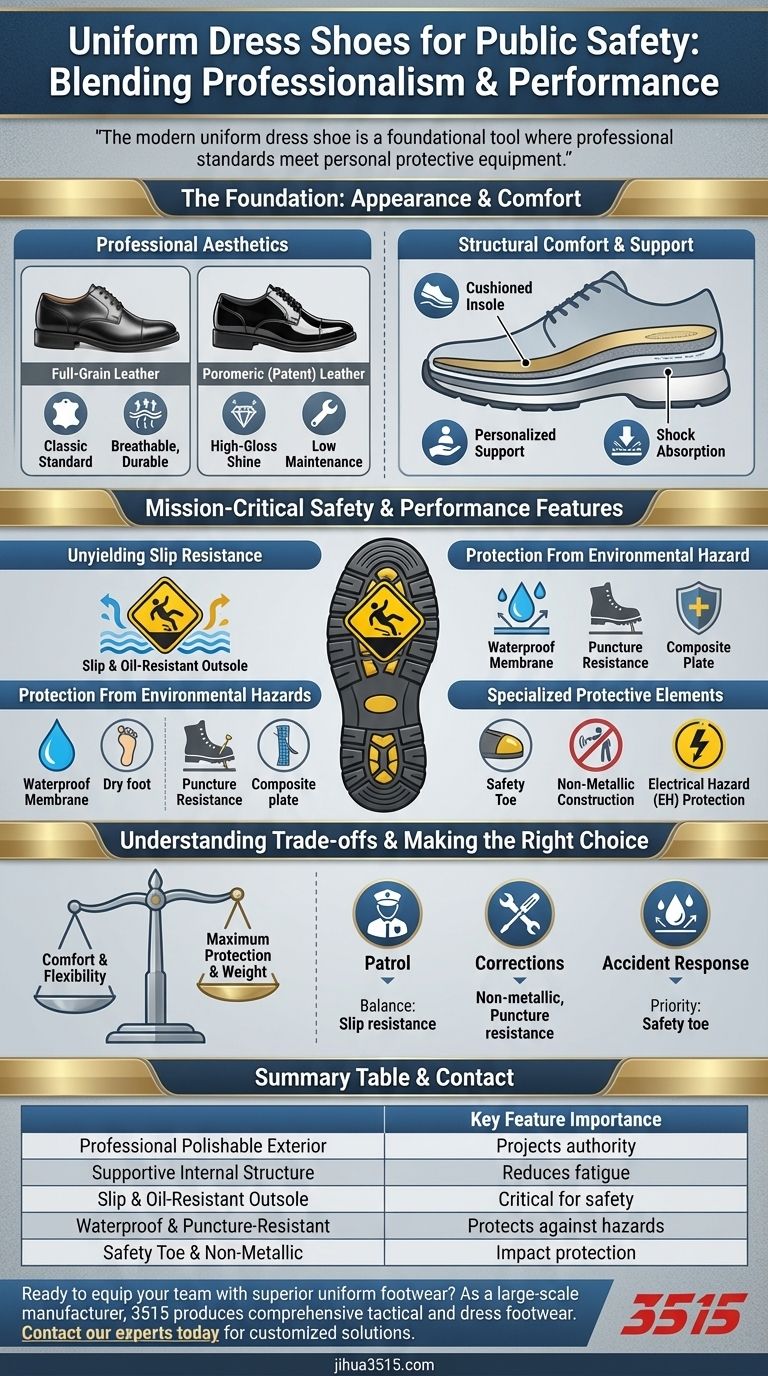
A clean, polished appearance conveys authority and professionalism. Your primary choice is between traditional leather and modern synthetics.
Full-grain leather is the classic standard, offering excellent durability, breathability, and the ability to take a high-quality polish. It molds to your foot over time but requires regular maintenance.
Poromeric "patent" leather is a synthetic material that provides a permanent high-gloss shine with minimal effort. This makes it ideal for quick inspections, but it is less breathable and can crack over time without proper care.
Structural Comfort and Support
Long shifts spent standing, walking, or running demand footwear that prevents fatigue and injury.
Supportive, cushioned insoles are non-negotiable. Many quality shoes come with good stock insoles, but professionals often upgrade to aftermarket orthotics for personalized support.
The midsole, typically made of materials like EVA foam, provides the primary shock absorption. This reduces the impact on your feet, knees, and back during dynamic movement.
Mission-Critical Safety and Performance Features
Beyond appearance and comfort, a uniform shoe must be equipped to handle unpredictable environments. These features transform it from simple footwear into essential safety gear.
Unyielding Slip Resistance
This is arguably the most critical safety feature. Public safety work often involves traversing wet, oily, or unexpectedly slick surfaces.
An oil- and slip-resistant outsole is essential. Look for shoes with a certified rating and a tread pattern designed to channel away liquids and maintain a firm grip under pressure.
Protection From Environmental Hazards
Your environment dictates the necessary level of protection.
Waterproofing is a key feature for anyone working outdoors. A waterproof membrane (like a Gore-Tex liner) keeps your feet dry from external moisture while allowing internal sweat to escape, preventing blisters and discomfort.
Puncture resistance is a vital feature for officers in urban environments or situations where hazards like broken glass, nails, or needles may be underfoot. This is typically achieved with a composite plate in the midsole.
Specialized Protective Elements
Certain roles require specific, certified protection from workplace hazards.
A safety toe (either composite or steel) protects the foot from impact and compression. Composite toes are lighter and don't conduct heat or cold, making them a popular modern choice.
Non-metallic construction is crucial for professionals working in and around metal detectors, such as in courthouses or correctional facilities. These shoes use composite safety toes and shanks to provide structure without setting off alarms.
Electrical Hazard (EH) protection is a more specialized feature that provides a secondary source of protection on surfaces with live electrical circuits, though this is less common for standard patrol duty.
Understanding the Trade-offs
Selecting the right features always involves balancing competing priorities. Understanding these trade-offs is key to making an informed decision.
Full-Grain Leather vs. Poromeric Synthetics
The choice between leather and high-gloss synthetics is a classic trade-off between tradition and convenience. Leather offers superior breathability and long-term durability, while poromeric materials offer a low-maintenance, inspection-ready shine right out of the box.
Comfort vs. Maximum Protection
Adding features inherently changes the shoe. A safety toe, puncture-resistant plate, and thick, slip-resistant outsole add weight and can reduce flexibility. You must assess your daily risks to decide if the added protection is worth the potential decrease in agility and comfort.
Making the Right Choice for Your Role
Your specific duties should be the ultimate guide for your footwear selection.
- If your primary focus is patrol or frequent public interaction: Prioritize a balance of a polishable finish, all-day comfort, and superior slip resistance.
- If your primary focus is corrections or secure facility work: Emphasize non-metallic construction and consider adding puncture resistance for enhanced safety.
- If your primary focus is accident response or varied environments: Focus on certified waterproofing, oil/slip resistance, and a safety toe to protect against unknown hazards.
Choosing the right uniform footwear is an investment in your daily safety, comfort, and professional presence.
Summary Table:
| Key Feature | Importance for Public Safety |
|---|---|
| Professional Polishable Exterior | Projects authority and meets uniform standards. |
| Supportive Internal Structure | Reduces fatigue during long shifts of standing and moving. |
| Slip & Oil-Resistant Outsole | Critical for safety on unpredictable or wet surfaces. |
| Waterproof & Puncture-Resistant | Protects feet from environmental hazards and sharp objects. |
| Safety Toe & Non-Metallic Options | Provides impact protection for specific high-risk roles. |
Ready to equip your team with superior uniform footwear?
As a large-scale manufacturer, 3515 produces a comprehensive range of tactical and dress footwear for distributors, brand owners, and bulk clients. Our production capabilities encompass all types of safety shoes and boots, engineered to meet the rigorous demands of public safety professionals.
We can provide the perfect blend of professional appearance, all-day comfort, and mission-critical safety features your team requires. Contact our experts today to discuss your specific needs and receive a customized solution.
Visual Guide
Related Products
- Premium Suede Sport Safety Shoes for Wholesale & Bulk Orders
- Premium KPU Athletic Safety Shoes for Wholesale
- Premium Lightweight Safety Shoes for Wholesale & Bulk Orders
- Heavy-Duty Waterproof Nubuck Safety Boots Safety Shoes for Bulk Supply
- Wholesale Patent Oxford Dress Shoes | Custom & Bulk Manufacturing
People Also Ask
- What industries have specific OSHA footwear requirements? Ensure Compliance & Protect Your Workforce
- What are the primary functions of professional safety shoes? Maximize Safety in Water Supply Confined Spaces
- What role do specialized safety shoes play in preventing falls? Engineering Stability in Industrial Environments
- What are the technical advantages of integrating sensors into safety shoes? Achieve Superior Motion Capture Precision
- Why wear protective masks, gloves, and safety shoes in 5S Shine? Elevate Safety and Discipline